



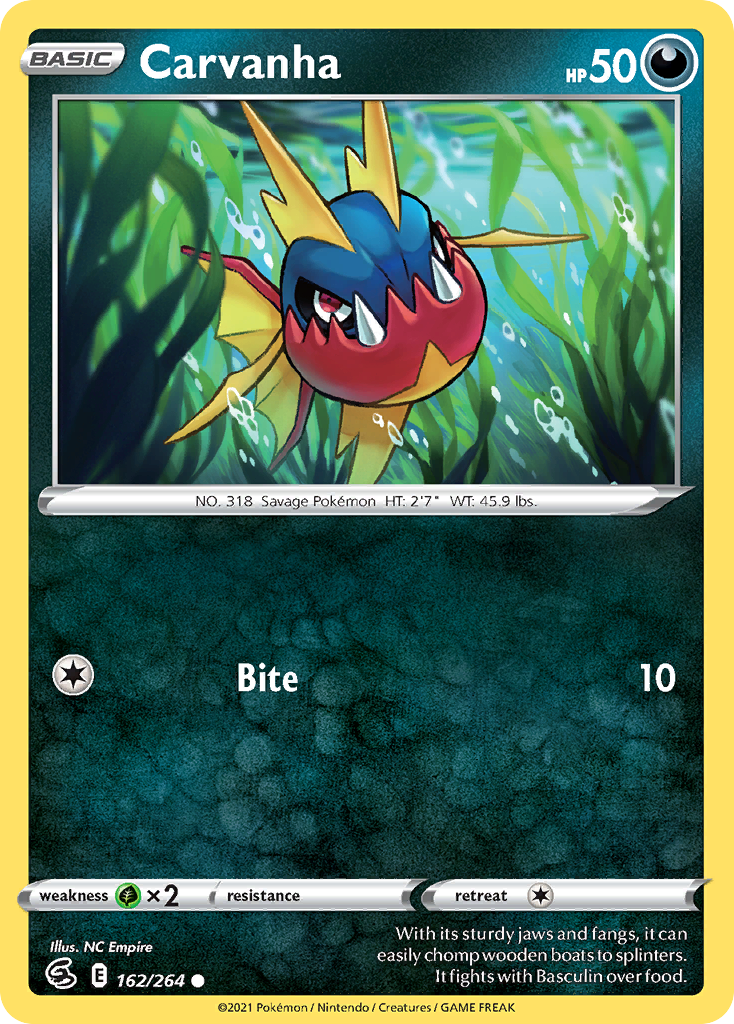
Carvanha
With its sturdy jaws and fangs, it can easily chomp wooden boats to splinters. It fights with Basculin over food.
| Supertype | Pokémon |
|---|---|
| Subtype | Basic |
| HP | 50 |
| Types | Darkness |
| Attack | Bite |
| Attack cost | Colorless |
| Artist | NC Empire |
| Rarity | Common |
| Pokédex | 318 |
| Evolves to | Sharpedo |
Vendor Information
- Store Name: DutchGem
- Vendor: DutchGem
-
Address:
gekkestraat
179
2345GT Utrecht
Sword & Shield
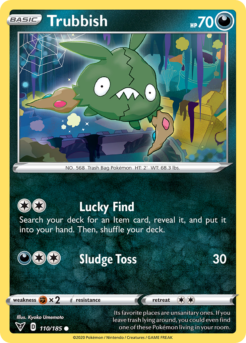
Its favorite places are unsanitary ones. If you leave trash lying around, you could even find one of these Pokémon living in your room.
Brilliant Stars
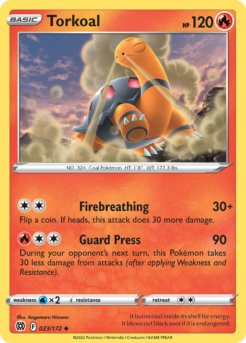
It burns coal inside its shell for energy. It blows out black soot if it is endangered.
Crimson Invasion
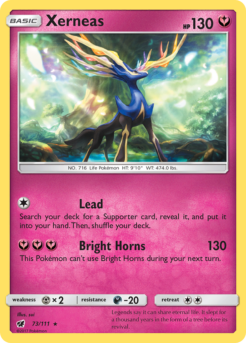
Legends say it can share eternal life. It slept for a thousand years in the form of a tree before its revival.
Sun & Moon
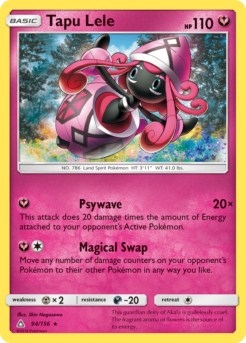
This guardian deity of Akala is guilelessly cruel. The fragrant aroma of flowers is the source of its energy.
מוצרים קשורים
Sword & Shield
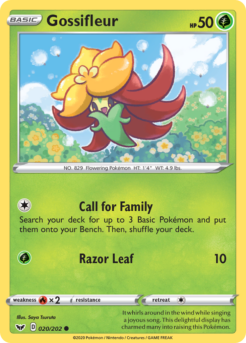
It whirls around in the wind while singing a joyous song. This delightful display has charmed many into raising this Pokémon.
Sword & Shield
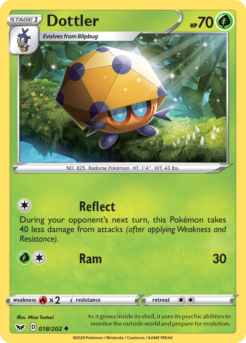
As it grows inside its shell, it uses its psychic abilities to monitor the outside world and prepare for evolution.
Sword & Shield
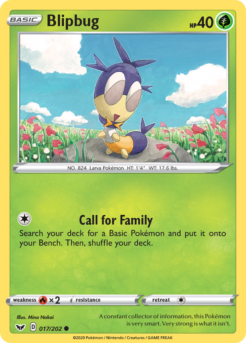
A constant collector of information, this Pokémon is very smart. Very strong is what it isn't.
Sword & Shield
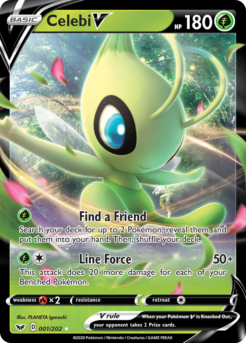
Search your deck for up to 2 Pokémon, reveal them, and put them into your hand. Then, shuffle your deck.
Sword & Shield
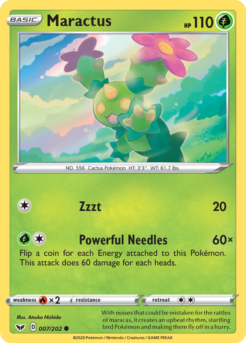
With noises that could be mistaken for the rattles of maracas, it creates an upbeat rhythm, startling bird Pokémon and making them fly off in a hurry.
Sword & Shield
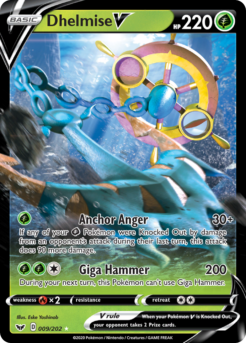
If any of your Grass Pokémon were Knocked Out by damage from an opponent's attack during their last turn, this attack does 90 more damage.
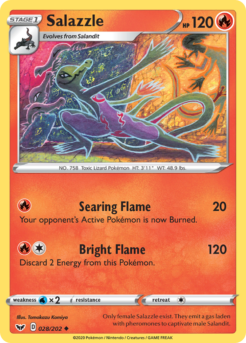
Sword & Shield
Only female Salazzle exist. They emit a gas laden with pheromones to captivate male Salandit.
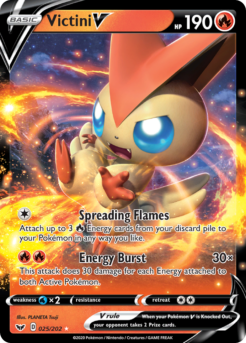
Sword & Shield
Attach up to 3 Fire Energy cards from your discard pile to your Pokémon in any way you like.