


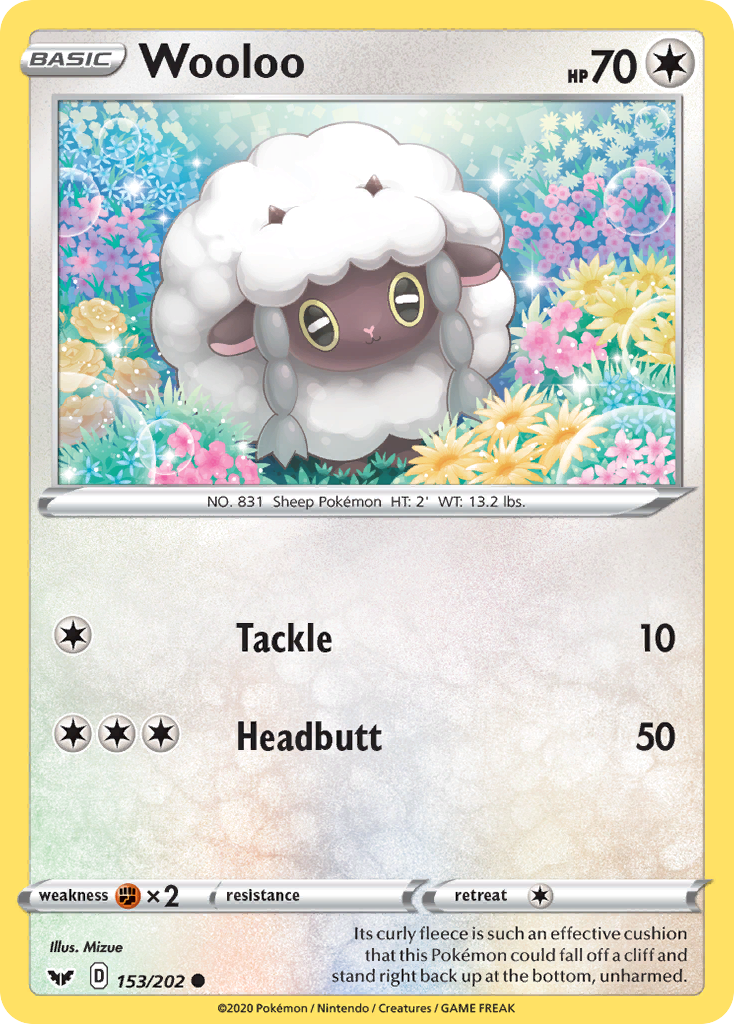
Wooloo
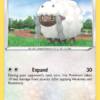
Its curly fleece is such an effective cushion that this Pokémon could fall off a cliff and stand right back up at the bottom, unharmed.

| Supertype | Pokémon |
|---|---|
| Subtype | Basic |
| HP | 70 |
| Types | Colorless |
| Attack | Tackle |
| Attack cost | Colorless |
| Artist | Mizue |
| Rarity | Common |
| Pokédex | 831 |
| Evolves to | Dubwool |
Vendor Information
- Store Name: DutchGem
- Vendor: DutchGem
-
Address:
gekkestraat
179
2345GT Utrecht
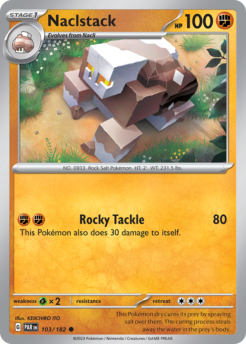
Paradox Rift
This Pokémon dry cures its prey by spraying salt over them. The curing process steals away the water in the prey's body.
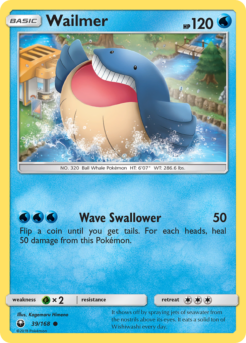
Celestial Storm
It shows off by spraying jets of seawater from the nostrils above its eyes. It eats a solid ton of Wishiwashi every day.
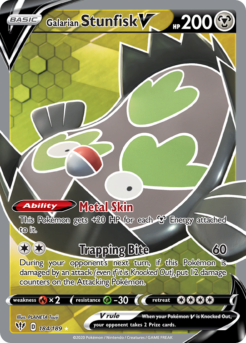
Darkness Ablaze
During your opponent’s next turn, if this Pokémon is damaged by an attack (even if it is Knocked Out), put 12 damage counters on the Attacking Pokémon.
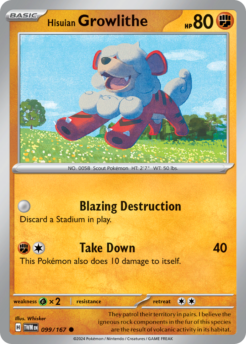
Scarlet & Violet
They patrol their territory in pairs. I believe the igneous rock components in the fur of this species are the result of volcanic activity in its habitat.