



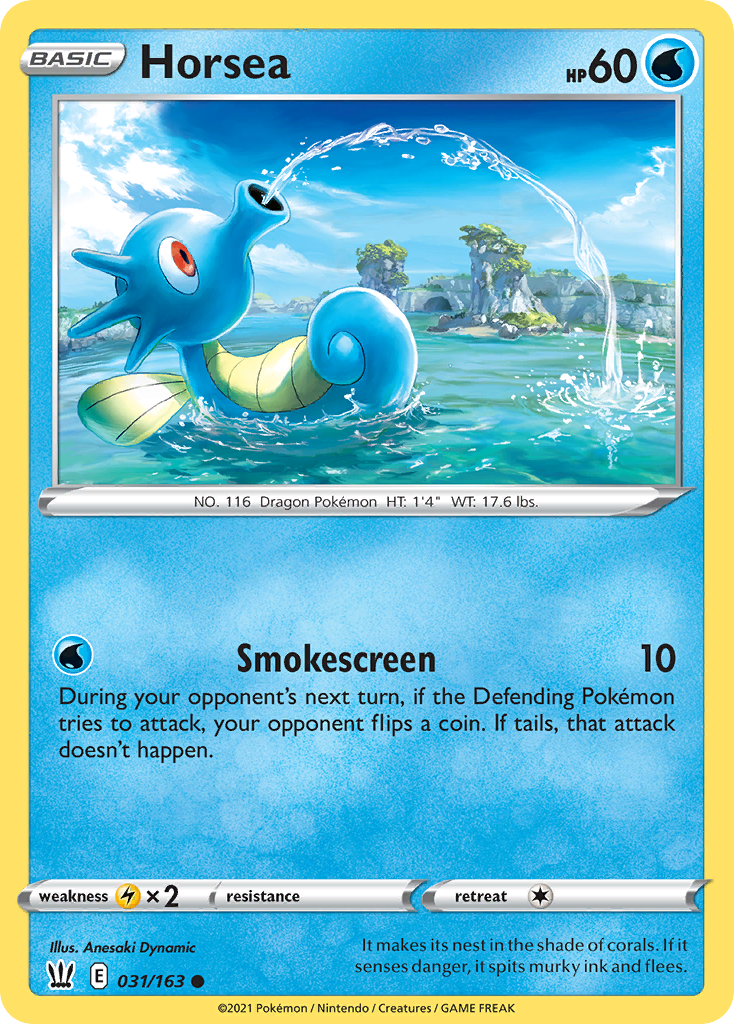
Horsea
It makes its nest in the shade of corals. If it senses danger, it spits murky ink and flees.
During your opponent’s next turn, if the Defending Pokémon tries to attack, your opponent flips a coin. If tails, that attack doesn’t happen.
| Supertype | Pokémon |
|---|---|
| Subtype | Basic |
| HP | 60 |
| Types | Water |
| Attack | Smokescreen |
| Attack cost | Water |
| Artist | Anesaki Dynamic |
| Rarity | Common |
| Pokédex | 116 |
| Evolves to | Seadra |
Vendor Information
- Store Name: DutchGem
- Vendor: DutchGem
-
Address:
gekkestraat
179
2345GT Utrecht
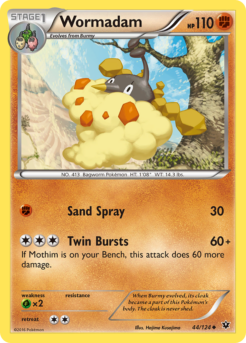
Fates Collide
When Burmy evolved, its cloak became a part of this Pokémon's body. The cloak is never shed.
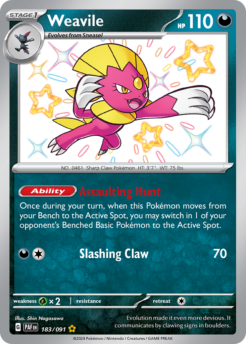
Paldean Fates
Evolution made it even more devious. It communicates by clawing signs in boulders.
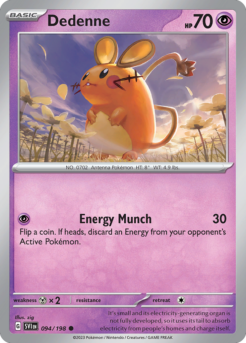
Scarlet & Violet
It's small and its electricity-generating organ is not fully developed, so it uses its tail to absorb electricity from people's homes and charge itself.
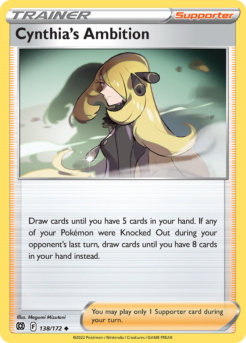
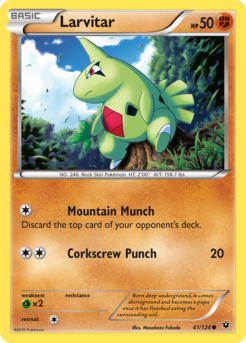
Fates Collide
Born deep underground, it comes aboveground and becomes a pupa once it has finished eating the surrounding soil.
Produtos Relacionados
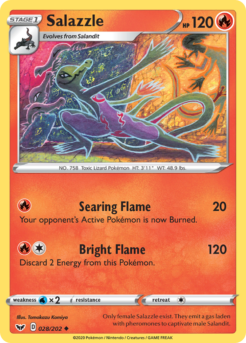
Sword & Shield
Only female Salazzle exist. They emit a gas laden with pheromones to captivate male Salandit.
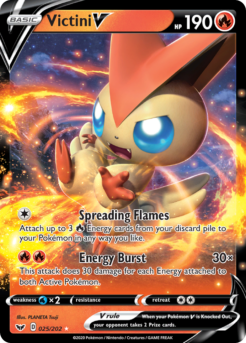
Sword & Shield
Attach up to 3 Fire Energy cards from your discard pile to your Pokémon in any way you like.
Sword & Shield
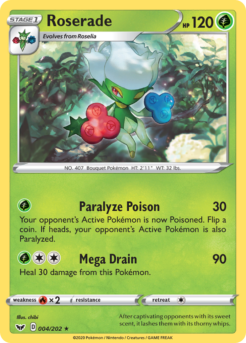
After captivating opponents with its sweet scent, it lashes them with its thorny whips.
Sword & Shield
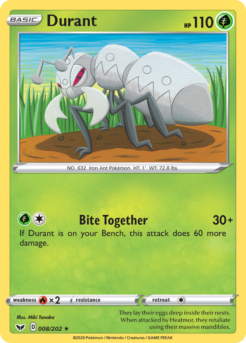
They lay their eggs deep inside their nests. When attacked by Heatmor, they retaliate using their massive mandibles.
Sword & Shield
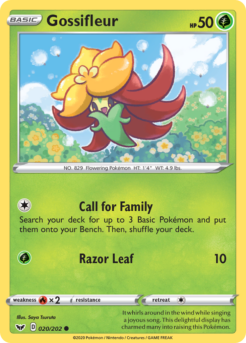
It whirls around in the wind while singing a joyous song. This delightful display has charmed many into raising this Pokémon.
Sword & Shield
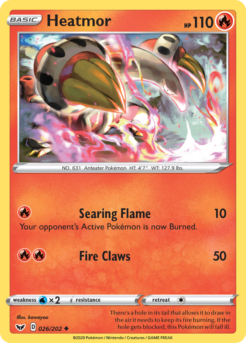
There's a hole in its tail that allows it to draw in the air it needs to keep its fire burning. If the hole gets blocked, this Pokémon will fall ill.
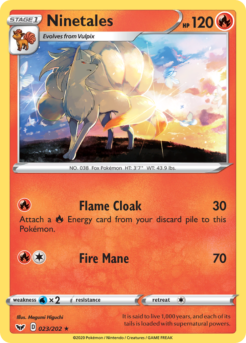
Sword & Shield
It is said to live 1,000 years, and each of its tails is loaded with supernatural powers.
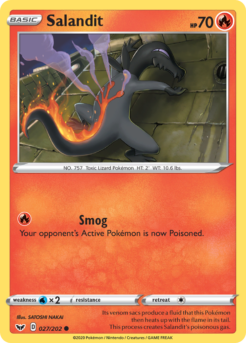
Sword & Shield
Its venom sacs produce a fluid that this Pokémon then heats up with the flame in its tail. This process creates Salandit's poisonous gas.