



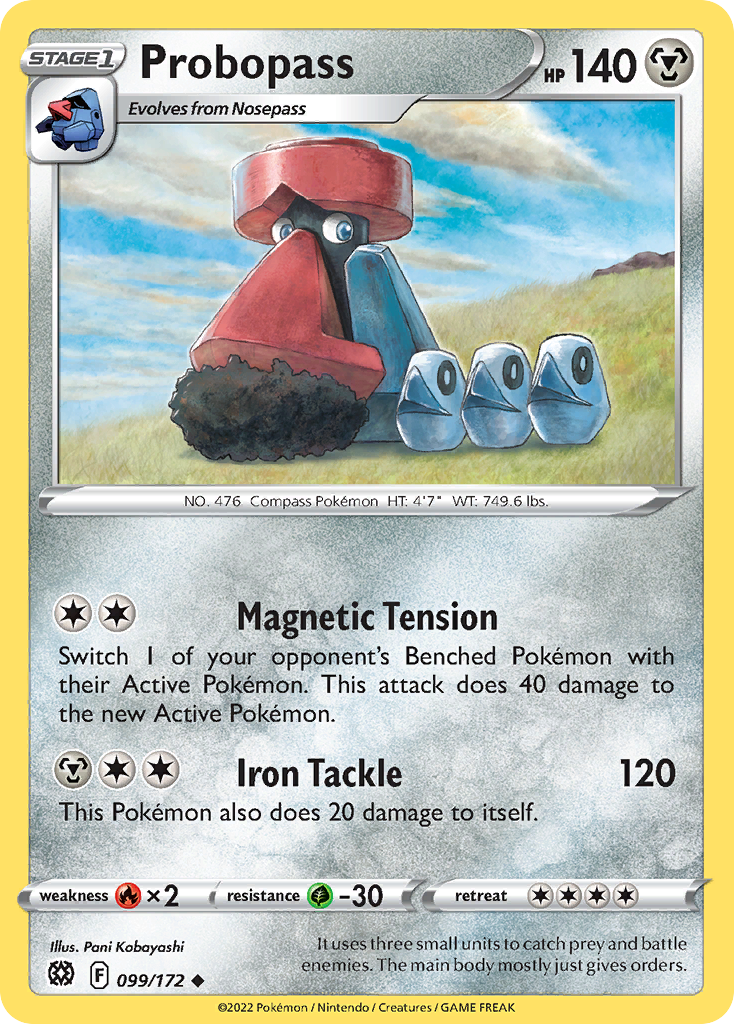
Probopass
It uses three small units to catch prey and battle enemies. The main body mostly just gives orders.
Switch 1 of your opponent’s Benched Pokémon with their Active Pokémon. This attack does 40 damage to the new Active Pokémon.
| Supertype | Pokémon |
|---|---|
| Subtype | Stage 1 |
| HP | 140 |
| Types | Metal |
| Attack | Magnetic Tension |
| Attack cost | Colorless |
| Artist | Pani Kobayashi |
| Rarity | Uncommon |
| Pokédex | 476 |
| Evolves from | Nosepass |
Vendor Information
- Store Name: DutchGem
- Vendor: DutchGem
-
Address:
gekkestraat
179
2345GT Utrecht
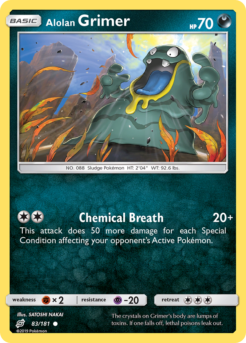
Sun & Moon
The crystals on Grimer's body are lumps of toxins. If one falls off, lethal poisons leak out.
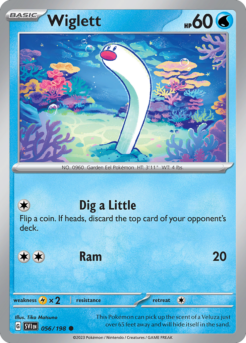
Scarlet & Violet
This Pokémon can pick up the scent of a Veluza just over 65 feet away and will hide itself in the sand.
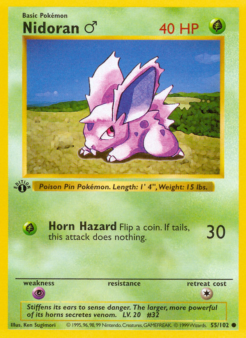
Base
Stiffens its ears to sense danger. The larger, more powerful of its horns secretes venom.
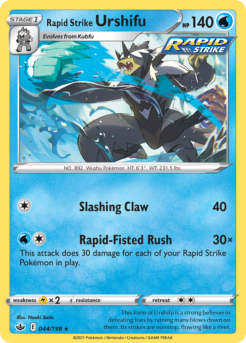
Chilling Reign
This form of Urshifu is a strong believer in defeating foes by raining many blows down on them. Its strikes are nonstop, flowing like a river.
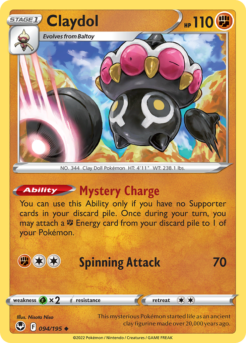
Silver Tempest
This mysterious Pokémon started life as an ancient clay figurine made over 20,000 years ago.
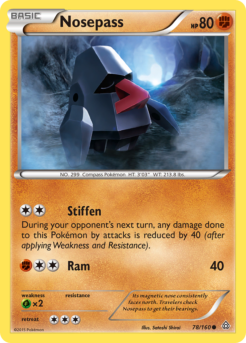
Primal Clash
Its magnetic nose consistently faces north. Travelers check Nosepass to get their bearings.
Related products
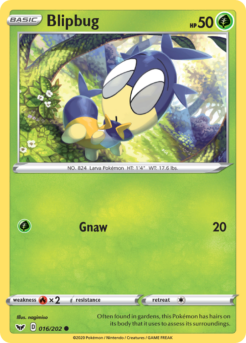
Sword & Shield
Often found in gardens, this Pokémon has hairs on its body that it uses to assess its surroundings.
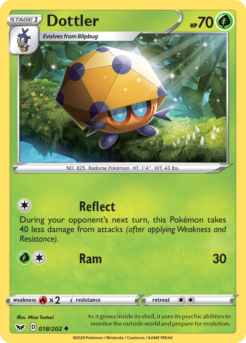
Sword & Shield
As it grows inside its shell, it uses its psychic abilities to monitor the outside world and prepare for evolution.
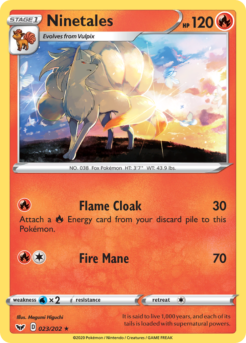
Sword & Shield
It is said to live 1,000 years, and each of its tails is loaded with supernatural powers.
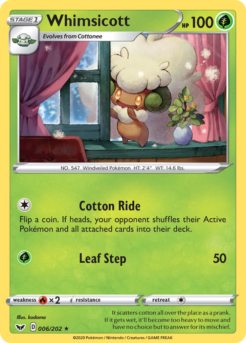
Sword & Shield
It scatters cotton all over the place as a prank. If it gets wet, it'll become too heavy to move and have no choice but to answer for its mischief.
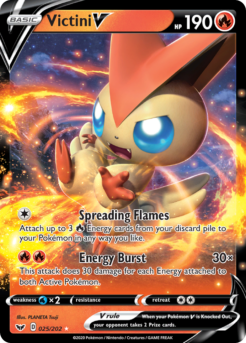
Sword & Shield
Attach up to 3 Fire Energy cards from your discard pile to your Pokémon in any way you like.
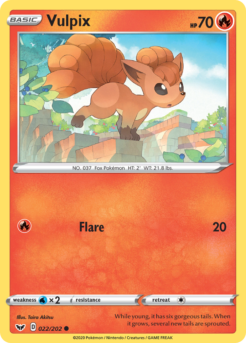
Sword & Shield
While young, it has six gorgeous tails. When it grows, several new tails are sprouted.
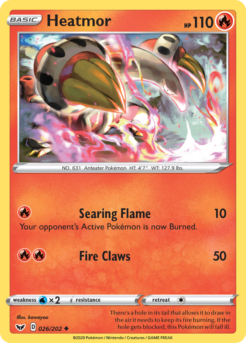
Sword & Shield
There's a hole in its tail that allows it to draw in the air it needs to keep its fire burning. If the hole gets blocked, this Pokémon will fall ill.
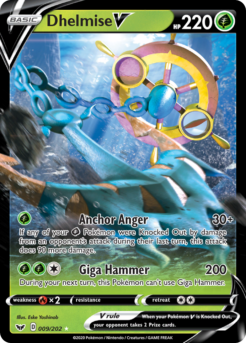
Sword & Shield
If any of your Grass Pokémon were Knocked Out by damage from an opponent’s attack during their last turn, this attack does 90 more damage.