



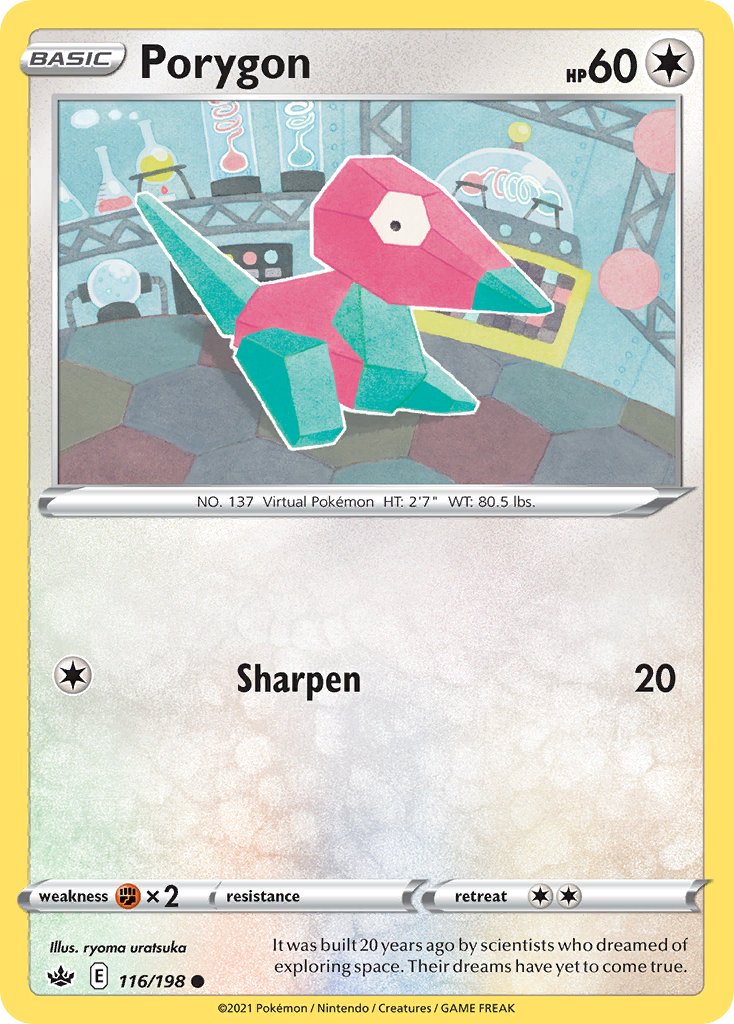
Porygon


It was built 20 years ago by scientists who dreamed of exploring space. Their dreams have yet to come true.

| Supertype | Pokémon |
|---|---|
| Subtype | Basic |
| HP | 60 |
| Types | Colorless |
| Attack | Sharpen |
| Attack cost | Colorless |
| Artist | ryoma uratsuka |
| Rarity | Common |
| Pokédex | 137 |
| Evolves to | Porygon2 |
Vendor Information
- Store Name: DutchGem
- Vendor: DutchGem
-
Address:
gekkestraat
179
2345GT Utrecht

Steam Siege
One swing of the sword incorporated in its armor can fell an opponent. A simple glare from one of them quiets everybody.


Guardians Rising
During your opponent’s next turn, if this Pokémon is damaged by an attack (even if this Pokémon is Knocked Out), put 8 damage counters on the Attacking Pokémon.
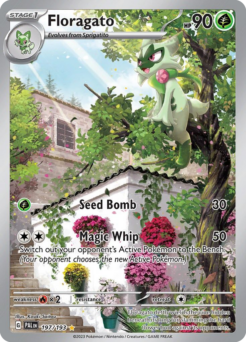
Paldea Evolved
Floragato deftly wields the vine hidden beneath its long fur, slamming the hard flower bud against its opponents.

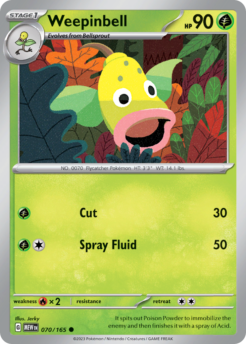
151
It spits out Poison Powder to immobilize the enemy and then finishes it with a spray of Acid.
Related products

Sword & Shield
When it uses its special stick to strike up a beat, the sound waves produced carry revitalizing energy to the plants and flowers in the area.

Sword & Shield
There's a hole in its tail that allows it to draw in the air it needs to keep its fire burning. If the hole gets blocked, this Pokémon will fall ill.

Sword & Shield
Its venom sacs produce a fluid that this Pokémon then heats up with the flame in its tail. This process creates Salandit's poisonous gas.
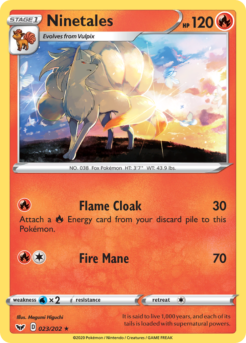
Sword & Shield
It is said to live 1,000 years, and each of its tails is loaded with supernatural powers.
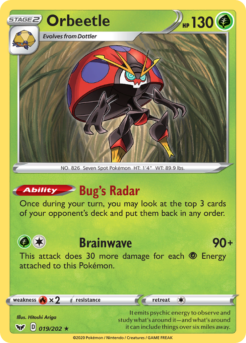
Sword & Shield
It emits psychic energy to observe and study what's around it—and what's around it can include things over six miles away.
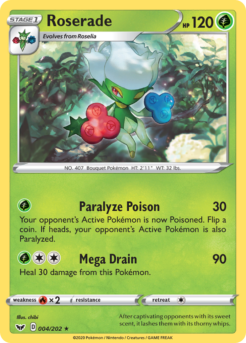
Sword & Shield
After captivating opponents with its sweet scent, it lashes them with its thorny whips.
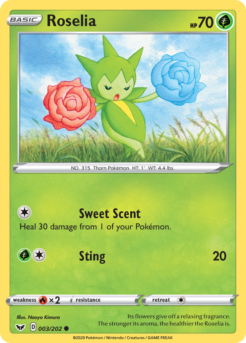
Sword & Shield
Its flowers give off a relaxing fragrance. The stronger its aroma, the healthier the Roselia is.
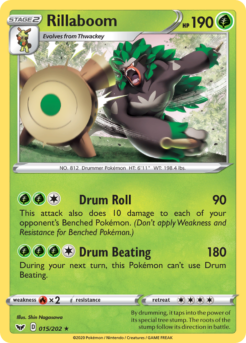
Sword & Shield
By drumming, it taps into the power of its special tree stump. The roots of the stump follow its direction in battle.