



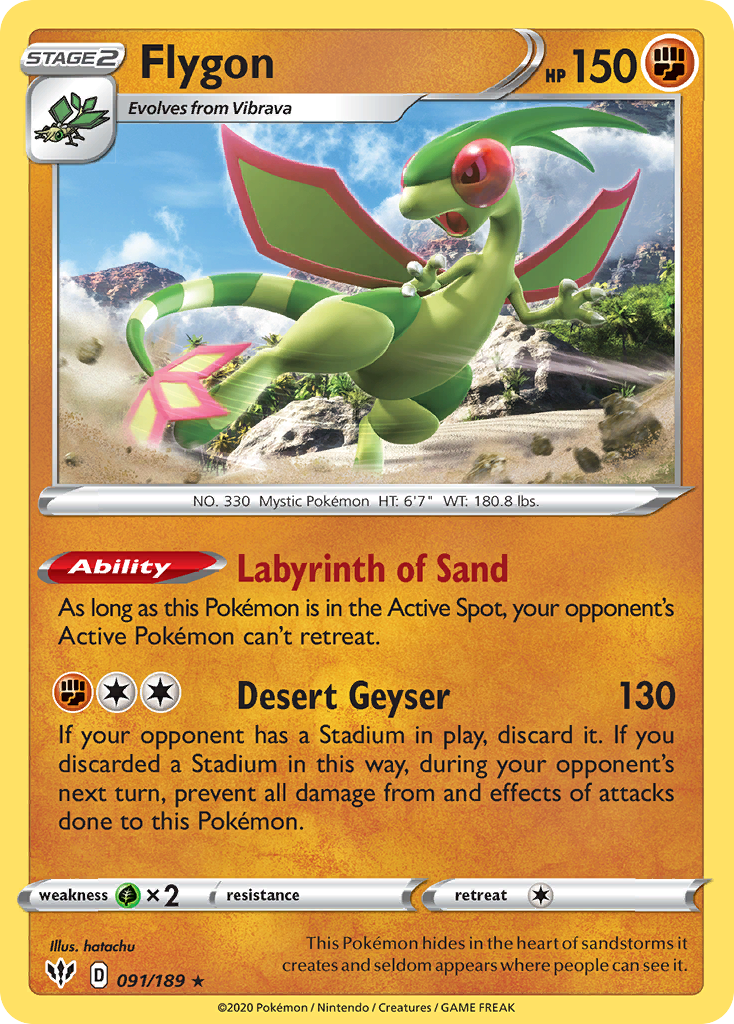
Flygon
This Pokémon hides in the heart of sandstorms it creates and seldom appears where people can see it.

If your opponent has a Stadium in play, discard it. If you discarded a Stadium in this way, during your opponent’s next turn, prevent all damage from and effects of attacks done to this Pokémon.
| Supertype | Pokémon |
|---|---|
| Subtype | Stage 2 |
| HP | 150 |
| Types | Fighting |
| Attack | Desert Geyser |
| Attack cost | Fighting |
| Artist | hatachu |
| Rarity | Rare |
| Pokédex | 330 |
| Evolves from | Vibrava |
Vendor Information
- Store Name: DutchGem
- Vendor: DutchGem
-
Address:
gekkestraat
179
2345GT Utrecht
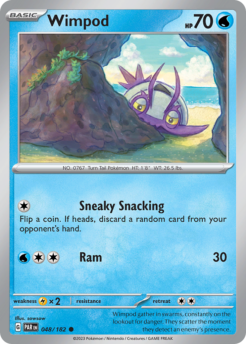
Paradox Rift
Wimpod gather in swarms, constantly on the lookout for danger. They scatter the moment they detect an enemy's presence.
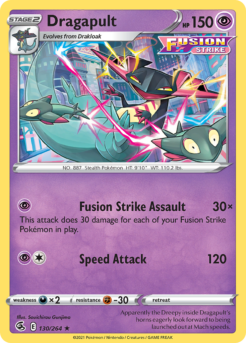
Fusion Strike
Apparently the Dreepy inside Dragapult's horns eagerly look forward to being launched out at Mach speeds.
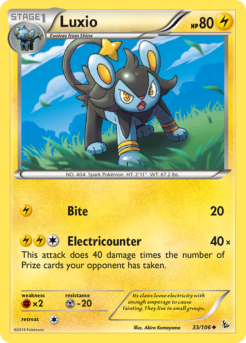
Flashfire
Its claws loose electricity with enough amperage to cause fainting. They live in small groups.
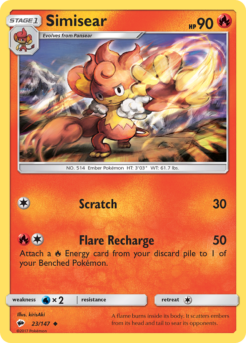
Burning Shadows
A flame burns inside its body. It scatters embers from its head and tail to sear its opponents.
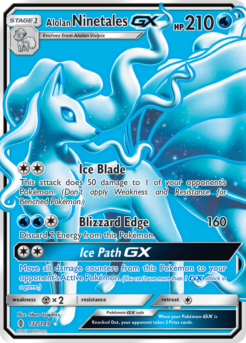
Guardians Rising
This attack does 50 damage to 1 of your opponent’s Pokémon. (Don’t apply Weakness and Resistance for Benched Pokémon.)
Related products
Sword & Shield
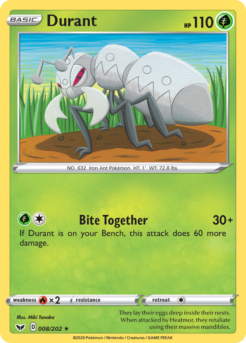
They lay their eggs deep inside their nests. When attacked by Heatmor, they retaliate using their massive mandibles.

Sword & Shield
Search your deck for up to 2 Pokémon, reveal them, and put them into your hand. Then, shuffle your deck.
Sword & Shield
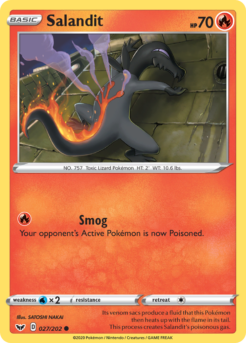
Its venom sacs produce a fluid that this Pokémon then heats up with the flame in its tail. This process creates Salandit's poisonous gas.
Sword & Shield
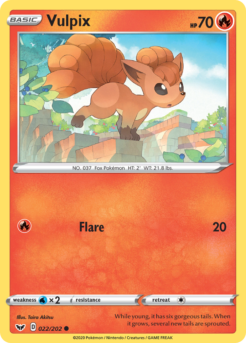
While young, it has six gorgeous tails. When it grows, several new tails are sprouted.
Sword & Shield
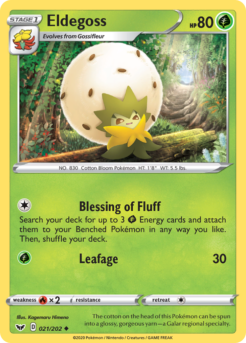
The cotton on the head of this Pokémon can be spun into a glossy, gorgeous yarn—a Galar regional specialty.
Sword & Shield
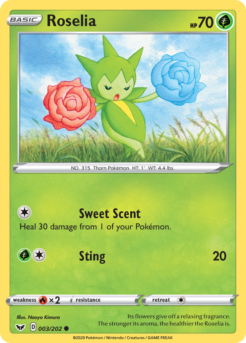
Its flowers give off a relaxing fragrance. The stronger its aroma, the healthier the Roselia is.

Sword & Shield
Attach up to 3 Fire Energy cards from your discard pile to your Pokémon in any way you like.
Sword & Shield
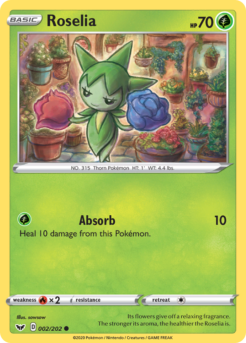
Its flowers give off a relaxing fragrance. The stronger its aroma, the healthier the Roselia is.