



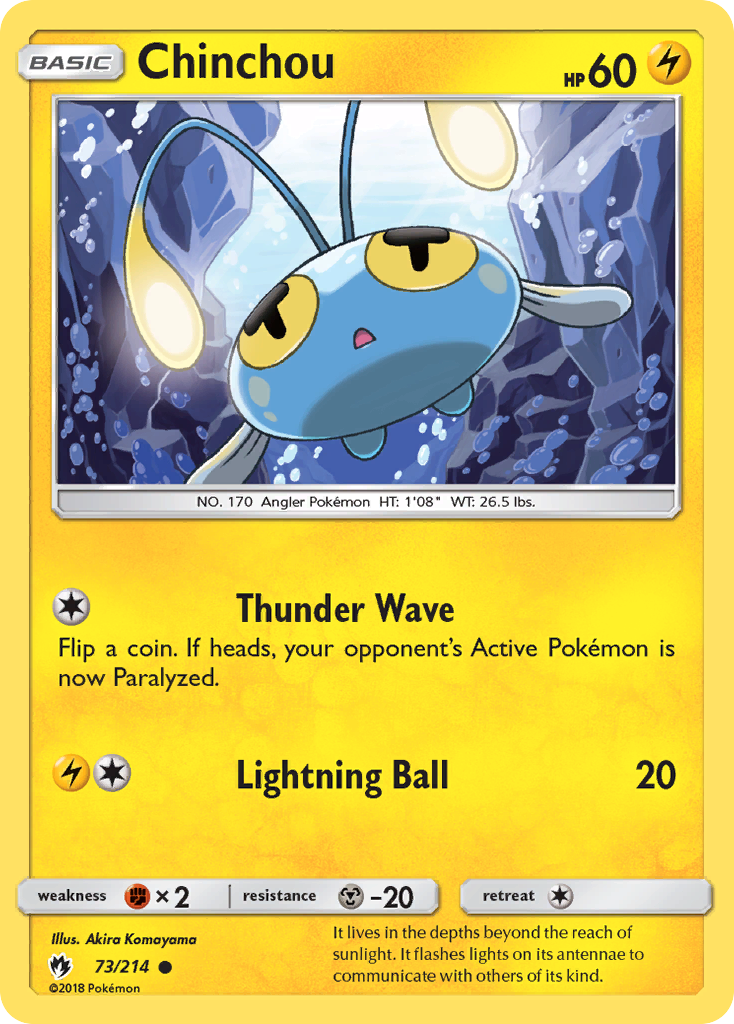
Chinchou
It lives in the depths beyond the reach of sunlight. It flashes lights on its antennae to communicate with others of its kind.
Flip a coin. If heads, your opponent’s Active Pokémon is now Paralyzed.
| Supertype | Pokémon |
|---|---|
| Subtype | Basic |
| HP | 60 |
| Types | Lightning |
| Attack | Thunder Wave |
| Attack cost | Colorless |
| Artist | Akira Komayama |
| Rarity | Common |
| Pokédex | 170 |
| Evolves to | Lanturn |
Vendor Information
- Store Name: DutchGem
- Vendor: DutchGem
-
Address:
gekkestraat
179
2345GT Utrecht
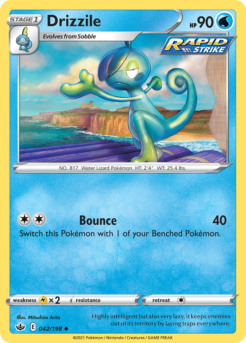
Chilling Reign
Highly intelligent but also very lazy, it keeps enemies out of its territory by laying traps everywhere.
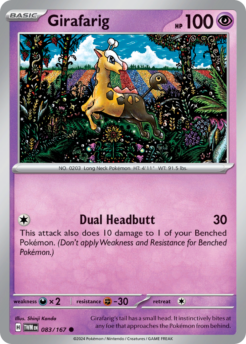
Scarlet & Violet
Girafarig's tail has a small head. It instinctively bites at any foe that approaches the Pokémon from behind.
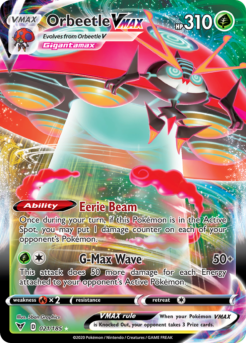
Sword & Shield
This attack does 50 more damage for each Energy attached to your opponent’s Active Pokémon.
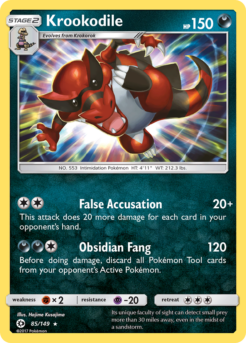
Sun & Moon
Its unique faculty of sight can detect small prey more than 30 miles away, even in the midst of a sandstorm.
Furious Fists
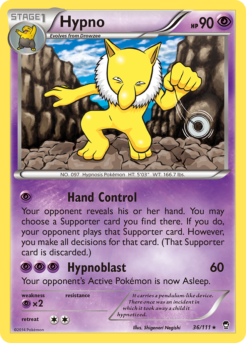
It carries a pendulum-like device. There once was an incident in which it took away a child it hypnotized.
Scarlet & Violet
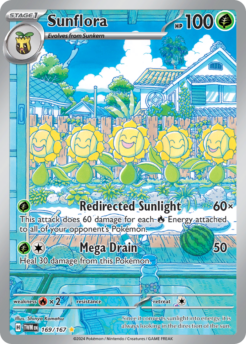
Since it converts sunlight into energy, it is always looking in the direction of the sun.
Related products
Sun & Moon
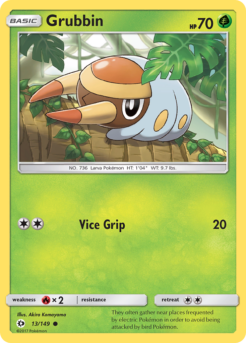
They often gather near places frequented by electric Pokémon in order to avoid being attacked by bird Pokémon.
Sun & Moon
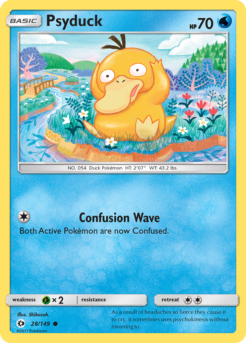
As a result of headaches so fierce they cause it to cry, it sometimes uses psychokinesis without meaning to.
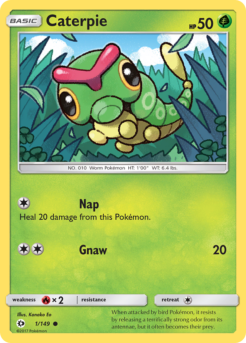
Sun & Moon
When attacked by bird Pokémon, it resists by releasing a terrifically strong odor from its antennae, but it often becomes their prey.
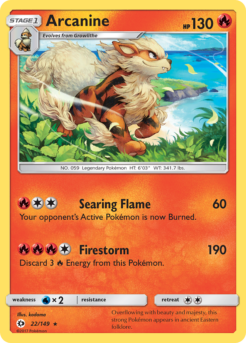
Sun & Moon
Overflowing with beauty and majesty, this strong Pokémon appears in ancient Eastern folklore.
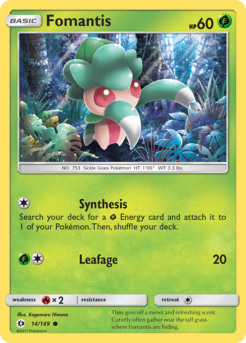
Sun & Moon
They give off a sweet and refreshing scent. Cutiefly often gather near the tall grass where Fomantis are hiding.
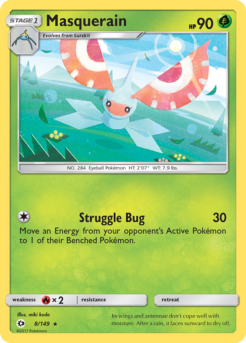
Sun & Moon
Its wings and antennae don't cope well with moisture. After a rain, it faces sunward to dry off.
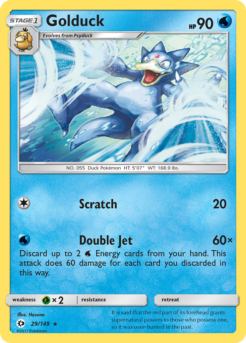
Sun & Moon
It is said that the red part of its forehead grants supernatural powers to those who posses one, so it was over-hunted in the past.
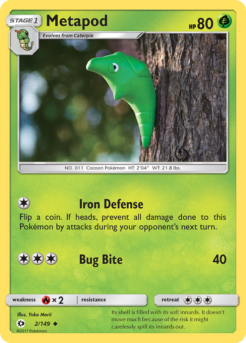
Sun & Moon
Its shell is filled with its soft innards. It doesn't move much because of the risk it might carelessly spill its innards out.