



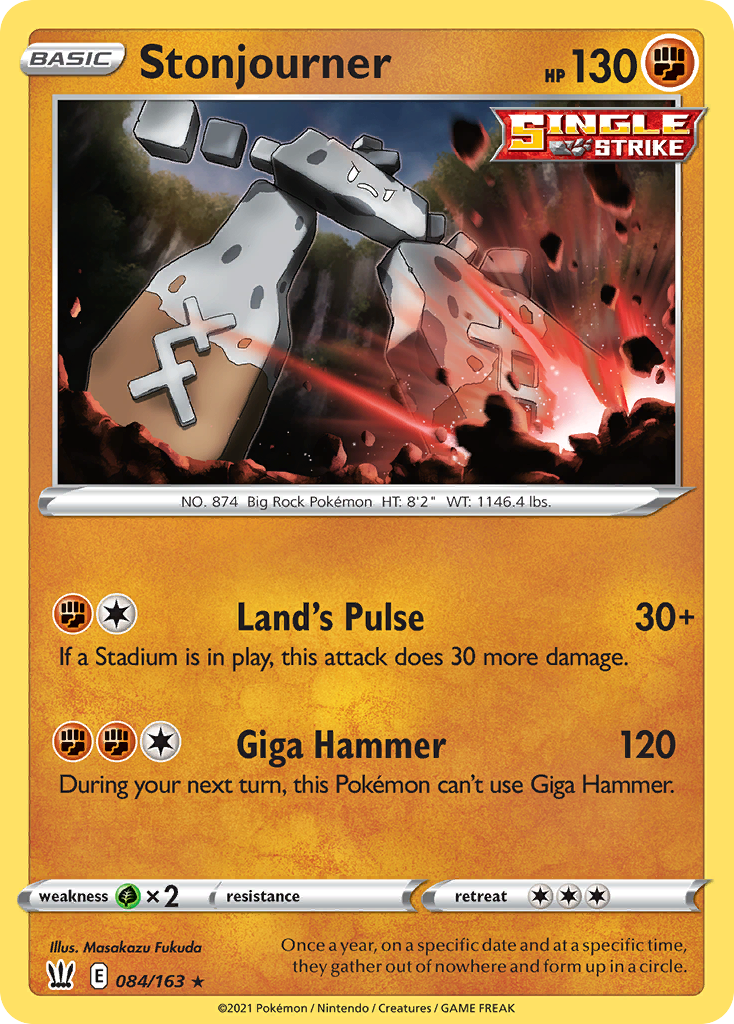
Stonjourner
Once a year, on a specific date and at a specific time, they gather out of nowhere and form up in a circle.
If a Stadium is in play, this attack does 30 more damage.
| Supertype | Pokémon |
|---|---|
| Subtype | Basic |
| HP | 130 |
| Types | Fighting |
| Attack | Land's Pulse |
| Attack cost | Fighting |
| Artist | Masakazu Fukuda |
| Rarity | Rare |
| Pokédex | 874 |
Vendor Information
- Store Name: DutchGem
- Vendor: DutchGem
-
Address:
gekkestraat
179
2345GT Utrecht
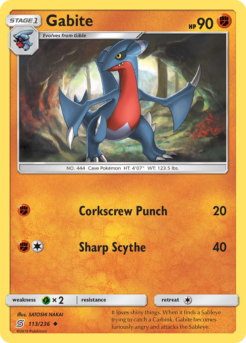
Sun & Moon
It loves shiny things. When it finds a Sableye trying to catch a Carbink, Gabite becomes furiously angry and attacks the Sableye.
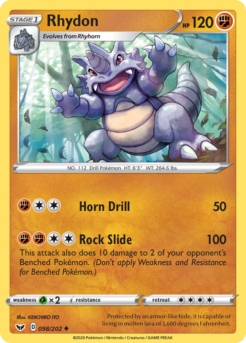
Sword & Shield
Protected by an armor-like hide, it is capable of living in molten lava of 3,600 degrees Fahrenheit.

Sun & Moon
Discard 2 Energy from this Pokémon. This attack does 170 damage to 1 of your opponent’s Pokémon. (Don’t apply Weakness and Resistance for Benched Pokémon.)
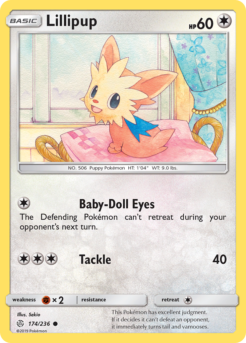
Cosmic Eclipse
This Pokémon has excellent judgment. If it decides it can't defeat an opponent, it immediately turns tail and vamooses.

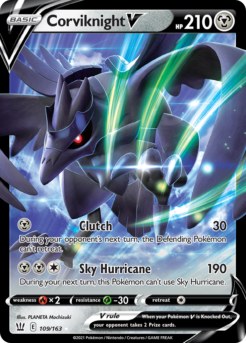
Related products
Sword & Shield
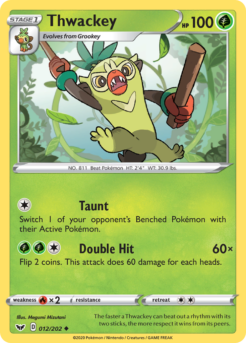
The faster a Thwackey can beat out a rhythm with its two sticks, the more respect it wins from its peers.
Sword & Shield
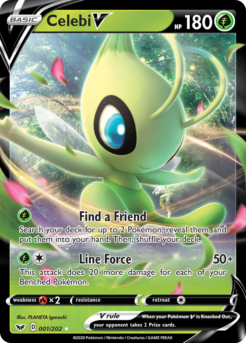
Search your deck for up to 2 Pokémon, reveal them, and put them into your hand. Then, shuffle your deck.
Sword & Shield
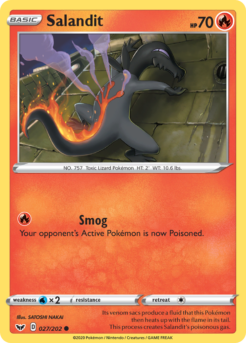
Its venom sacs produce a fluid that this Pokémon then heats up with the flame in its tail. This process creates Salandit's poisonous gas.
Sword & Shield
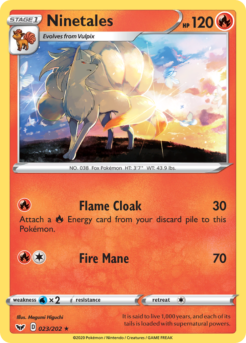
It is said to live 1,000 years, and each of its tails is loaded with supernatural powers.
Sword & Shield
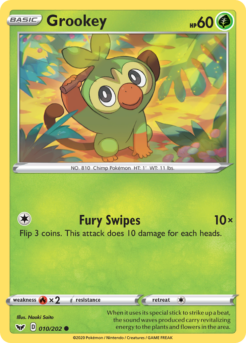
When it uses its special stick to strike up a beat, the sound waves produced carry revitalizing energy to the plants and flowers in the area.
Sword & Shield
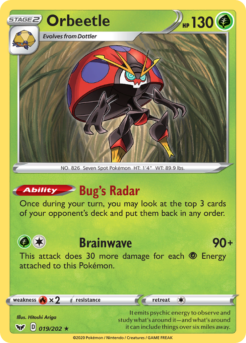
It emits psychic energy to observe and study what's around it—and what's around it can include things over six miles away.
Sword & Shield
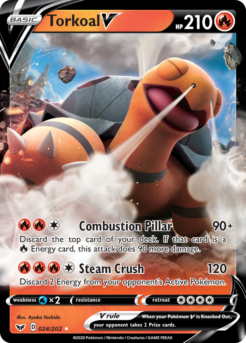
Discard the top card of your deck. If that card is a Fire Energy card, this attack does 90 more damage.
Sword & Shield
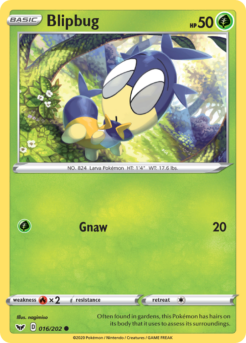
Often found in gardens, this Pokémon has hairs on its body that it uses to assess its surroundings.