



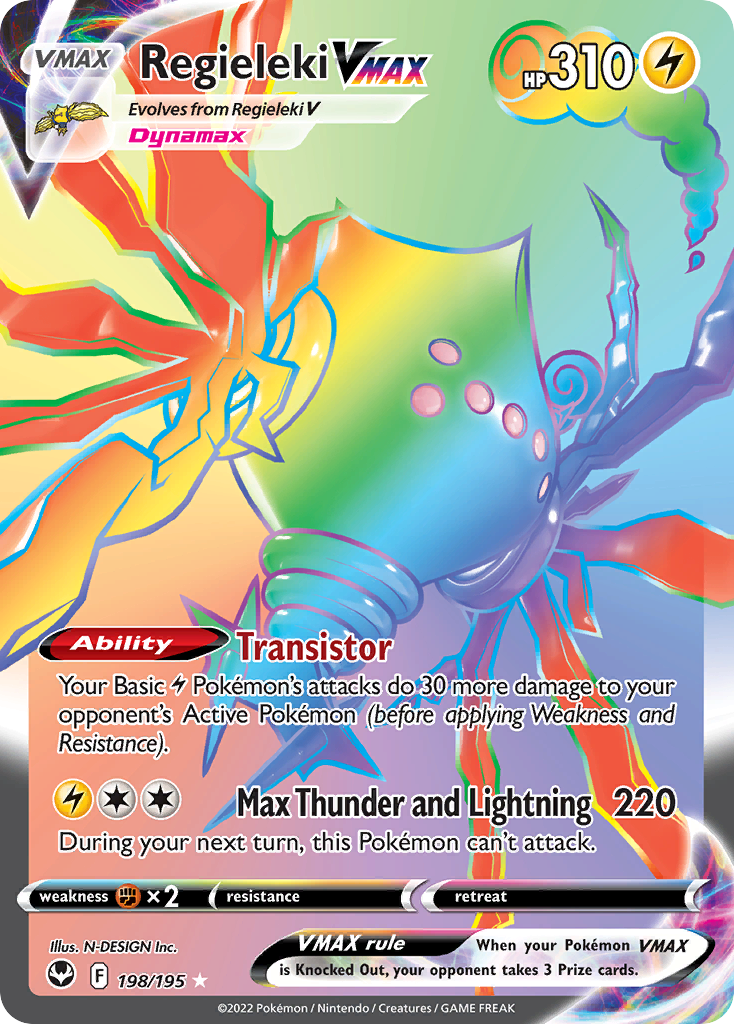
During your next turn, this Pokémon can’t attack.
| Supertype | Pokémon |
|---|---|
| Subtype | VMAX |
| HP | 310 |
| Types | Lightning |
| Attack | Max Thunder and Lightning |
| Attack cost | Lightning |
| Artist | N-DESIGN Inc. |
| Rarity | Rare Rainbow |
| Pokédex | 894 |
| Evolves from | Regieleki V |
Vendor Information
- Store Name: DutchGem
- Vendor: DutchGem
-
Address:
gekkestraat
179
2345GT Utrecht
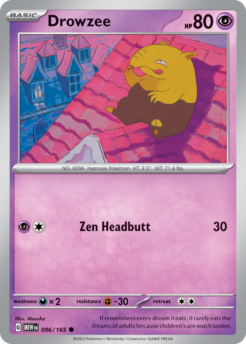
151
It remembers every dream it eats. It rarely eats the dreams of adults because children's are much tastier.
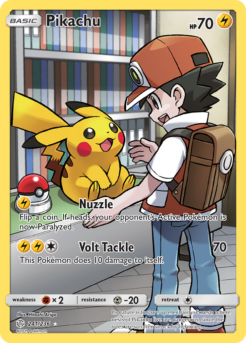
Cosmic Eclipse
Its nature is to store up electricity. Forests where nests of Pikachu live are dangerous, since the trees are so often struck by lightning.
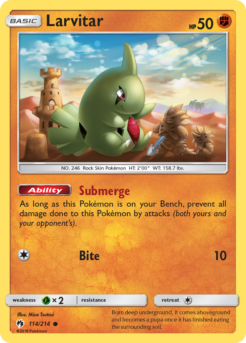
Lost Thunder
Born deep underground, it comes aboveground and becomes a pupa once it has finished eating the surrounding soil.

Cosmic Eclipse
They can't swim well yet, and they move much faster by rolling. When they're happy, they clap fins.
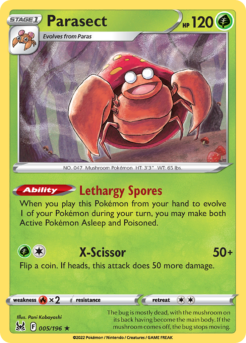
Lost Origin
The bug is mostly dead, with the mushroom on its back having become the main body. If the mushroom comes off, the bug stops moving.
Related products
Sword & Shield
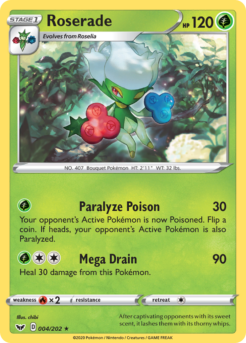
After captivating opponents with its sweet scent, it lashes them with its thorny whips.
Sword & Shield
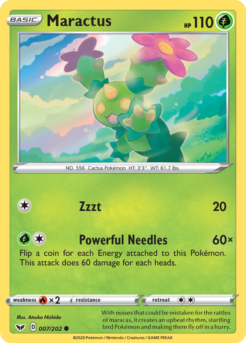
With noises that could be mistaken for the rattles of maracas, it creates an upbeat rhythm, startling bird Pokémon and making them fly off in a hurry.
Sword & Shield
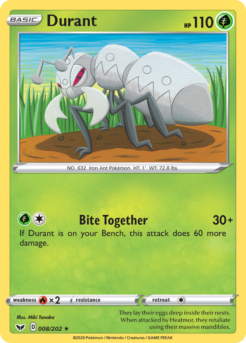
They lay their eggs deep inside their nests. When attacked by Heatmor, they retaliate using their massive mandibles.
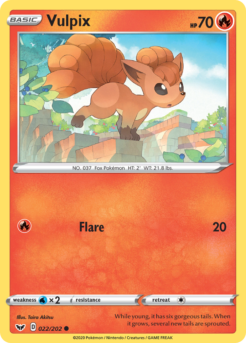
Sword & Shield
While young, it has six gorgeous tails. When it grows, several new tails are sprouted.
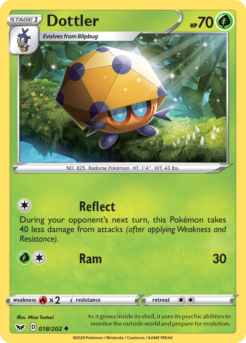
Sword & Shield
As it grows inside its shell, it uses its psychic abilities to monitor the outside world and prepare for evolution.
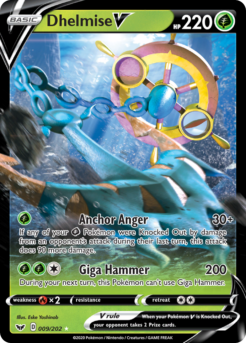
Sword & Shield
If any of your Grass Pokémon were Knocked Out by damage from an opponent’s attack during their last turn, this attack does 90 more damage.
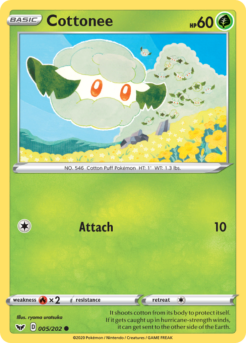
Sword & Shield
It shoots cotton from its body to protect itself. If it gets caught up in hurricane-strength winds, it can get sent to the other side of the Earth.
Sword & Shield
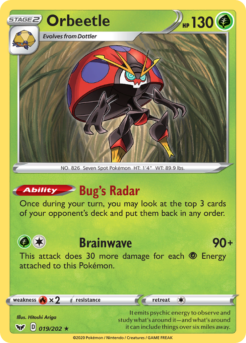
It emits psychic energy to observe and study what's around it—and what's around it can include things over six miles away.