



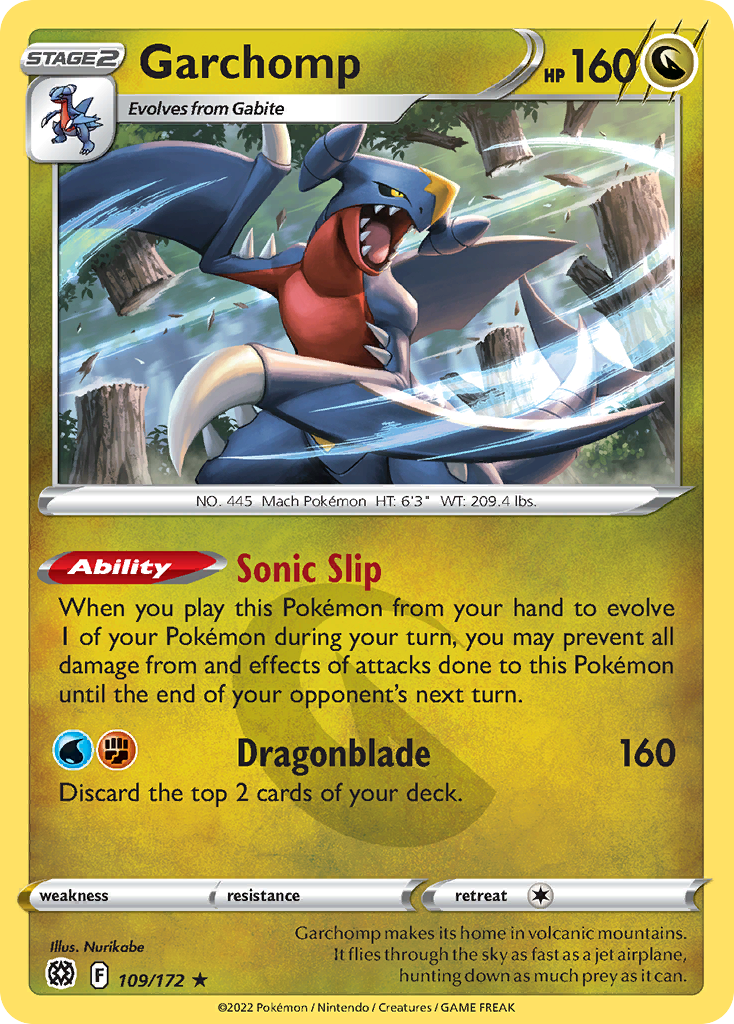
Garchomp
Garchomp makes its home in volcanic mountains. It flies through the sky as fast as a jet airplane, hunting down as much prey as it can.
Discard the top 2 cards of your deck.
| Supertype | Pokémon |
|---|---|
| Subtype | Stage 2 |
| HP | 160 |
| Types | Dragon |
| Attack | Dragonblade |
| Attack cost | Water |
| Artist | Nurikabe |
| Rarity | Rare Holo |
| Pokédex | 445 |
| Evolves from | Gabite |
Vendor Information
- Store Name: DutchGem
- Vendor: DutchGem
-
Address:
gekkestraat
179
2345GT Utrecht
Burning Shadows
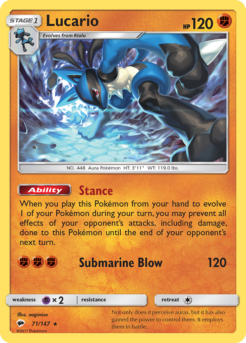
Not only does it perceive auras, but it has also gained the power to control them. It employs them in battle.

Sun & Moon
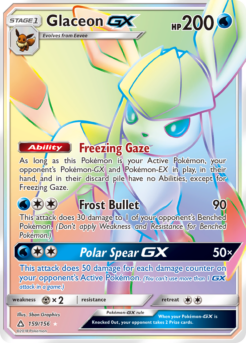
This attack does 30 damage to 1 of your opponent’s Benched Pokémon. (Don’t apply Weakness and Resistance for Benched Pokémon.)
Cosmic Eclipse
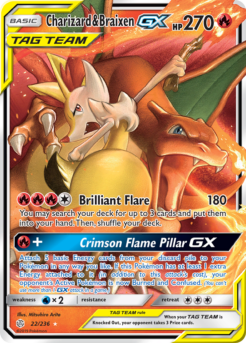
You may search your deck for up to 3 cards and put them into your hand. Then, shuffle your deck.
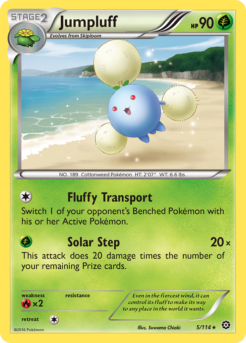
Steam Siege
Even in the fiercest wind, it can control its fluff to make its way to any place in the world it wants.
Podobne produkty
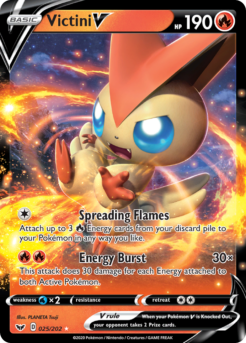
Sword & Shield
Attach up to 3 Fire Energy cards from your discard pile to your Pokémon in any way you like.
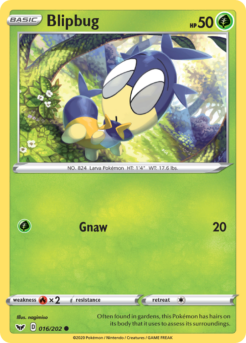
Sword & Shield
Often found in gardens, this Pokémon has hairs on its body that it uses to assess its surroundings.
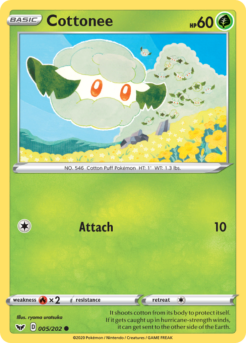
Sword & Shield
It shoots cotton from its body to protect itself. If it gets caught up in hurricane-strength winds, it can get sent to the other side of the Earth.
Sword & Shield
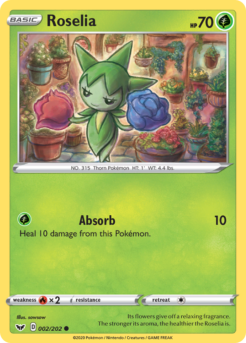
Its flowers give off a relaxing fragrance. The stronger its aroma, the healthier the Roselia is.
Sword & Shield
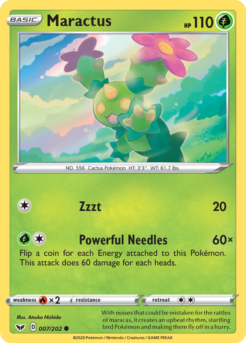
With noises that could be mistaken for the rattles of maracas, it creates an upbeat rhythm, startling bird Pokémon and making them fly off in a hurry.
Sword & Shield
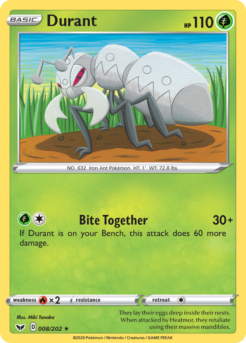
They lay their eggs deep inside their nests. When attacked by Heatmor, they retaliate using their massive mandibles.
Sword & Shield
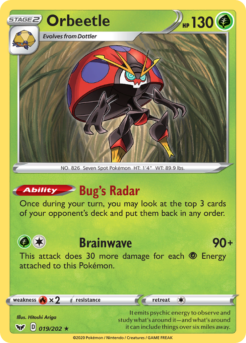
It emits psychic energy to observe and study what's around it—and what's around it can include things over six miles away.
Sword & Shield
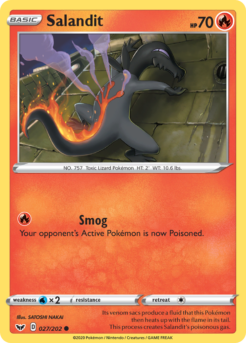
Its venom sacs produce a fluid that this Pokémon then heats up with the flame in its tail. This process creates Salandit's poisonous gas.