



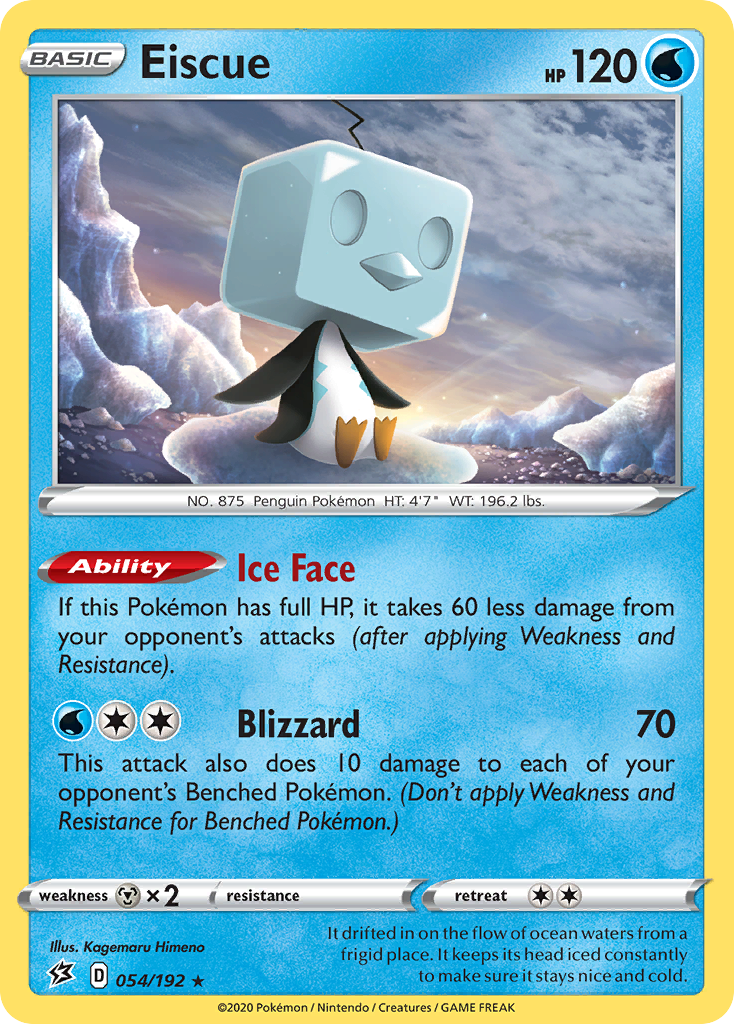
Eiscue
It drifted in on the flow of ocean waters from a frigid place. It keeps its head iced constantly to make sure it stays nice and cold.
This attack also does 10 damage to each of your opponent’s Benched Pokémon. (Don’t apply Weakness and Resistance for Benched Pokémon.)
| Supertype | Pokémon |
|---|---|
| Subtype | Basic |
| HP | 120 |
| Types | Water |
| Attack | Blizzard |
| Attack cost | Water |
| Artist | Kagemaru Himeno |
| Rarity | Rare Holo |
| Pokédex | 875 |
Vendor Information
- Store Name: DutchGem
- Vendor: DutchGem
-
Address:
gekkestraat
179
2345GT Utrecht
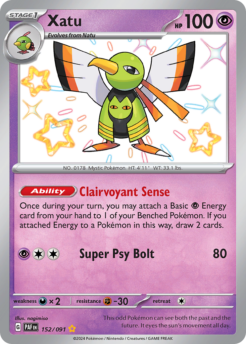
Paldean Fates
This odd Pokémon can see both the past and the future. It eyes the sun's movement all day.
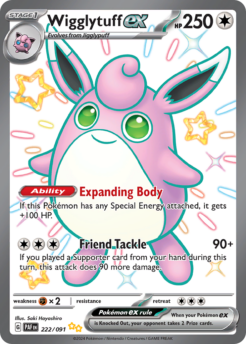
Paldean Fates
If you played a Supporter card from your hand during this turn, this attack does 90 more damage.
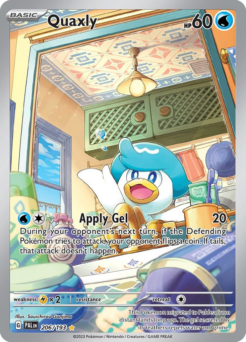
Paldea Evolved
This Pokémon migrated to Paldea from distant lands long ago. The gel secreted by its feathers repels water and grime.
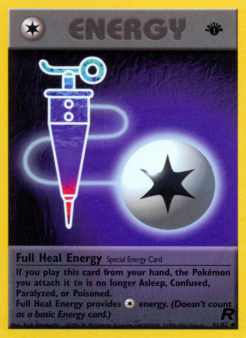
Sun & Moon
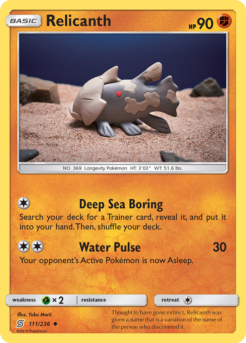
Thought to have gone extinct, Relicanth was given a name that is a variation of the name of the person who discovered it.
Podobne produkty

Sword & Shield
Search your deck for up to 2 Pokémon, reveal them, and put them into your hand. Then, shuffle your deck.
Sword & Shield
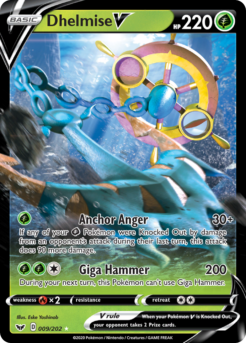
If any of your Grass Pokémon were Knocked Out by damage from an opponent’s attack during their last turn, this attack does 90 more damage.
Sword & Shield
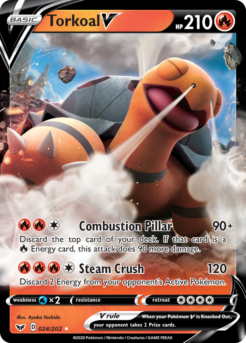
Discard the top card of your deck. If that card is a Fire Energy card, this attack does 90 more damage.
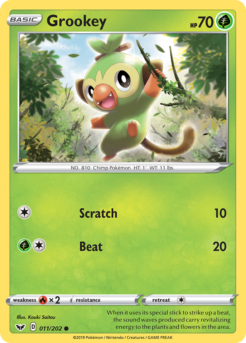
Sword & Shield
When it uses its special stick to strike up a beat, the sound waves produced carry revitalizing energy to the plants and flowers in the area.
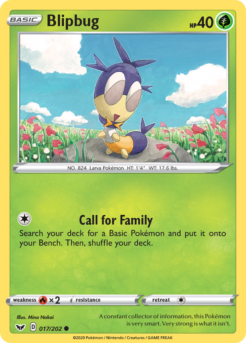
Sword & Shield
A constant collector of information, this Pokémon is very smart. Very strong is what it isn't.
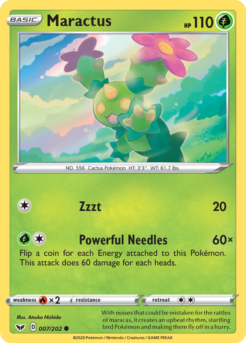
Sword & Shield
With noises that could be mistaken for the rattles of maracas, it creates an upbeat rhythm, startling bird Pokémon and making them fly off in a hurry.
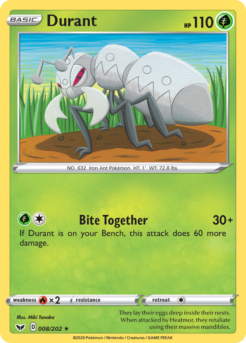
Sword & Shield
They lay their eggs deep inside their nests. When attacked by Heatmor, they retaliate using their massive mandibles.
Sword & Shield
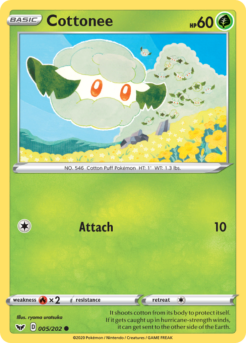
It shoots cotton from its body to protect itself. If it gets caught up in hurricane-strength winds, it can get sent to the other side of the Earth.