







Discard a Special Energy from your opponent’s Active Pokémon.
| Supertype | Pokémon |
|---|---|
| Subtype | Basic |
| HP | 230 |
| Types | Metal |
| Attack | Assault Tackle |
| Attack cost | Metal |
| Artist | aky CG Works |
| Rarity | Rare Ultra |
| Pokédex | 889 |
Vendor Information
- Store Name: DutchGem
- Vendor: DutchGem
-
Address:
gekkestraat
179
2345GT Utrecht

Obsidian Flames
It lives about one yard underground, where it feeds on plant roots. It sometimes appears aboveground.
Sun & Moon
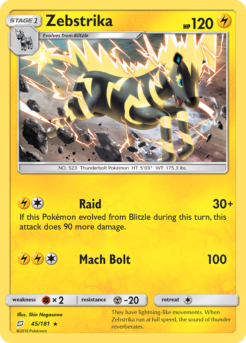
They have lightning-like movements. When Zebstrika run at full speed, the sound of thunder reverberates.
Base
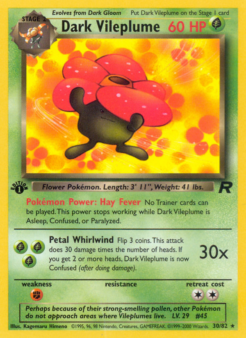
Perhaps because of their strong-smelling pollen, other Pokémon do not approach areas where Vileplumes live.
Cosmic Eclipse
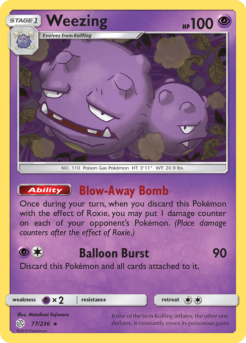
If one of the twin Koffing inflates, the other one deflates. It constantly mixes its poisonous gases.


Sun & Moon
If any of your Pokémon were Knocked Out by damage from an opponent’s attack during their last turn, this attack does 90 more damage.
Related products
Sword & Shield
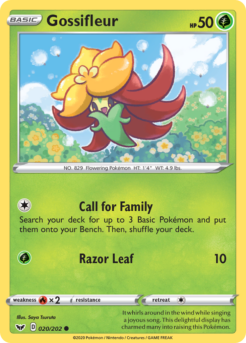
It whirls around in the wind while singing a joyous song. This delightful display has charmed many into raising this Pokémon.

Sword & Shield
When it uses its special stick to strike up a beat, the sound waves produced carry revitalizing energy to the plants and flowers in the area.
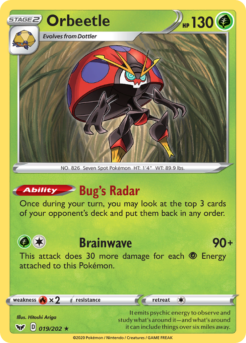
Sword & Shield
It emits psychic energy to observe and study what's around it—and what's around it can include things over six miles away.

Sword & Shield
If any of your Grass Pokémon were Knocked Out by damage from an opponent’s attack during their last turn, this attack does 90 more damage.
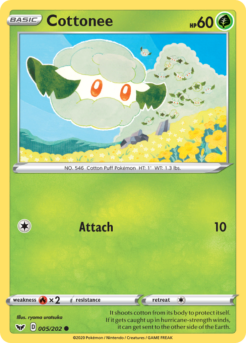
Sword & Shield
It shoots cotton from its body to protect itself. If it gets caught up in hurricane-strength winds, it can get sent to the other side of the Earth.
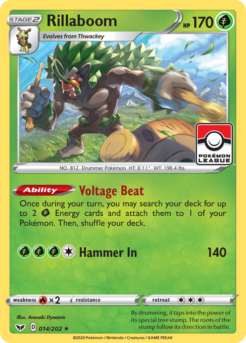
Sword & Shield
By drumming, it taps into the power of its special tree stump. The roots of the stump follow its direction in battle.
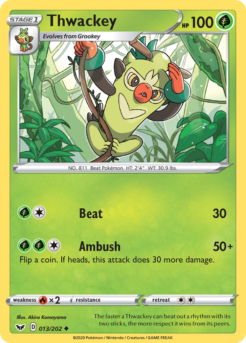
Sword & Shield
The faster a Thwackey can beat out a rhythm with its two sticks, the more respect it wins from its peers.
Sword & Shield
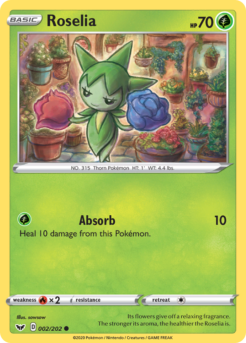
Its flowers give off a relaxing fragrance. The stronger its aroma, the healthier the Roselia is.