



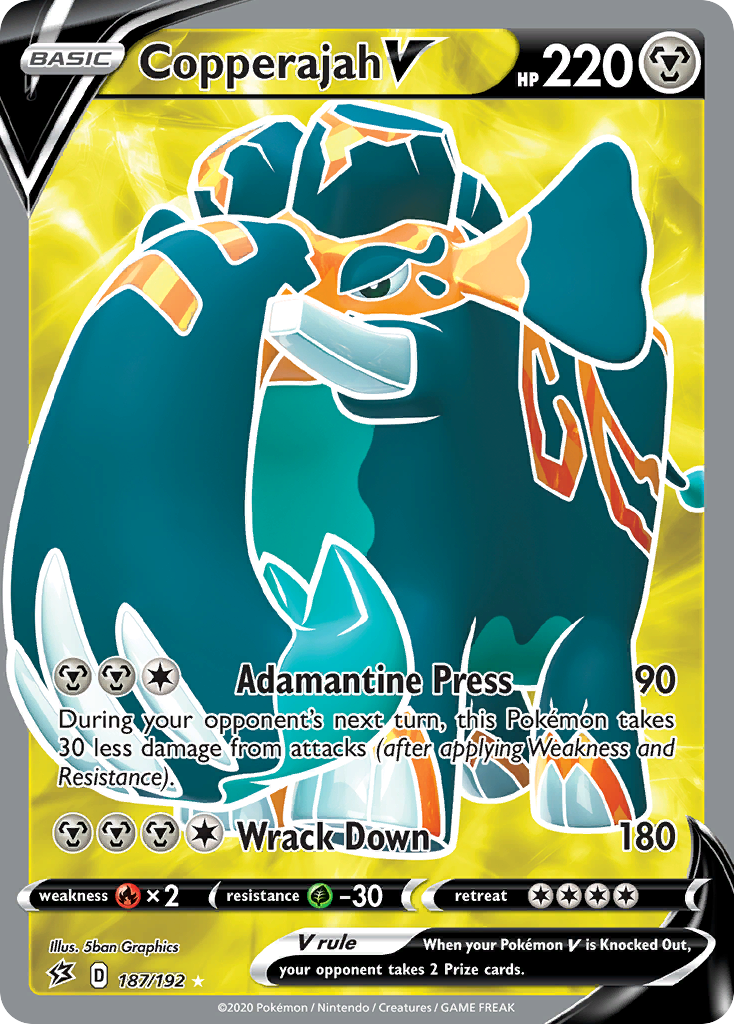
During your opponent’s next turn, this Pokémon takes 30 less damage from attacks (after applying Weakness and Resistance).
| Supertype | Pokémon |
|---|---|
| Subtype | Basic |
| HP | 220 |
| Types | Metal |
| Attack | Adamantine Press |
| Attack cost | Metal |
| Artist | 5ban Graphics |
| Rarity | Rare Ultra |
| Pokédex | 879 |
Vendor Information
- Store Name: DutchGem
- Vendor: DutchGem
-
Address:
gekkestraat
179
2345GT Utrecht
Scarlet & Violet
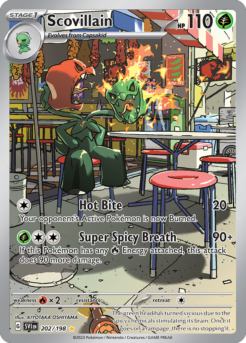
The green head has turned vicious due to the spicy chemicals stimulating its brain. Once it goes on a rampage, there is no stopping it.
Flashfire
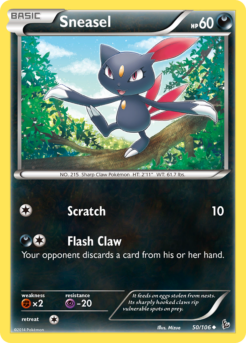
It feeds on eggs stolen from nests. Its sharply hooked claws rip vulnerable spots on prey.
Celestial Storm
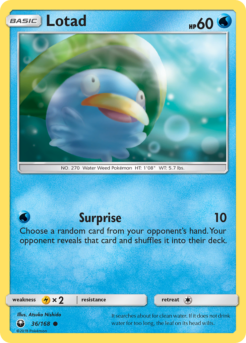
It searches about for clean water. If it does not drink water for too long, the leaf on its head wilts.
Fusion Strike
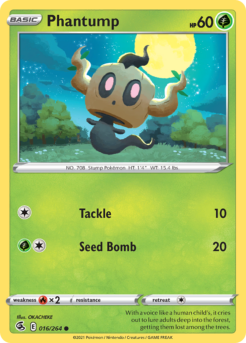
With a voice like a human child's, it cries out to lure adults deep into the forest, getting them lost among the trees.
BREAKpoint
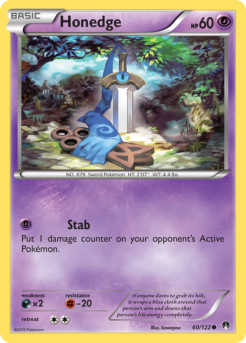
If anyone dares to grab its hilt, it wraps a blue cloth around that person's arm and drains that person's life energy completely.
Related products
Sword & Shield
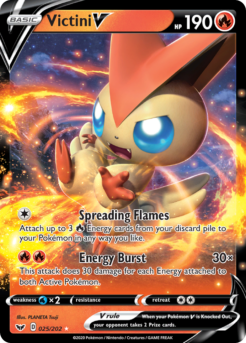
Attach up to 3 Fire Energy cards from your discard pile to your Pokémon in any way you like.
Sword & Shield
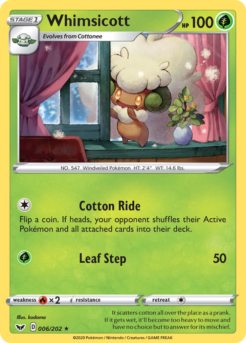
It scatters cotton all over the place as a prank. If it gets wet, it'll become too heavy to move and have no choice but to answer for its mischief.
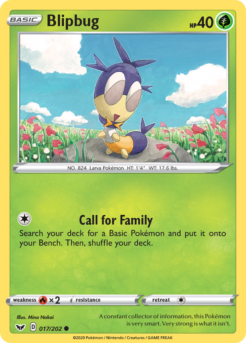
Sword & Shield
A constant collector of information, this Pokémon is very smart. Very strong is what it isn't.
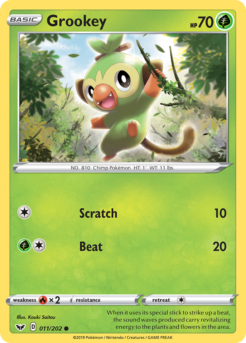
Sword & Shield
When it uses its special stick to strike up a beat, the sound waves produced carry revitalizing energy to the plants and flowers in the area.
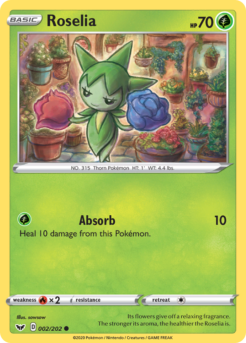
Sword & Shield
Its flowers give off a relaxing fragrance. The stronger its aroma, the healthier the Roselia is.
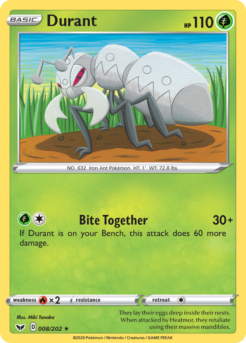
Sword & Shield
They lay their eggs deep inside their nests. When attacked by Heatmor, they retaliate using their massive mandibles.
Sword & Shield
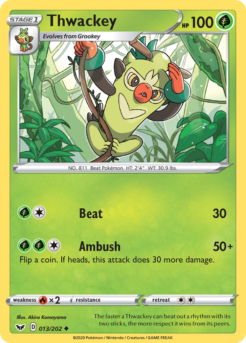
The faster a Thwackey can beat out a rhythm with its two sticks, the more respect it wins from its peers.
Sword & Shield
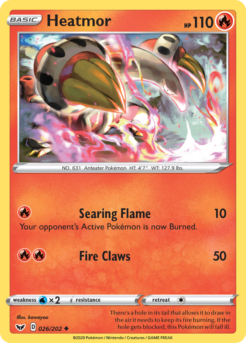
There's a hole in its tail that allows it to draw in the air it needs to keep its fire burning. If the hole gets blocked, this Pokémon will fall ill.