



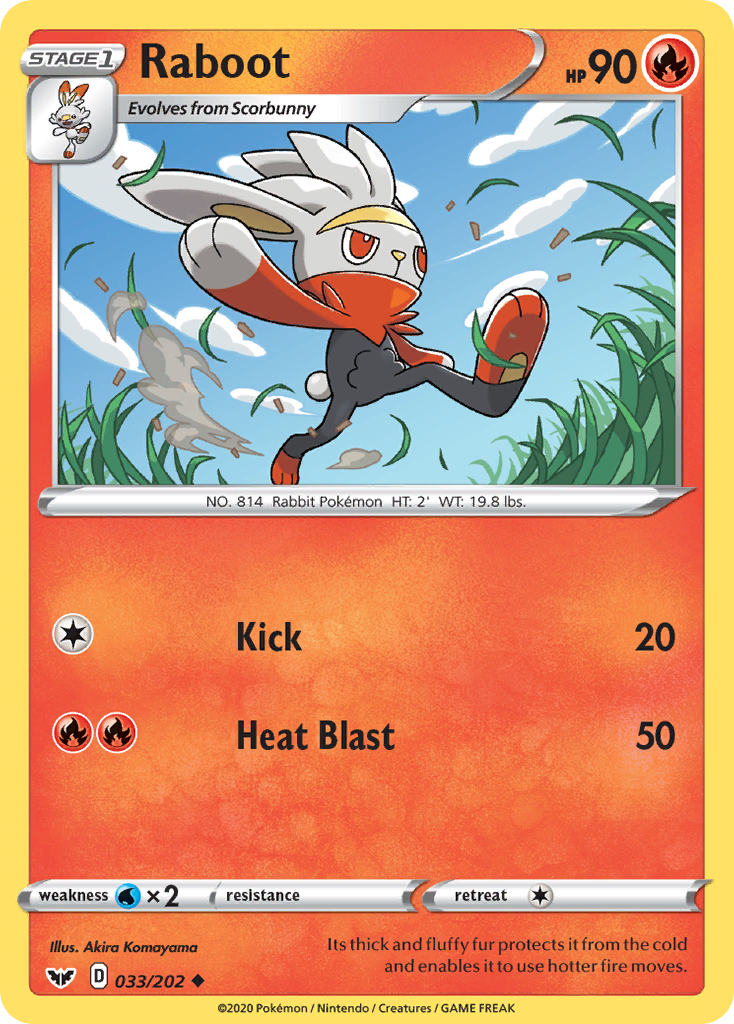
Raboot

Its thick and fluffy fur protects it from the cold and enables it to use hotter fire moves.
| Supertype | Pokémon |
|---|---|
| Subtype | Stage 1 |
| HP | 90 |
| Types | Fire |
| Attack | Kick |
| Attack cost | Colorless |
| Artist | Akira Komayama |
| Rarity | Uncommon |
| Pokédex | 814 |
| Evolves from | Scorbunny |
| Evolves to | Cinderace |
Informatie verkoper
- Shopnaam: DutchGem
- Verkoper DutchGem
-
Adres:
gekkestraat
179
2345GT Utrecht

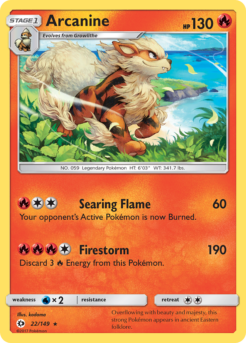
Sun & Moon
Overflowing with beauty and majesty, this strong Pokémon appears in ancient Eastern folklore.
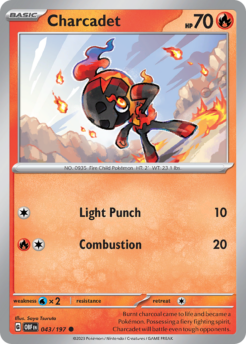
Obsidian Flames
Burnt charcoal came to life and became a Pokémon. Possessing a fiery fighting spirit, Charcadet will battle even tough opponents.
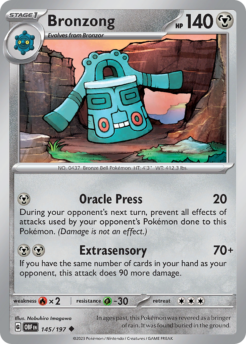
Obsidian Flames
In ages past, this Pokémon was revered as a bringer of rain. It was found buried in the ground.
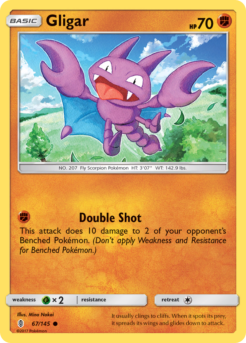
Guardians Rising
It usually clings to cliffs. When it spots its prey, it spreads its wings and glides down to attack.
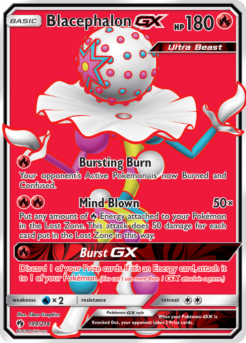
Gerelateerde producten
Sword & Shield
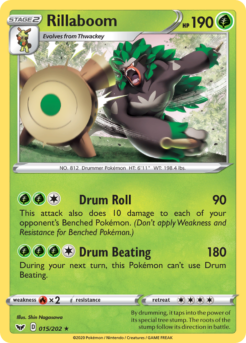
By drumming, it taps into the power of its special tree stump. The roots of the stump follow its direction in battle.
Sword & Shield
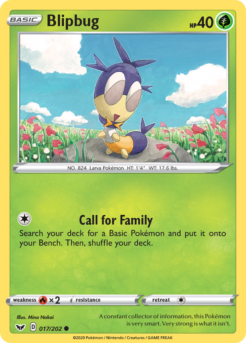
A constant collector of information, this Pokémon is very smart. Very strong is what it isn't.
Sword & Shield
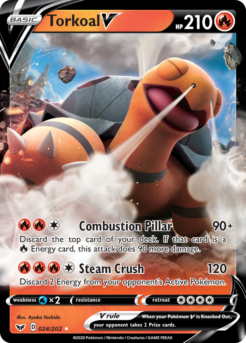
Discard the top card of your deck. If that card is a Fire Energy card, this attack does 90 more damage.
Sword & Shield
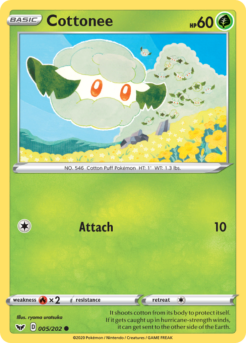
It shoots cotton from its body to protect itself. If it gets caught up in hurricane-strength winds, it can get sent to the other side of the Earth.
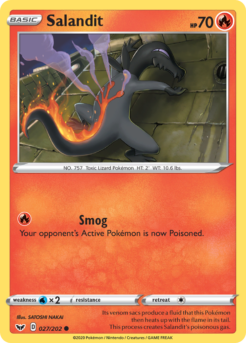
Sword & Shield
Its venom sacs produce a fluid that this Pokémon then heats up with the flame in its tail. This process creates Salandit's poisonous gas.
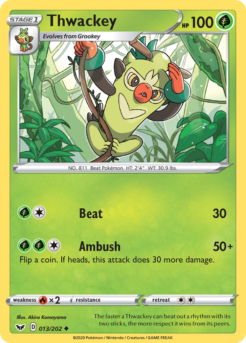
Sword & Shield
The faster a Thwackey can beat out a rhythm with its two sticks, the more respect it wins from its peers.
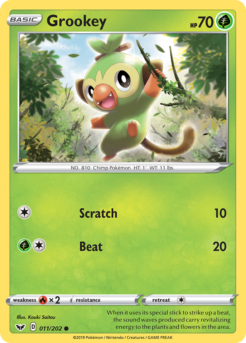
Sword & Shield
When it uses its special stick to strike up a beat, the sound waves produced carry revitalizing energy to the plants and flowers in the area.
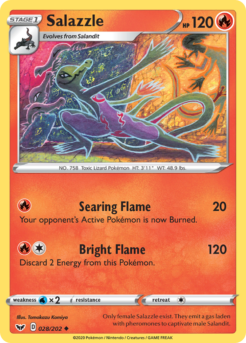
Sword & Shield
Only female Salazzle exist. They emit a gas laden with pheromones to captivate male Salandit.