



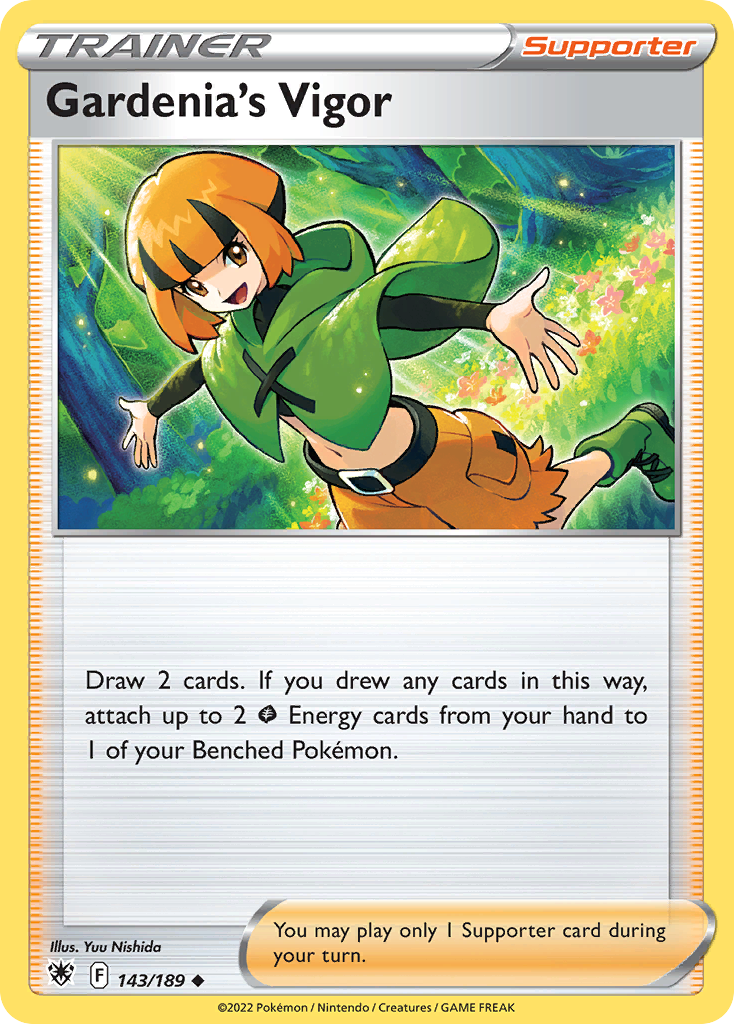
| Supertype | Trainer |
|---|---|
| Subtype | Supporter |
| Artist | Yuu Nishida |
| Rarity | Uncommon |
Informatie verkoper
- Shopnaam: DutchGem
- Verkoper DutchGem
-
Adres:
gekkestraat
179
2345GT Utrecht
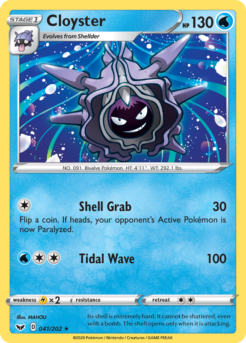
Sword & Shield
Its shell is extremely hard. It cannot be shattered, even with a bomb. The shell opens only when it is attacking.
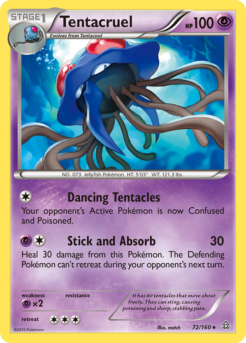
Primal Clash
It has 80 tentacles that move about freely. They can sting, causing poisoning and sharp, stabbing pain.
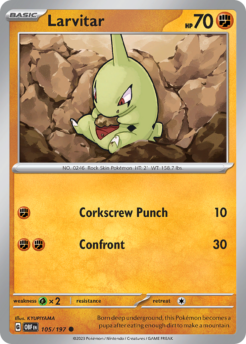
Obsidian Flames
Born deep underground, this Pokémon becomes a pupa after eating enough dirt to make a mountain.
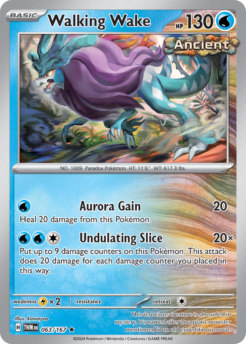
Scarlet & Violet
This ferocious creature is shrouded in mystery. It's named after an aquatic monster mentioned in an old expedition journal.
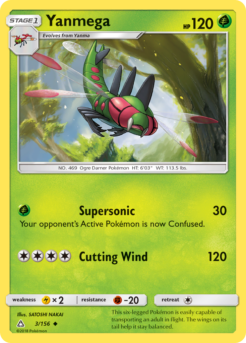
Sun & Moon
This six-legged Pokémon is easily capable of transporting an adult in flight. The wings on its tail help it stay balanced.
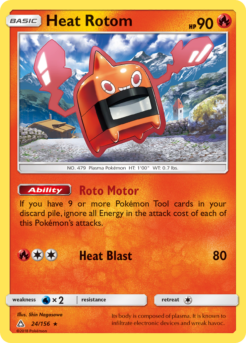
Sun & Moon
Its body is composed of plasma. It is known to infiltrate electronic devices and wreak havoc.
Gerelateerde producten
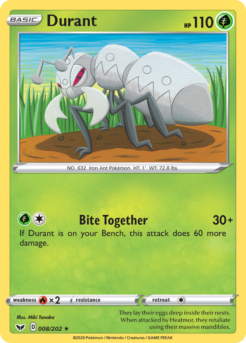
Sword & Shield
They lay their eggs deep inside their nests. When attacked by Heatmor, they retaliate using their massive mandibles.
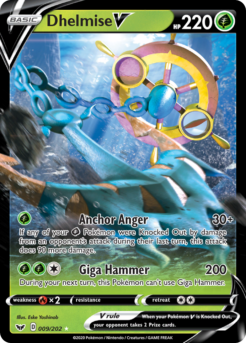
Sword & Shield
If any of your Grass Pokémon were Knocked Out by damage from an opponent’s attack during their last turn, this attack does 90 more damage.
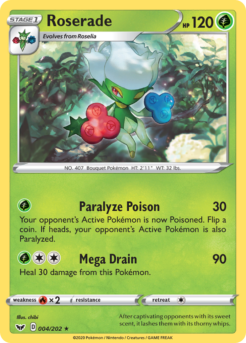
Sword & Shield
After captivating opponents with its sweet scent, it lashes them with its thorny whips.
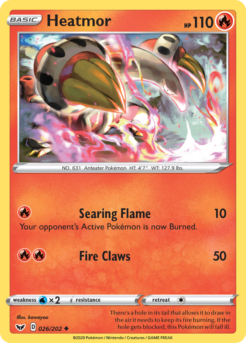
Sword & Shield
There's a hole in its tail that allows it to draw in the air it needs to keep its fire burning. If the hole gets blocked, this Pokémon will fall ill.
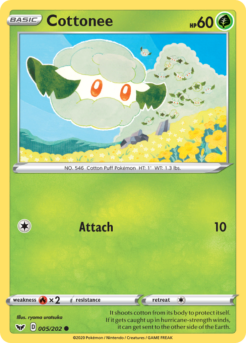
Sword & Shield
It shoots cotton from its body to protect itself. If it gets caught up in hurricane-strength winds, it can get sent to the other side of the Earth.
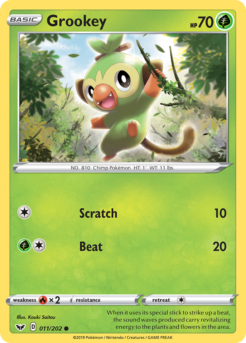
Sword & Shield
When it uses its special stick to strike up a beat, the sound waves produced carry revitalizing energy to the plants and flowers in the area.
Sword & Shield
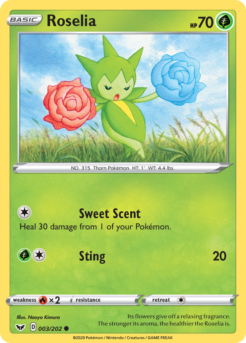
Its flowers give off a relaxing fragrance. The stronger its aroma, the healthier the Roselia is.
Sword & Shield
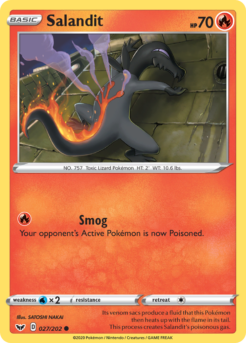
Its venom sacs produce a fluid that this Pokémon then heats up with the flame in its tail. This process creates Salandit's poisonous gas.