



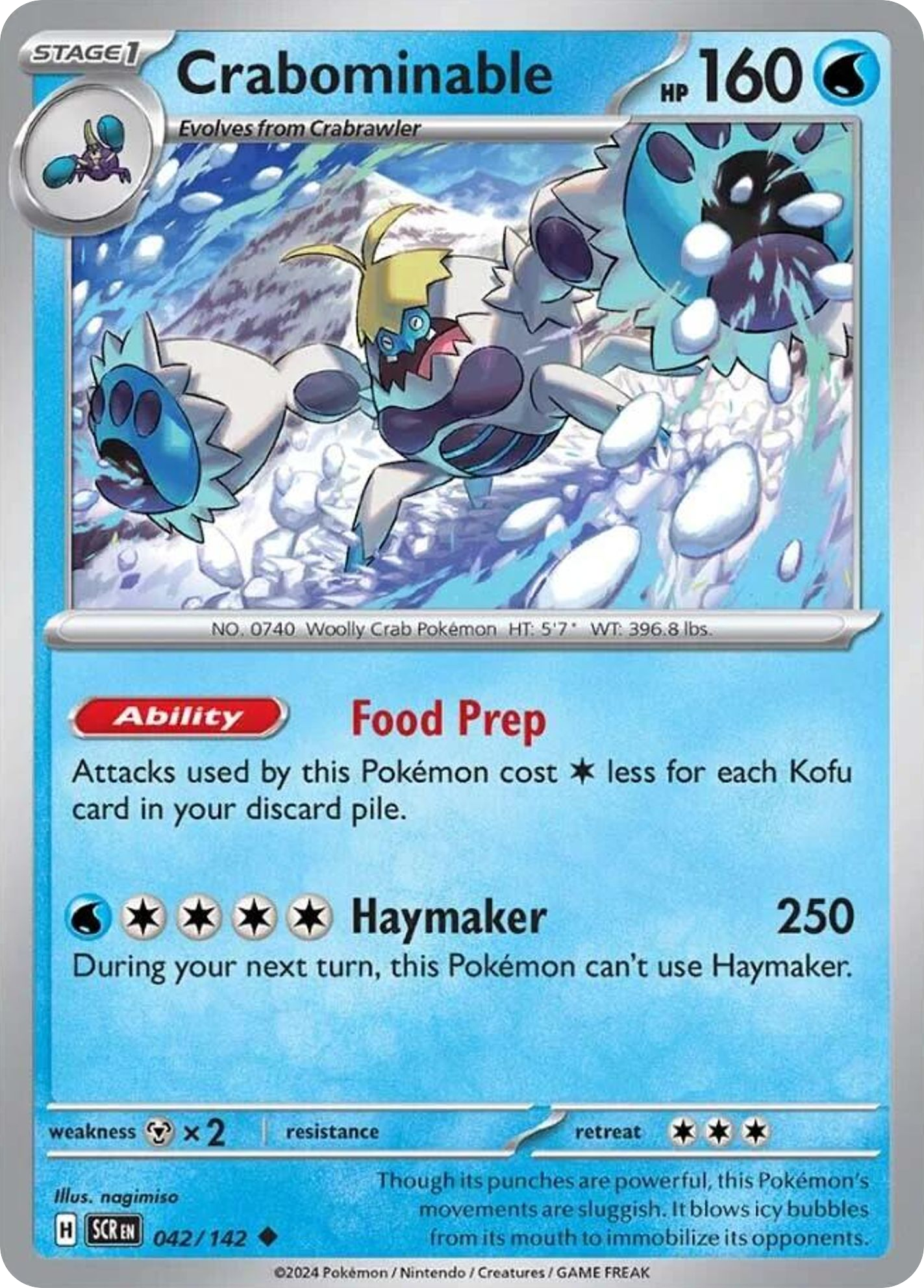
During your next turn, this Pokémon can’t use Haymaker.
| Supertype | Pokémon |
|---|---|
| Subtype | Stage 1 |
| HP | 160 |
| Types | Water |
| Attack | Haymaker |
| Attack cost | Water |
| Rarity | Uncommon |
| Pokédex | 740 |
| Evolves from | Crabrawler |
Informatie verkoper
- Shopnaam: DutchGem
- Verkoper DutchGem
-
Adres:
gekkestraat
179
2345GT Utrecht
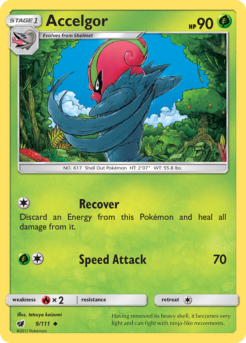
Crimson Invasion
Having removed its heavy shell, it becomes very light and can fight with ninja-like movements.

Base
A scientist created this Pokémon after years of horrific gene-splicing and DNA engineering experiments.
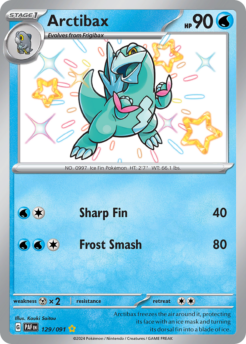
Paldean Fates
Arctibax freezes the air around it, protecting its face with an ice mask and turning its dorsal fin into a blade of ice.
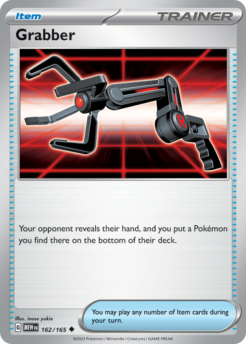
Lost Origin
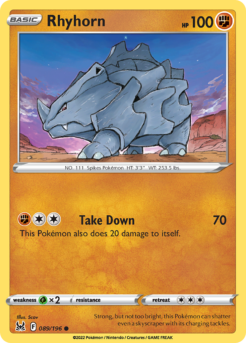
Strong, but not too bright, this Pokémon can shatter even a skyscraper with its charging tackles.
Gerelateerde producten
Scarlet & Violet
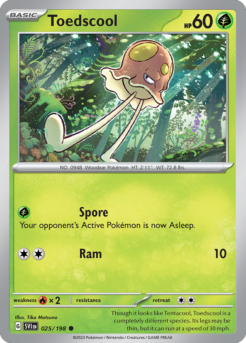
Though it looks like Tentacool, Toedscool is a completely different species. Its legs may be thin, but it can run at a speed of 30 mph.
Scarlet & Violet
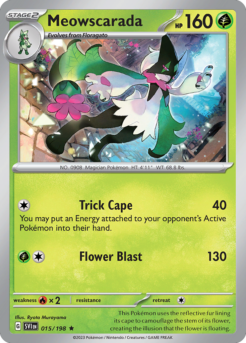
This Pokémon uses the reflective fur lining its cape to camouflage the stem of its flower, creating the illusion that the flower is floating.
Scarlet & Violet
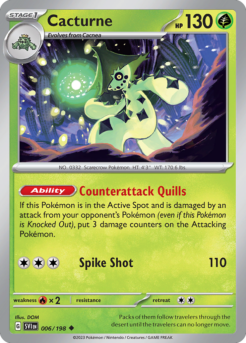
Packs of them follow travelers through the desert until the travelers can no longer move.
Scarlet & Violet
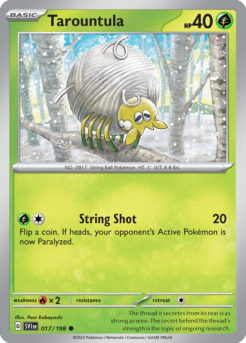
The thread it secretes from its rear is as strong as wire. The secret behind the thread's strength is the topic of ongoing research.
Scarlet & Violet
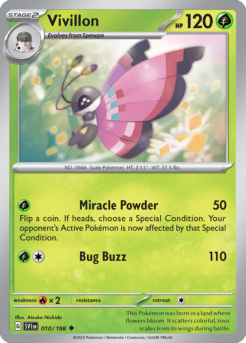
This Pokémon was born in a land where flowers bloom. It scatters colorful, toxic scales from its wings during battle.
Scarlet & Violet
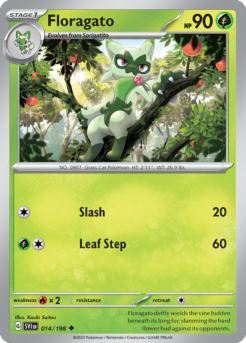
Floragato deftly wields the vine hidden beneath its long fur, slamming the hard flower bud against its opponents.
Scarlet & Violet
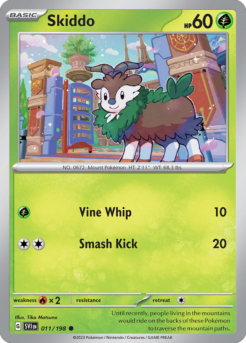
Until recently, people living in the mountains would ride on the back of these Pokémon to traverse the mountain paths.
Scarlet & Violet
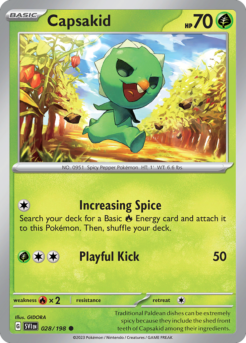
Traditional Paldean dishes can be extremely spicy because they include the shed front teeth of Capsakid among their ingredients.