





This attack does 40 more damage for each Fire Energy attached to this Pokémon. If you did any damage with this attack, you may attach a Fire Energy card from your discard pile to this Pokémon.
| Supertype | Pokémon |
|---|---|
| Subtype | VMAX |
| HP | 320 |
| Types | Fire |
| Attack | G-Max Centiferno |
| Attack cost | Colorless |
| Artist | 5ban Graphics |
| Rarity | Rare Holo VMAX |
| Pokédex | 851 |
| Evolves from | Centiskorch V |
Informatie verkoper
- Shopnaam: DutchGem
- Verkoper DutchGem
-
Adres:
gekkestraat
179
2345GT Utrecht
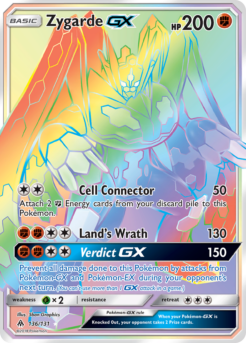

Evolving Skies
Your opponent’s Active Pokémon is now Poisoned. During your opponent’s next turn, that Pokémon can’t retreat.
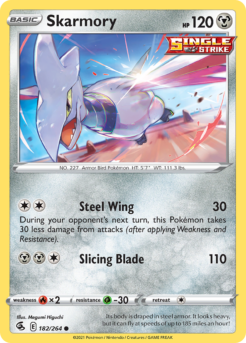
Fusion Strike
Its body is draped in steel armor. It looks heavy, but it can fly at speeds of up to 185 miles an hour!
Battle Styles
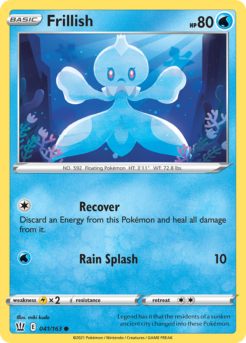
Legend has it that the residents of a sunken ancient city changed into these Pokémon.
Lost Thunder
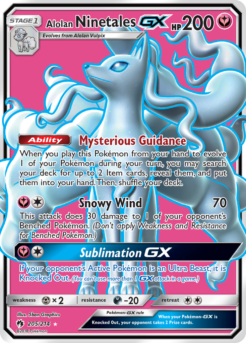
This attack does 30 damage to 1 of your opponent’s Benched Pokémon. (Don’t apply Weakness and Resistance for Benched Pokémon.)
Gerelateerde producten
Sword & Shield
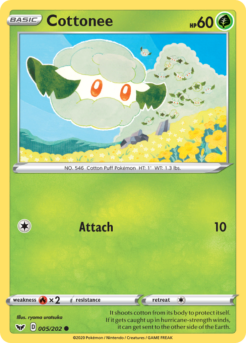
It shoots cotton from its body to protect itself. If it gets caught up in hurricane-strength winds, it can get sent to the other side of the Earth.
Sword & Shield
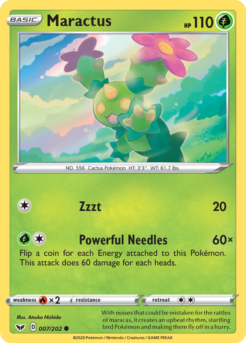
With noises that could be mistaken for the rattles of maracas, it creates an upbeat rhythm, startling bird Pokémon and making them fly off in a hurry.
Sword & Shield
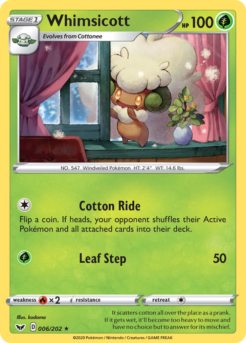
It scatters cotton all over the place as a prank. If it gets wet, it'll become too heavy to move and have no choice but to answer for its mischief.
Sword & Shield
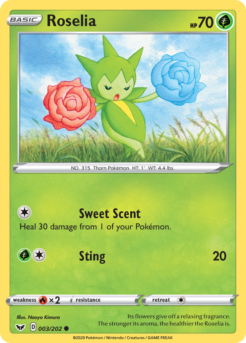
Its flowers give off a relaxing fragrance. The stronger its aroma, the healthier the Roselia is.
Sword & Shield
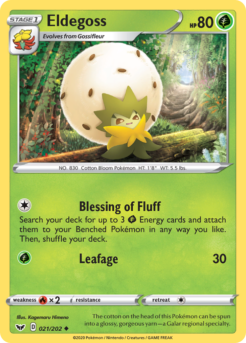
The cotton on the head of this Pokémon can be spun into a glossy, gorgeous yarn—a Galar regional specialty.
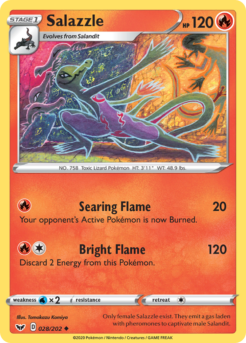
Sword & Shield
Only female Salazzle exist. They emit a gas laden with pheromones to captivate male Salandit.
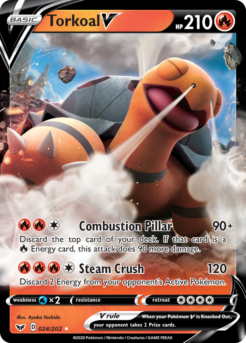
Sword & Shield
Discard the top card of your deck. If that card is a Fire Energy card, this attack does 90 more damage.
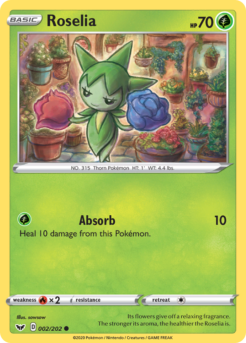
Sword & Shield
Its flowers give off a relaxing fragrance. The stronger its aroma, the healthier the Roselia is.