



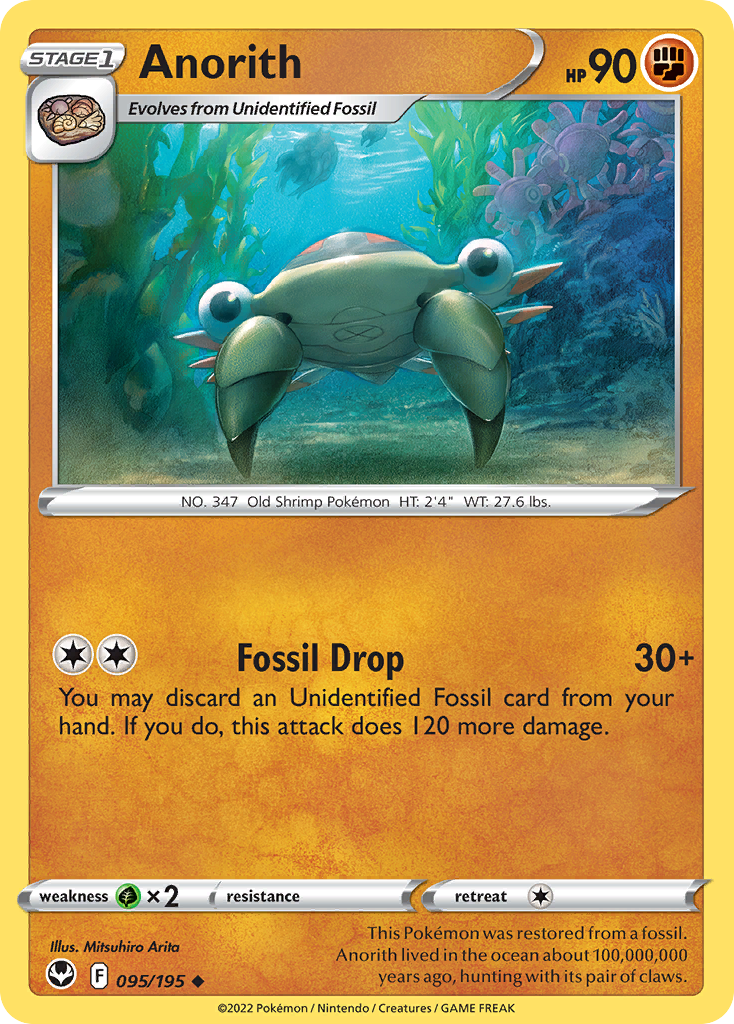
Anorith
This Pokémon was restored from a fossil. Anorith lived in the ocean about 100,000,000 years ago, hunting with its pair of claws.
You may discard an Unidentified Fossil card from your hand. If you do, this attack does 120 more damage.
| Supertype | Pokémon |
|---|---|
| Subtype | Stage 1 |
| HP | 90 |
| Types | Fighting |
| Attack | Fossil Drop |
| Attack cost | Colorless |
| Artist | Mitsuhiro Arita |
| Rarity | Uncommon |
| Pokédex | 347 |
| Evolves from | Unidentified Fossil |
| Evolves to | Armaldo |
Informatie verkoper
- Shopnaam: DutchGem
- Verkoper DutchGem
-
Adres:
gekkestraat
179
2345GT Utrecht
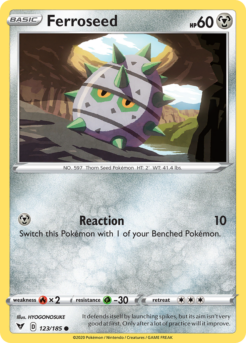
Sword & Shield
It defends itself by launching spikes, but its aim isn't very good at first. Only after a lot of practice will it improve.
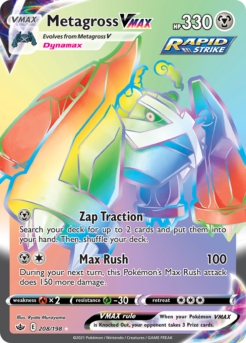
Chilling Reign
Search your deck for up to 2 cards and put them into your hand. Then, shuffle your deck.
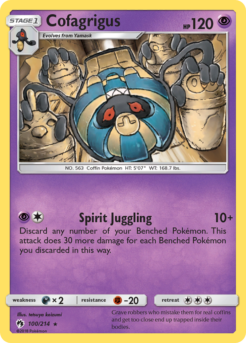
Lost Thunder
Grave robbers who mistake them for real coffins and get too close end up trapped inside their bodies.
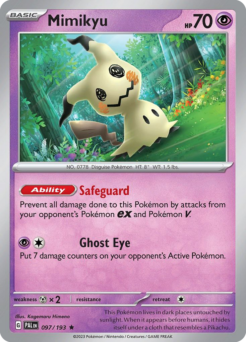
Paldea Evolved
This Pokémon lives in dark places untouched by sunlight. When it appears before humans, it hides itself under a cloth that resembles a Pikachu.
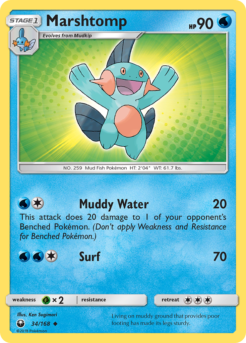
Celestial Storm
Living on muddy ground that provides poor footing has made its legs sturdy.
Gerelateerde producten
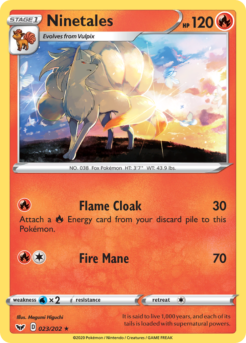
Sword & Shield
It is said to live 1,000 years, and each of its tails is loaded with supernatural powers.
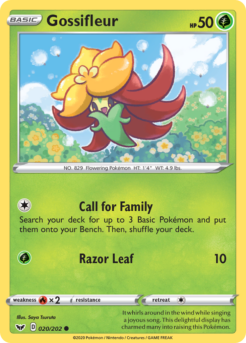
Sword & Shield
It whirls around in the wind while singing a joyous song. This delightful display has charmed many into raising this Pokémon.
Sword & Shield
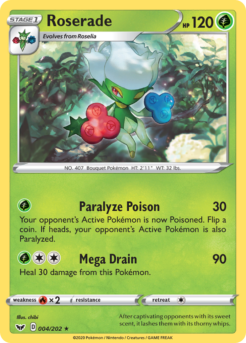
After captivating opponents with its sweet scent, it lashes them with its thorny whips.
Sword & Shield
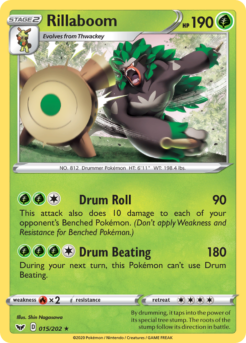
By drumming, it taps into the power of its special tree stump. The roots of the stump follow its direction in battle.
Sword & Shield
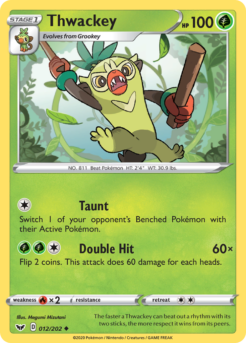
The faster a Thwackey can beat out a rhythm with its two sticks, the more respect it wins from its peers.

Sword & Shield
Discard the top card of your deck. If that card is a Fire Energy card, this attack does 90 more damage.
Sword & Shield
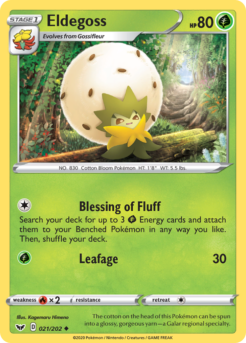
The cotton on the head of this Pokémon can be spun into a glossy, gorgeous yarn—a Galar regional specialty.
Sword & Shield
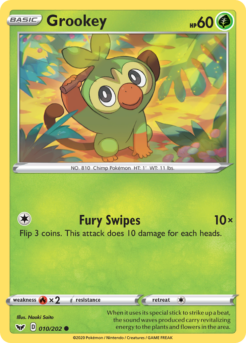
When it uses its special stick to strike up a beat, the sound waves produced carry revitalizing energy to the plants and flowers in the area.