



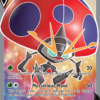
During your opponent's next turn, the Defending Pokémon can't retreat.
| Supertype | Pokémon |
|---|---|
| Subtype | Basic |
| HP | 210 |
| Types | Grass |
| Attack | Bind Down |
| Attack cost | Colorless |
| Artist | PLANETA Igarashi |
| Rarity | Rare Ultra |
| Pokédex | 893 |
Vendor Information
- Store Name: DutchGem
- Vendor: DutchGem
-
Address:
gekkestraat
179
2345GT Utrecht
Sun & Moon
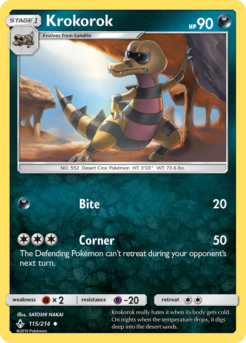
Krokorok really hates it when its body gets cold. On nights when the temperature drops, it digs deep into the desert sands.
Fates Collide
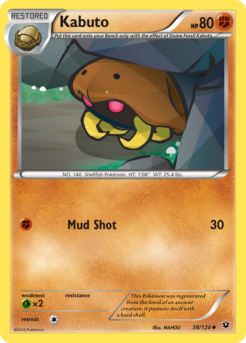
This Pokémon was regenerated from the fossil of an ancient creature. It protects itself with a hard shell.
Astral Radiance
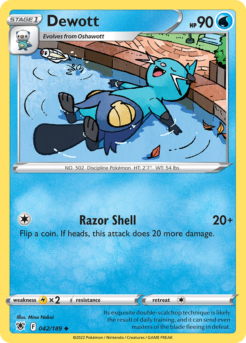
Its exquisite double-scalchop technique is likely the result of daily training, and it can send even masters of the blade fleeing in defeat.
מוצרים קשורים
Sword & Shield
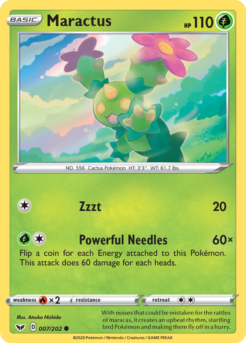
With noises that could be mistaken for the rattles of maracas, it creates an upbeat rhythm, startling bird Pokémon and making them fly off in a hurry.
Sword & Shield
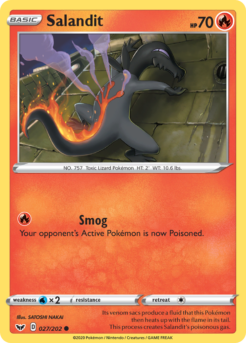
Its venom sacs produce a fluid that this Pokémon then heats up with the flame in its tail. This process creates Salandit's poisonous gas.
Sword & Shield
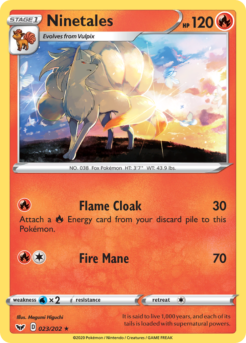
It is said to live 1,000 years, and each of its tails is loaded with supernatural powers.
Sword & Shield
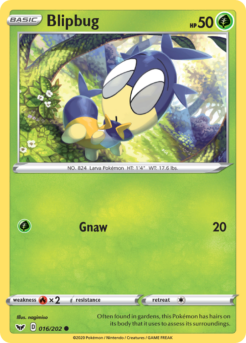
Often found in gardens, this Pokémon has hairs on its body that it uses to assess its surroundings.
Sword & Shield
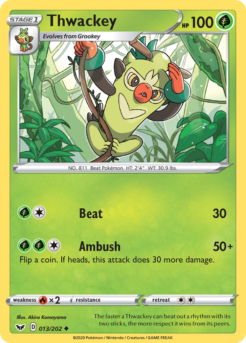
The faster a Thwackey can beat out a rhythm with its two sticks, the more respect it wins from its peers.
Sword & Shield
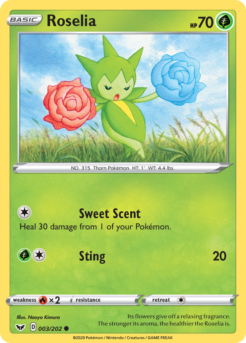
Its flowers give off a relaxing fragrance. The stronger its aroma, the healthier the Roselia is.
Sword & Shield
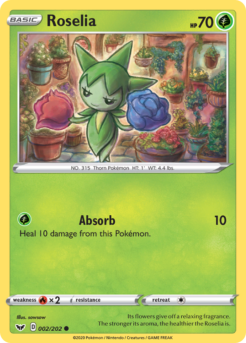
Its flowers give off a relaxing fragrance. The stronger its aroma, the healthier the Roselia is.
Sword & Shield
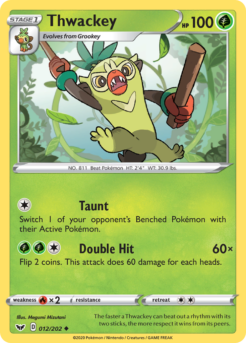
The faster a Thwackey can beat out a rhythm with its two sticks, the more respect it wins from its peers.