



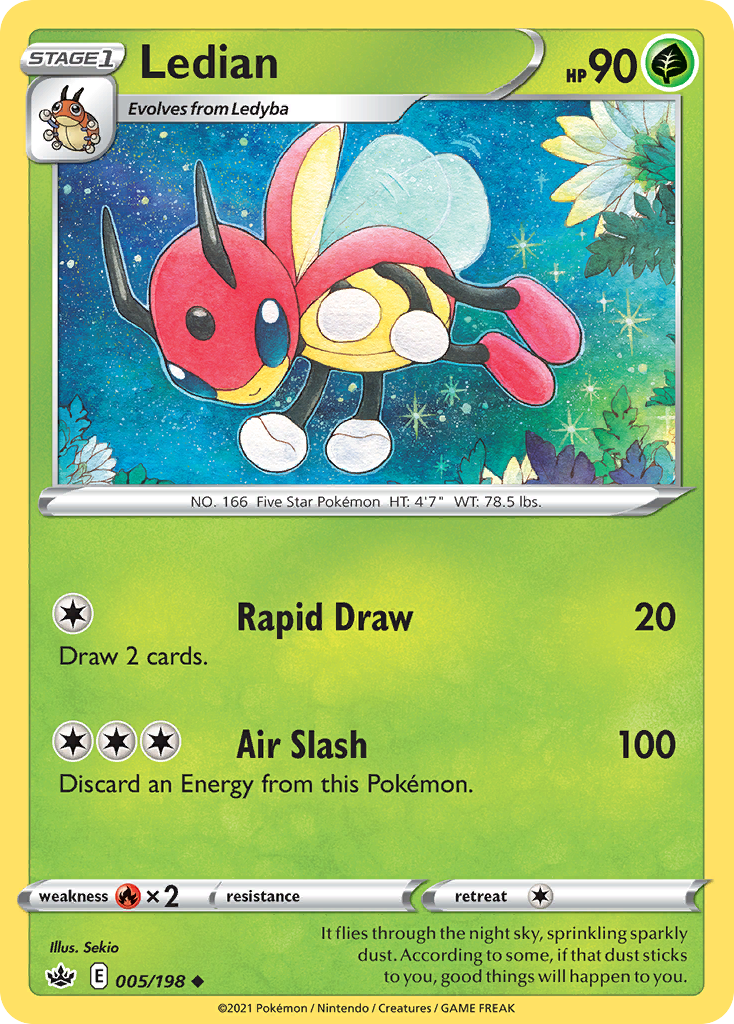
Ledian
It flies through the night sky, sprinkling sparkly dust. According to some, if that dust sticks to you, good things will happen to you.
Draw 2 cards.
| Supertype | Pokémon |
|---|---|
| Subtype | Stage 1 |
| HP | 90 |
| Types | Grass |
| Attack | Rapid Draw |
| Attack cost | Colorless |
| Artist | Sekio |
| Rarity | Uncommon |
| Pokédex | 166 |
| Evolves from | Ledyba |
Vendor Information
- Store Name: DutchGem
- Vendor: DutchGem
-
Address:
gekkestraat
179
2345GT Utrecht
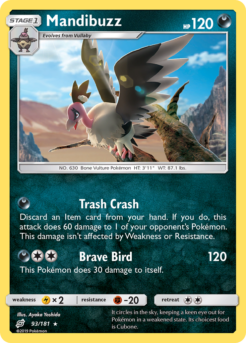
Sun & Moon
It circles in the sky, keeping a keen eye out for Pokémon in a weakened state. Its choicest food is Cubone.
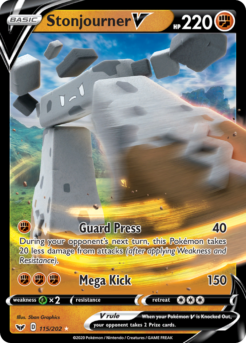
Sword & Shield
During your opponent's next turn, this Pokémon takes 20 less damage from attacks (after applying Weakness and Resistance).
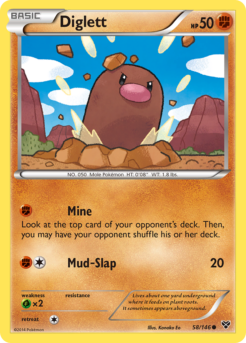
XY
Lives about one yard underground where it feeds on plant roots. It sometimes appears aboveground.
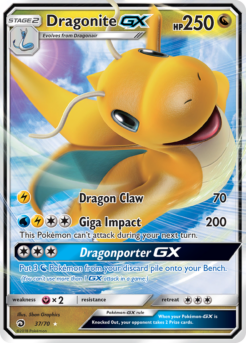
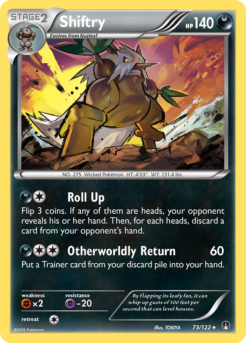
BREAKpoint
By flapping its leafy fan, it can whip up gusts of 100 feet per second that can level houses.
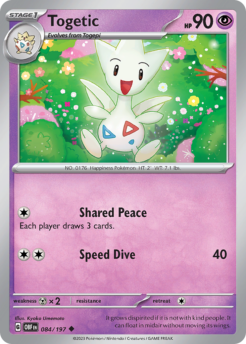
Obsidian Flames
It grows dispirited if it is not with kind people. It can float in midair without moving its wings.
מוצרים קשורים
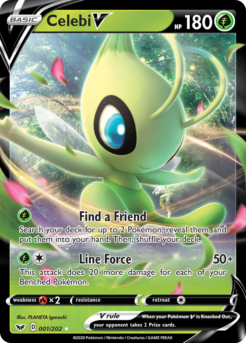
Sword & Shield
Search your deck for up to 2 Pokémon, reveal them, and put them into your hand. Then, shuffle your deck.
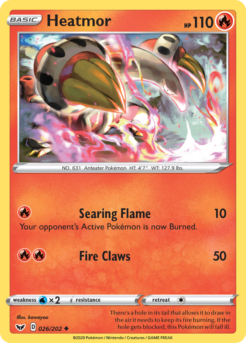
Sword & Shield
There's a hole in its tail that allows it to draw in the air it needs to keep its fire burning. If the hole gets blocked, this Pokémon will fall ill.
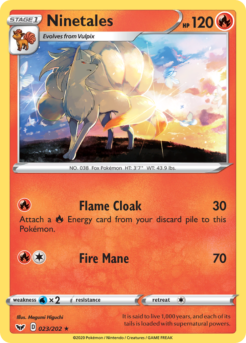
Sword & Shield
It is said to live 1,000 years, and each of its tails is loaded with supernatural powers.
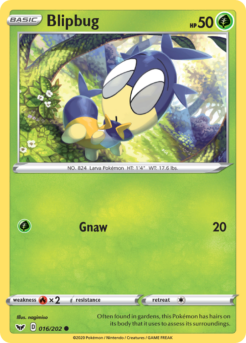
Sword & Shield
Often found in gardens, this Pokémon has hairs on its body that it uses to assess its surroundings.
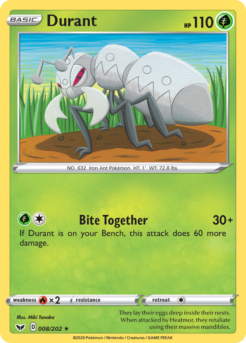
Sword & Shield
They lay their eggs deep inside their nests. When attacked by Heatmor, they retaliate using their massive mandibles.
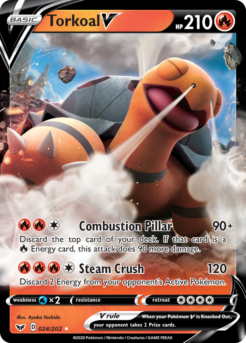
Sword & Shield
Discard the top card of your deck. If that card is a Fire Energy card, this attack does 90 more damage.
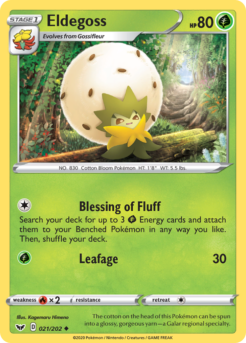
Sword & Shield
The cotton on the head of this Pokémon can be spun into a glossy, gorgeous yarn—a Galar regional specialty.
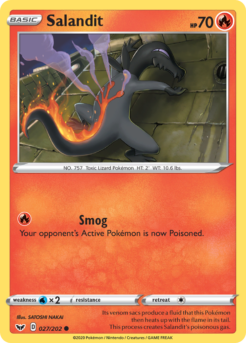
Sword & Shield
Its venom sacs produce a fluid that this Pokémon then heats up with the flame in its tail. This process creates Salandit's poisonous gas.