



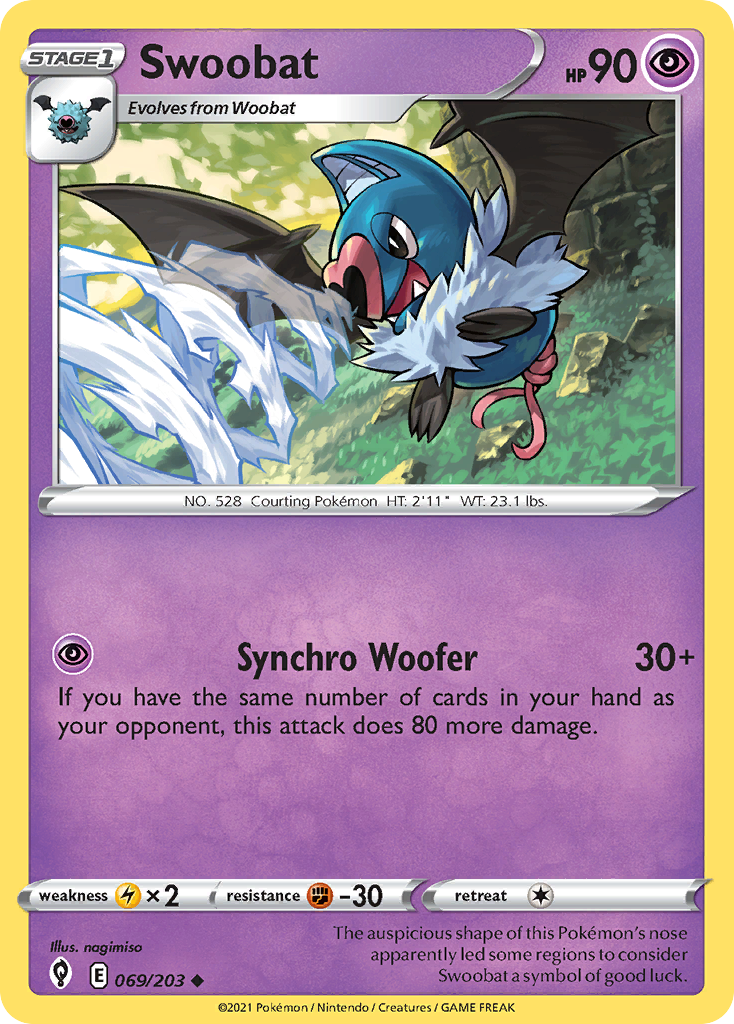
Swoobat
The auspicious shape of this Pokémon’s nose apparently led some regions to consider Swoobat a symbol of good luck.
If you have the same number of cards in your hand as your opponent, this attack does 80 more damage.
| Supertype | Pokémon |
|---|---|
| Subtype | Stage 1 |
| HP | 90 |
| Types | Psychic |
| Attack | Synchro Woofer |
| Attack cost | Psychic |
| Artist | nagimiso |
| Rarity | Uncommon |
| Pokédex | 528 |
| Evolves from | Woobat |
Vendor Information
- Store Name: DutchGem
- Vendor: DutchGem
-
Address:
gekkestraat
179
2345GT Utrecht
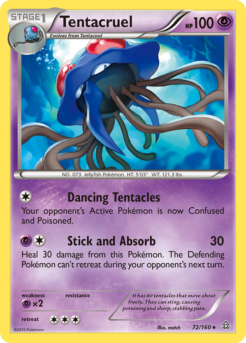
Primal Clash
It has 80 tentacles that move about freely. They can sting, causing poisoning and sharp, stabbing pain.
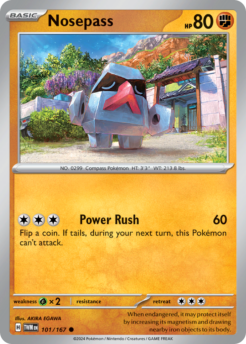
Scarlet & Violet
When endangered, it may protect itself by increasing its magnetism and drawing nearby iron objects to its body.
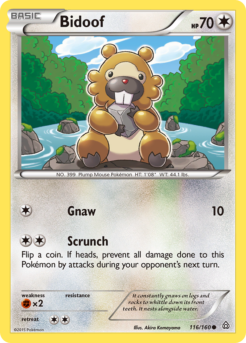
Primal Clash
It constantly gnaws on logs and rocks to whittle down its front teeth. It nests alongside water.
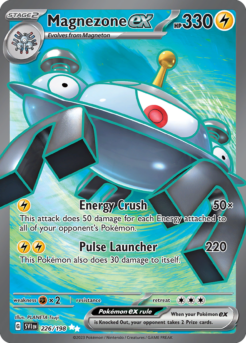
Scarlet & Violet
This attack does 50 damage for each Energy attached to all of your opponent’s Pokémon.
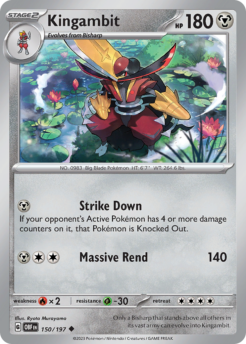
Obsidian Flames
Only a Bisharp that stands above all others in its vast army can evolve into Kingambit.
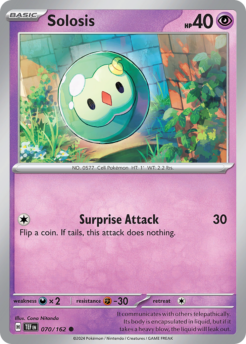
Scarlet & Violet
It communicates with others telepathically. Its body is encapsulated in liquid, but if it takes a heavy blow, the liquid will leak out.