



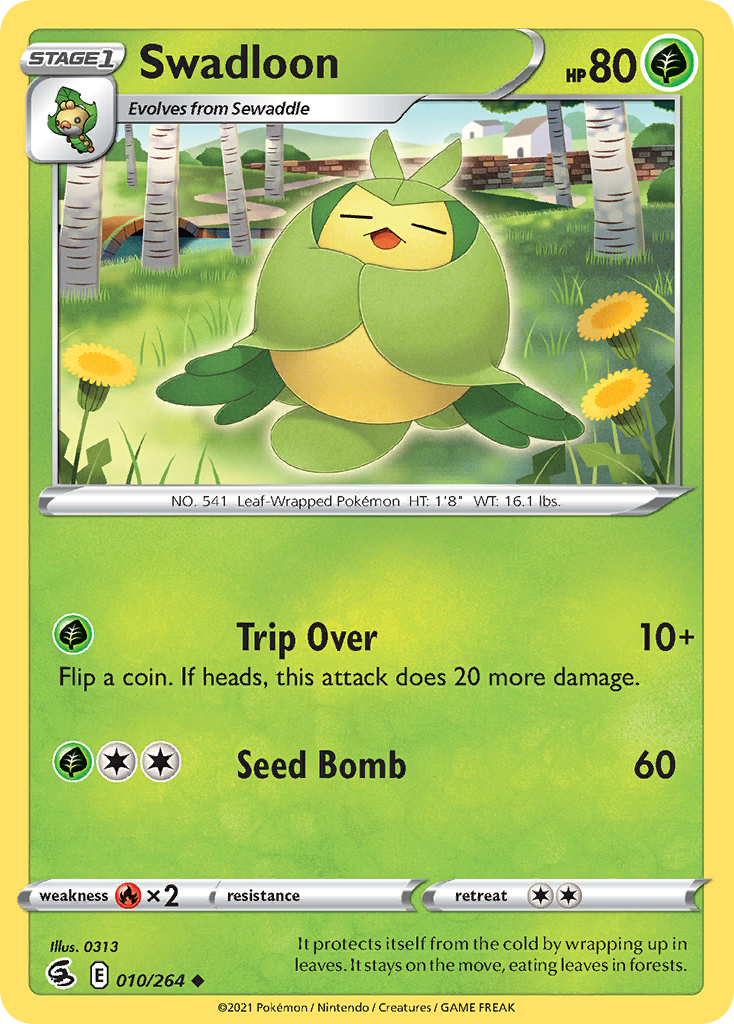
Swadloon
It protects itself from the cold by wrapping up in leaves. It stays on the move, eating leaves in forests.
Flip a coin. If heads, this attack does 20 more damage.
| Supertype | Pokémon |
|---|---|
| Subtype | Stage 1 |
| HP | 80 |
| Types | Grass |
| Attack | Trip Over |
| Attack cost | Grass |
| Artist | 0313 |
| Rarity | Uncommon |
| Pokédex | 541 |
| Evolves from | Sewaddle |
| Evolves to | Leavanny |
Vendor Information
- Store Name: DutchGem
- Vendor: DutchGem
-
Address:
gekkestraat
179
2345GT Utrecht
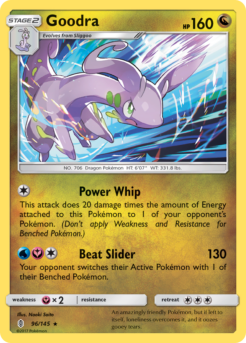
Guardians Rising
An amazingly friendly Pokémon, but if left to itself, loneliness overcomes it, and it oozes gooey tears.
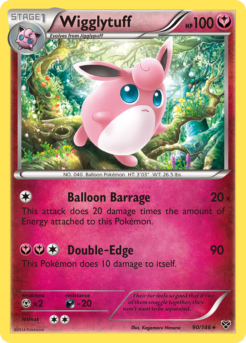
XY
Their fur feels so good that if two of them snuggle together, they won't want to be separated.
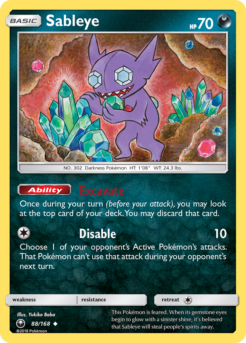
Celestial Storm
This Pokémon is feared. When its gemstone eyes begin to glow with a sinister shine, it's believed that Sableye will steal people's spirits away.
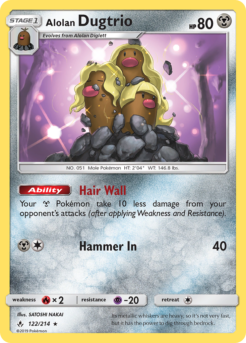
Sun & Moon
Its metallic whiskers are heavy, so it's not very fast, but it has the power to dig through bedrock.

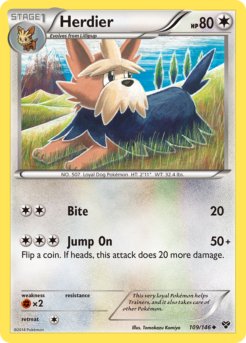
Tutustu myös
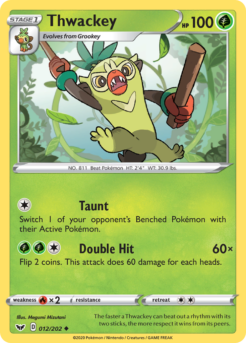
Sword & Shield
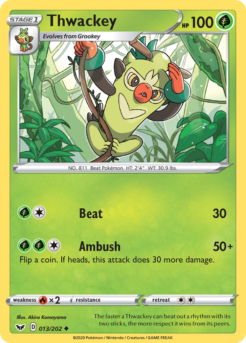
The faster a Thwackey can beat out a rhythm with its two sticks, the more respect it wins from its peers.
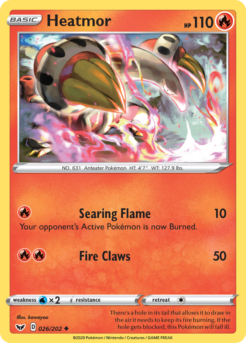
Sword & Shield
There's a hole in its tail that allows it to draw in the air it needs to keep its fire burning. If the hole gets blocked, this Pokémon will fall ill.
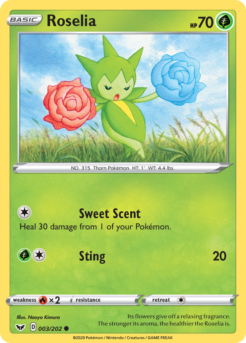
Sword & Shield
Its flowers give off a relaxing fragrance. The stronger its aroma, the healthier the Roselia is.
Sword & Shield
The faster a Thwackey can beat out a rhythm with its two sticks, the more respect it wins from its peers.
Sword & Shield
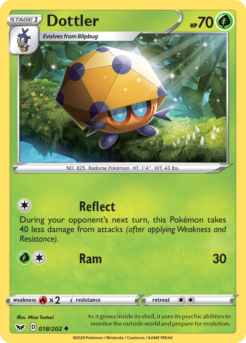
As it grows inside its shell, it uses its psychic abilities to monitor the outside world and prepare for evolution.
Sword & Shield
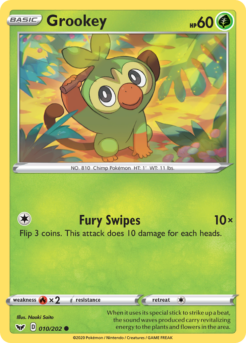
When it uses its special stick to strike up a beat, the sound waves produced carry revitalizing energy to the plants and flowers in the area.
Sword & Shield
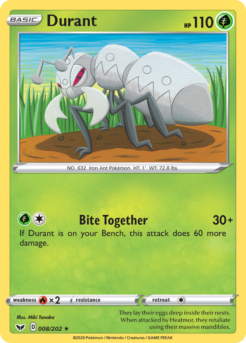
They lay their eggs deep inside their nests. When attacked by Heatmor, they retaliate using their massive mandibles.
Sword & Shield
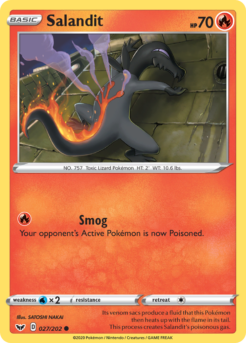
Its venom sacs produce a fluid that this Pokémon then heats up with the flame in its tail. This process creates Salandit's poisonous gas.