



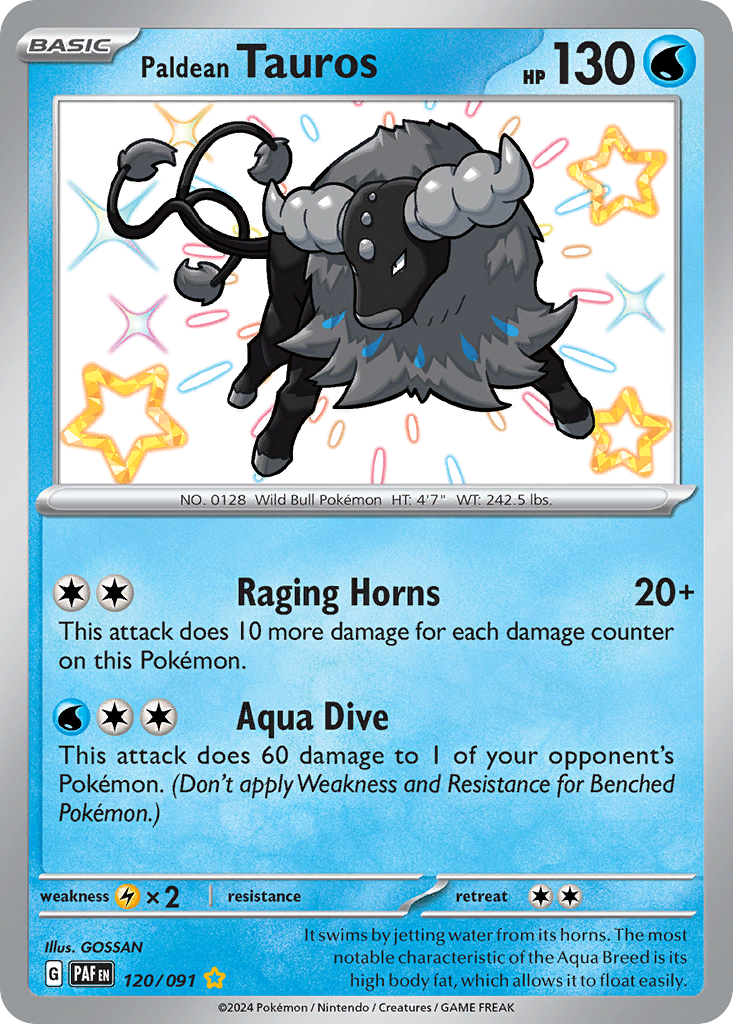
Paldean Tauros
It swims by jetting water from its horns. The most notable characteristic of the Aqua Breed is its high body fat, which allows it to float easily.
This attack does 10 more damage for each damage counter on this Pokémon.
| Supertype | Pokémon |
|---|---|
| Subtype | Basic |
| HP | Water |
| Attack | Raging Horns |
| Attack cost | Colorless |
| Artist | GOSSAN |
| Rarity | Shiny Rare |
| Pokédex | 128 |
Vendor Information
- Store Name: DutchGem
- Vendor: DutchGem
-
Address:
gekkestraat
179
2345GT Utrecht
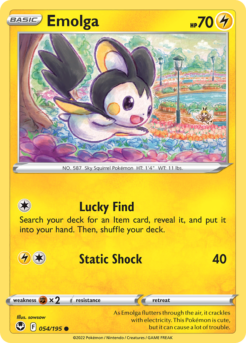
Silver Tempest
As Emolga flutters through the air, it crackles with electricity. This Pokémon is cute, but it can cause a lot of trouble.
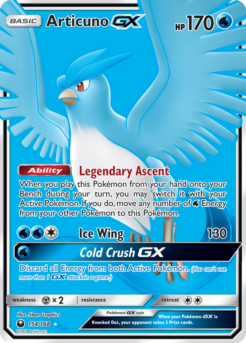
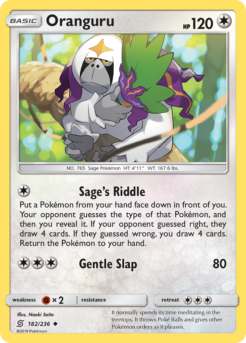
Sun & Moon
It normally spends its time meditating in the treetops. It throws Poké Balls and gives other Pokémon orders as it pleases.
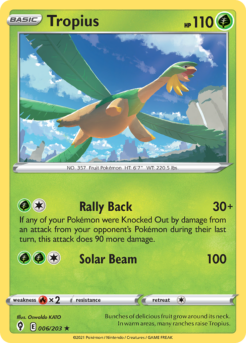
Evolving Skies
Bunches of delicious fruit grow around its neck. In warm areas, many ranches raise Tropius.


Darkness Ablaze
Capable of generating 15,000 volts of electricity, this Pokémon looks down on all that would challenge it.
Tutustu myös
Scarlet & Violet
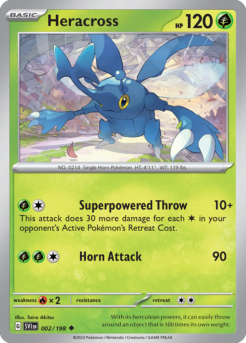
With its herculean powers, it can easily throw around an object that is 100 times its own weight.
Scarlet & Violet
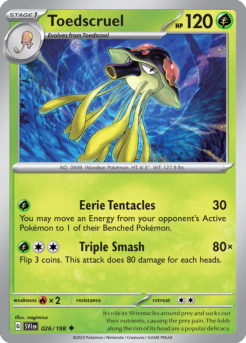
It coils its 10 tentacles around prey and sucks out their nutrients, causing the prey pain. The folds along the rim of its head are a popular delicacy.
Scarlet & Violet
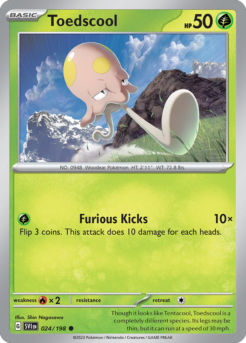
Though it looks like Tentacool, Toedscool is a completely different species. Its legs may be thin, but it can run at a speed of 30 mph.
Scarlet & Violet
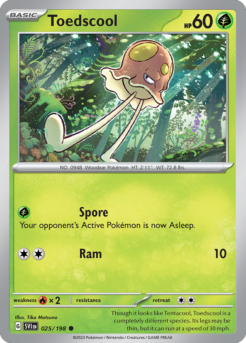
Though it looks like Tentacool, Toedscool is a completely different species. Its legs may be thin, but it can run at a speed of 30 mph.
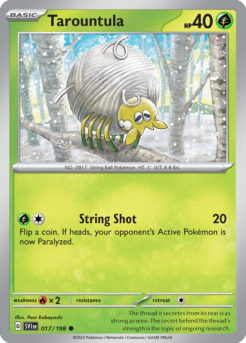
Scarlet & Violet
The thread it secretes from its rear is as strong as wire. The secret behind the thread's strength is the topic of ongoing research.
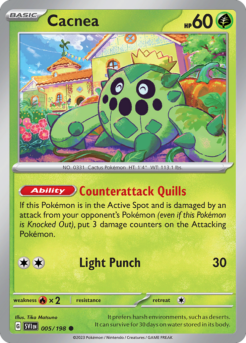
Scarlet & Violet
It prefers harsh environments, such as deserts. It can survive for 30 days on water stored in its body.
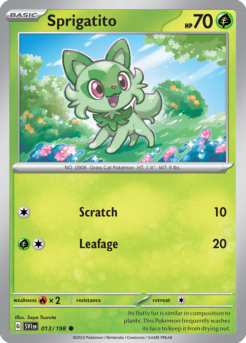
Scarlet & Violet
Its fluffy fur is similar in composition to plants. This Pokémon frequently washes its face to keep it from drying out.
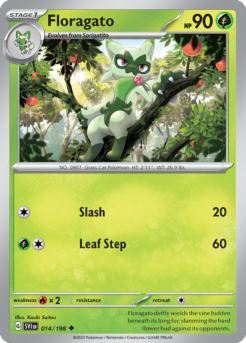
Scarlet & Violet
Floragato deftly wields the vine hidden beneath its long fur, slamming the hard flower bud against its opponents.