



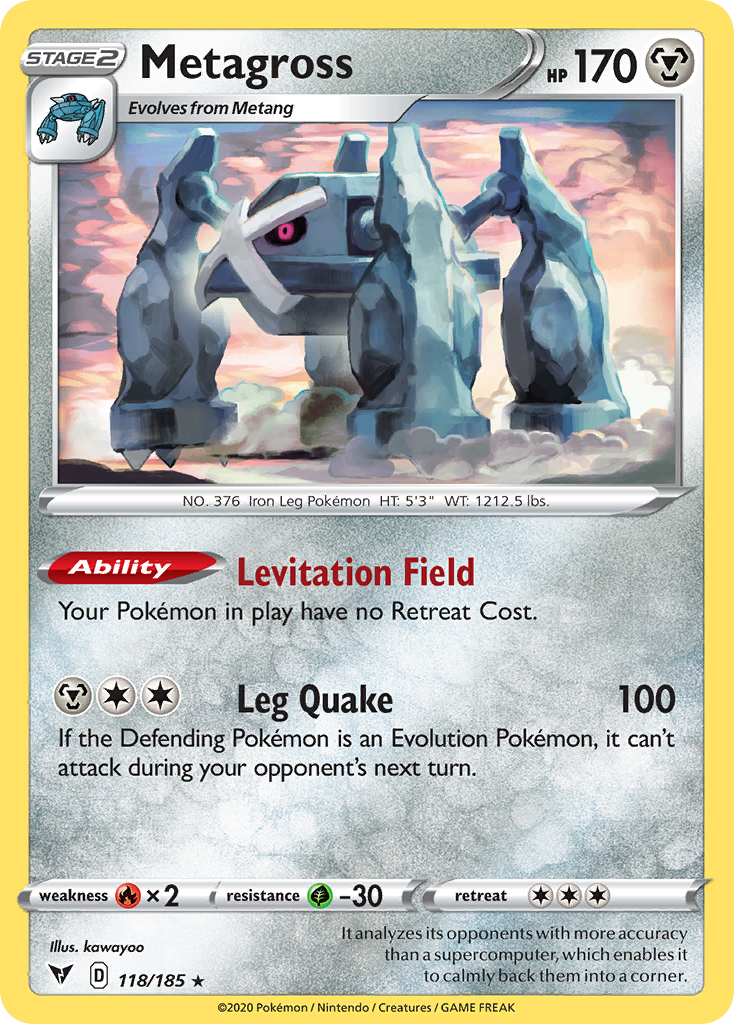
Metagross

It analyzes its opponents with more accuracy than a supercomputer, which enables it to calmly back them into a corner.

If the Defending Pokémon is an Evolution Pokémon, it can’t attack during your opponent’s next turn.
| Supertype | Pokémon |
|---|---|
| Subtype | Stage 2 |
| HP | 170 |
| Types | Metal |
| Attack | Leg Quake |
| Attack cost | Metal |
| Artist | kawayoo |
| Rarity | Rare |
| Pokédex | 376 |
| Evolves from | Metang |
Vendor Information
- Store Name: DutchGem
- Vendor: DutchGem
-
Address:
gekkestraat
179
2345GT Utrecht


Paldean Fates
It has a psychic power that enables it to distort the space around it and see into the future.


Guardians Rising
It rides on the wind and slips into people's homes. After it has turned a room into a cotton-filled mess, it giggles to itself and takes off.
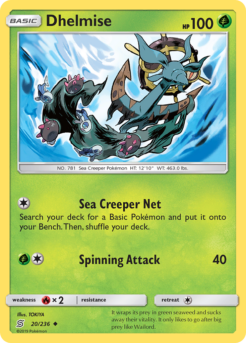
Sun & Moon
It wraps its prey in green seaweed and sucks away their vitality. It only likes to go after big prey like Wailord.

Chilling Reign
Left alone, its fur will grow longer and longer, but it will only allow someone it trusts to cut it.