



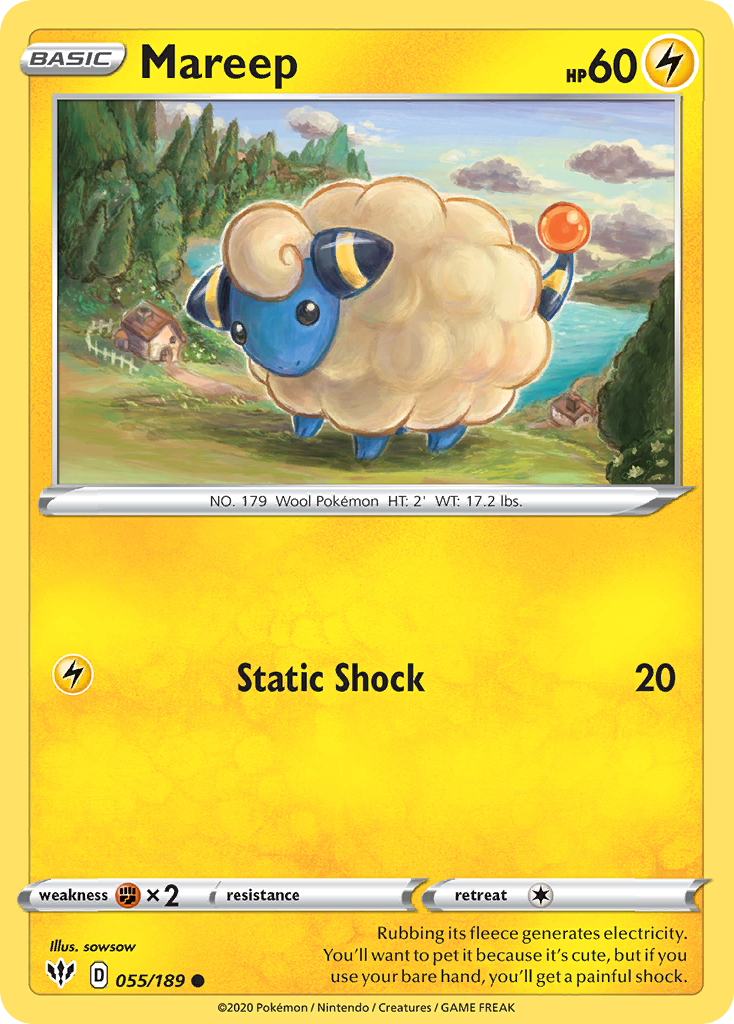
Mareep


Rubbing its fleece generates electricity. You’ll want to pet it because it’s cute, but if you use your bare hand, you’ll get a painful shock.
| Supertype | Pokémon |
|---|---|
| Subtype | Basic |
| HP | 60 |
| Types | Lightning |
| Attack | Static Shock |
| Attack cost | Lightning |
| Artist | sowsow |
| Rarity | Common |
| Pokédex | 179 |
| Evolves to | Flaaffy |
Vendor Information
- Store Name: DutchGem
- Vendor: DutchGem
-
Address:
gekkestraat
179
2345GT Utrecht
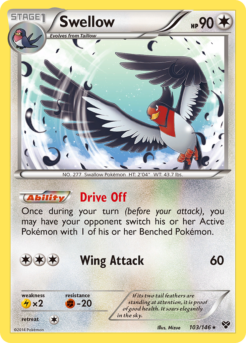
XY
If its two tail feathers are standing at attention, it is proof of good health. It soars elegantly in the sky.


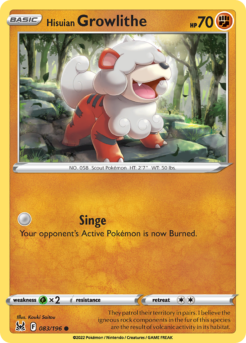
Lost Origin
They patrol their territory in pairs. I believe the igneous rock components in the fur of this species are the result of volcanic activity in its habitat.
Paldean Fates
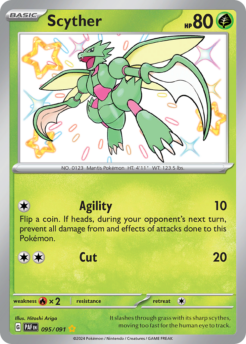
It slashes through grass with its sharp scythes, moving too fast for the human eye to track.
Paldean Fates
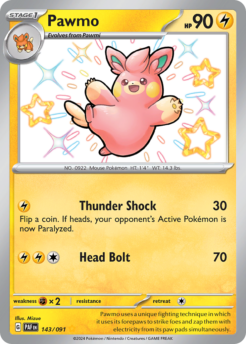
Pawmo uses a unique fighting technique in which it uses its forepaws to strike foes and zap them with electricity from its paw pads simultaneously.
Tutustu myös

Sword & Shield
Search your deck for up to 2 Pokémon, reveal them, and put them into your hand. Then, shuffle your deck.
Sword & Shield
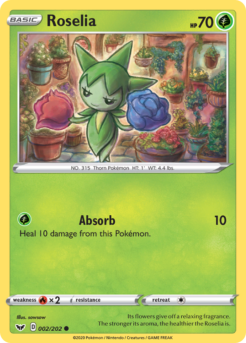
Its flowers give off a relaxing fragrance. The stronger its aroma, the healthier the Roselia is.

Sword & Shield
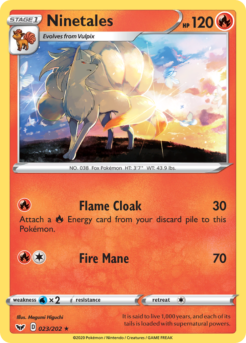
Attach up to 3 Fire Energy cards from your discard pile to your Pokémon in any way you like.
Sword & Shield
It is said to live 1,000 years, and each of its tails is loaded with supernatural powers.
Sword & Shield
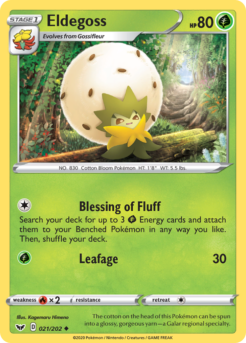
The cotton on the head of this Pokémon can be spun into a glossy, gorgeous yarn—a Galar regional specialty.

Sword & Shield
If any of your Grass Pokémon were Knocked Out by damage from an opponent’s attack during their last turn, this attack does 90 more damage.
Sword & Shield
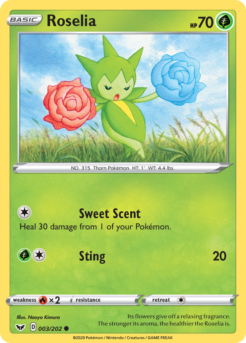
Its flowers give off a relaxing fragrance. The stronger its aroma, the healthier the Roselia is.
Sword & Shield
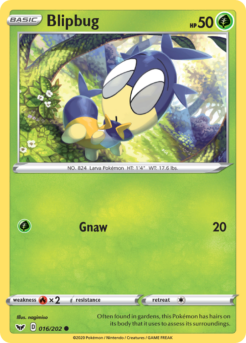
Often found in gardens, this Pokémon has hairs on its body that it uses to assess its surroundings.