



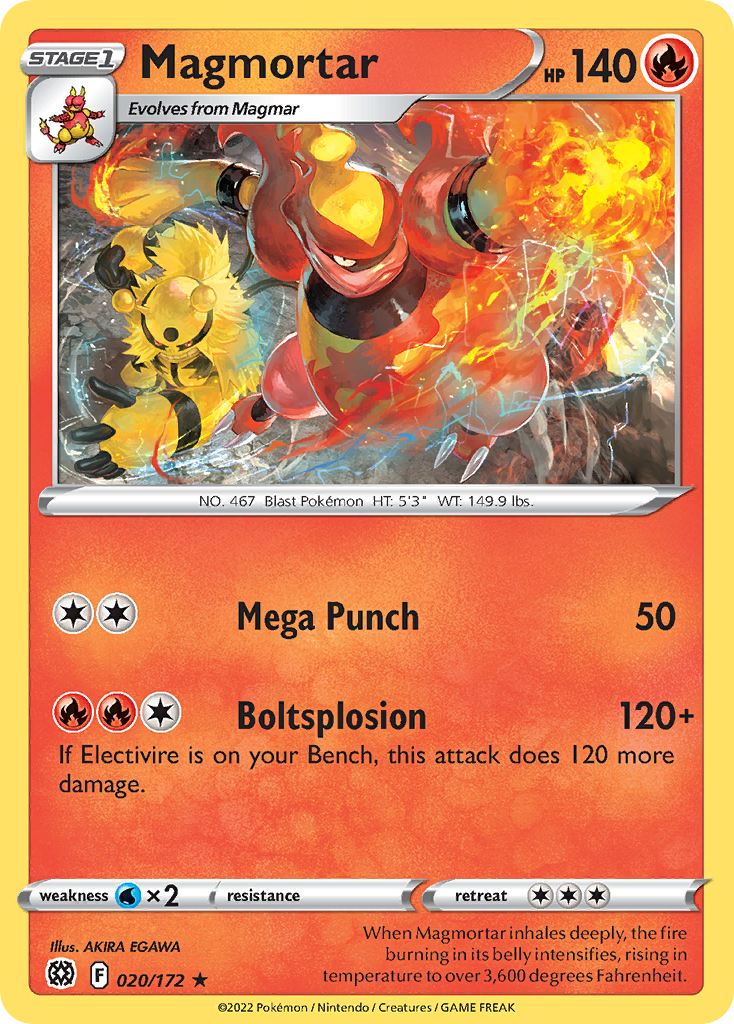
Magmortar
When Magmortar inhales deeply, the fire burning in its belly intensifies, rising in temperature to over 3,600 degrees Fahrenheit.
| Supertype | Pokémon |
|---|---|
| Subtype | Stage 1 |
| HP | 140 |
| Types | Fire |
| Attack | Mega Punch |
| Attack cost | Colorless |
| Artist | AKIRA EGAWA |
| Rarity | Rare |
| Pokédex | 467 |
| Evolves from | Magmar |
Vendor Information
- Store Name: DutchGem
- Vendor: DutchGem
-
Address:
gekkestraat
179
2345GT Utrecht

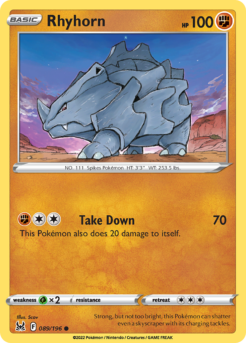
Lost Origin
Strong, but not too bright, this Pokémon can shatter even a skyscraper with its charging tackles.

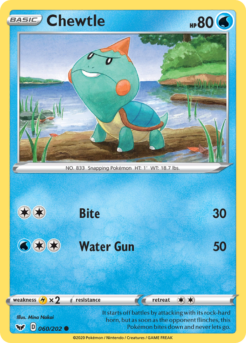
Sword & Shield
It starts off battles by attacking with its rock-hard horn, but as soon as the opponent flinches, this Pokémon bites down and never lets go.
Tutustu myös
Sword & Shield
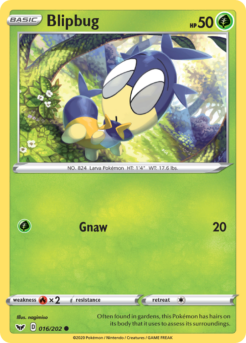
Often found in gardens, this Pokémon has hairs on its body that it uses to assess its surroundings.
Sword & Shield
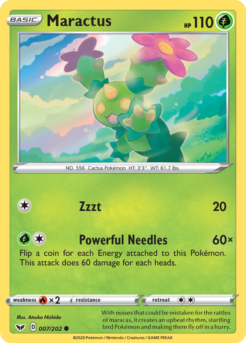
With noises that could be mistaken for the rattles of maracas, it creates an upbeat rhythm, startling bird Pokémon and making them fly off in a hurry.

Sword & Shield
Search your deck for up to 2 Pokémon, reveal them, and put them into your hand. Then, shuffle your deck.
Sword & Shield
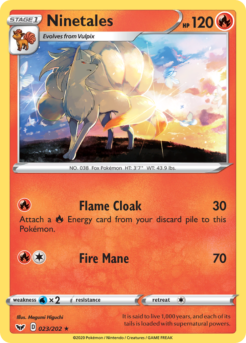
It is said to live 1,000 years, and each of its tails is loaded with supernatural powers.
Sword & Shield
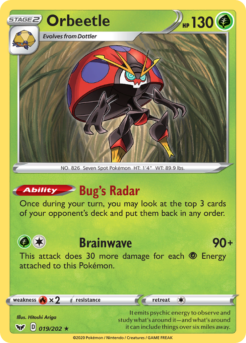
It emits psychic energy to observe and study what's around it—and what's around it can include things over six miles away.

Sword & Shield
Attach up to 3 Fire Energy cards from your discard pile to your Pokémon in any way you like.
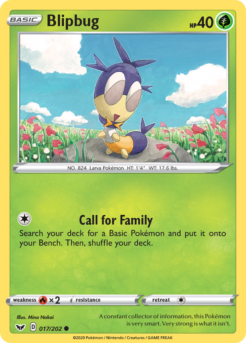
Sword & Shield
A constant collector of information, this Pokémon is very smart. Very strong is what it isn't.
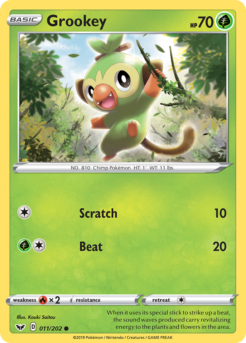
Sword & Shield
When it uses its special stick to strike up a beat, the sound waves produced carry revitalizing energy to the plants and flowers in the area.