



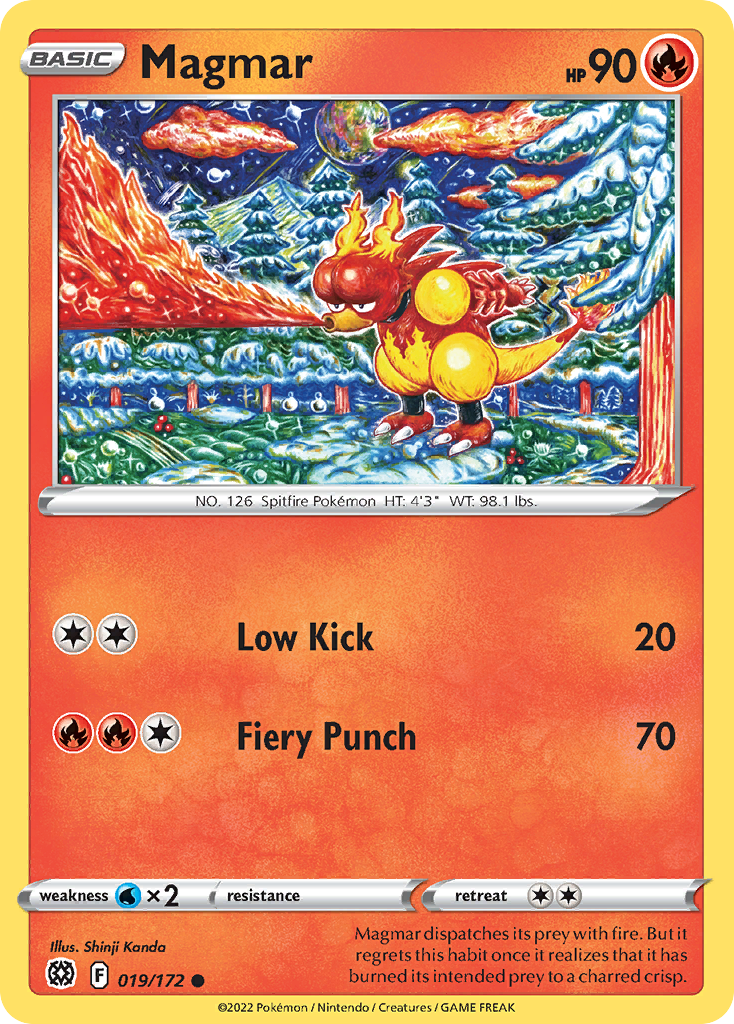
Magmar

Magmar dispatches its prey with fire. But it regrets this habit once it realizes that it has burned its intended prey to a charred crisp.
| Supertype | Pokémon |
|---|---|
| Subtype | Basic |
| HP | 90 |
| Types | Fire |
| Attack | Low Kick |
| Attack cost | Colorless |
| Artist | Shinji Kanda |
| Rarity | Common |
| Pokédex | 126 |
| Evolves to | Magmortar |
Vendor Information
- Store Name: DutchGem
- Vendor: DutchGem
-
Address:
gekkestraat
179
2345GT Utrecht
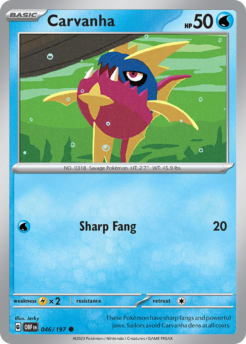
Obsidian Flames
These Pokémon have sharp fangs and powerful jaws. Sailors avoid Carvanha dens at all costs.
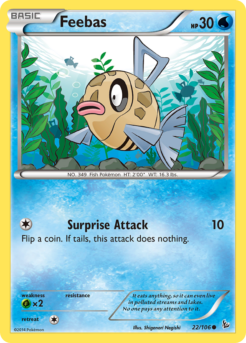
Flashfire
It eats anything, so it can even live in polluted streams and lakes. No one pays any attention to it.
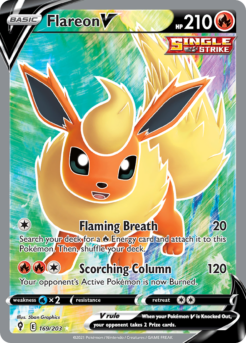
Evolving Skies
Search your deck for a Fire Energy card and attach it to this Pokémon. Then, shuffle your deck.
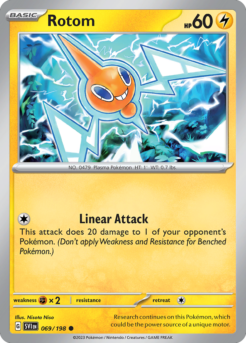
Scarlet & Violet
Research continues on this Pokémon, which could be the power source of a unique motor.
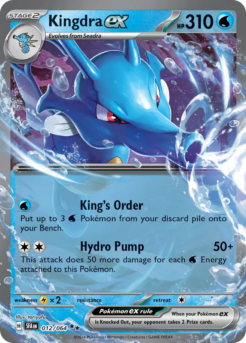
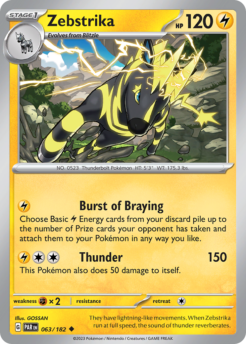
Paradox Rift
They have lightning-like movements. When Zebstrika run at full speed, the sound of thunder reverberates.
Tutustu myös
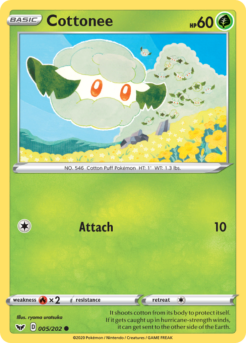
Sword & Shield
It shoots cotton from its body to protect itself. If it gets caught up in hurricane-strength winds, it can get sent to the other side of the Earth.
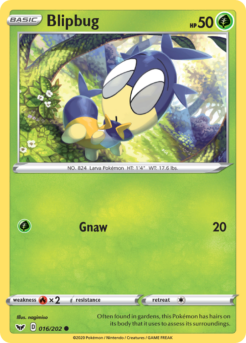
Sword & Shield
Often found in gardens, this Pokémon has hairs on its body that it uses to assess its surroundings.
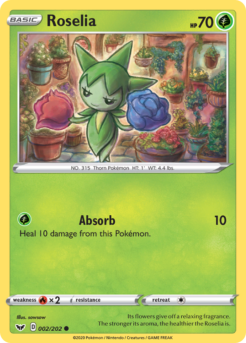
Sword & Shield
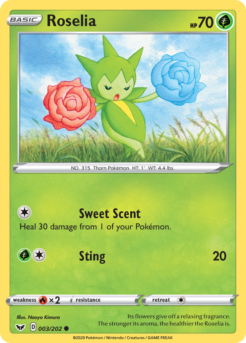
Its flowers give off a relaxing fragrance. The stronger its aroma, the healthier the Roselia is.
Sword & Shield
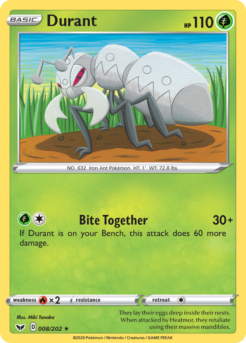
They lay their eggs deep inside their nests. When attacked by Heatmor, they retaliate using their massive mandibles.
Sword & Shield
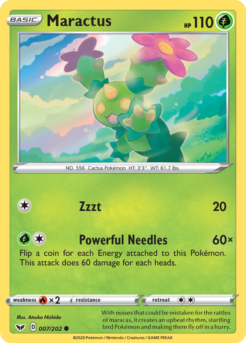
With noises that could be mistaken for the rattles of maracas, it creates an upbeat rhythm, startling bird Pokémon and making them fly off in a hurry.
Sword & Shield
Its flowers give off a relaxing fragrance. The stronger its aroma, the healthier the Roselia is.
Sword & Shield
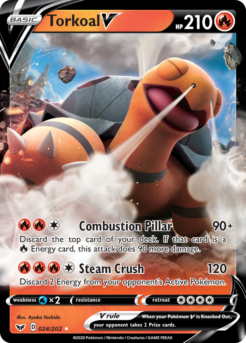
Discard the top card of your deck. If that card is a Fire Energy card, this attack does 90 more damage.
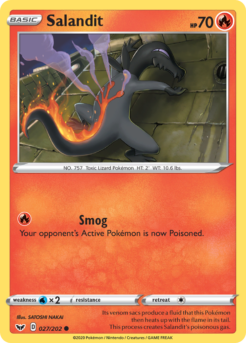
Sword & Shield
Its venom sacs produce a fluid that this Pokémon then heats up with the flame in its tail. This process creates Salandit's poisonous gas.