



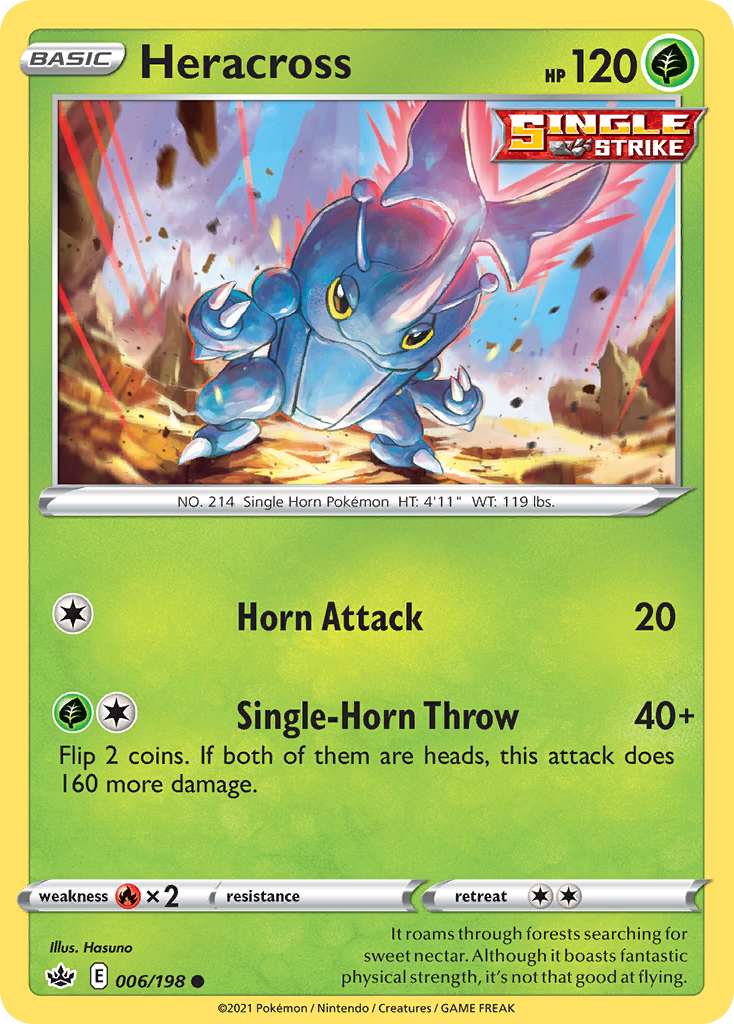
Heracross
It roams through forests searching for sweet nectar. Although it boasts fantastic physical strength, it’s not that good at flying.
| Supertype | Pokémon |
|---|---|
| Subtype | Basic |
| HP | 120 |
| Types | Grass |
| Attack | Horn Attack |
| Attack cost | Colorless |
| Artist | Hasuno |
| Rarity | Common |
| Pokédex | 214 |
Vendor Information
- Store Name: DutchGem
- Vendor: DutchGem
-
Address:
gekkestraat
179
2345GT Utrecht
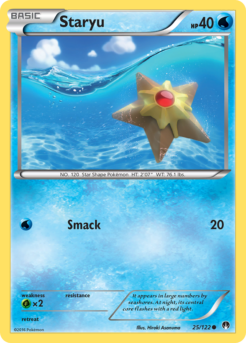
BREAKpoint
It appears in large numbers by seashores. At night, its central core flashes with a red light.
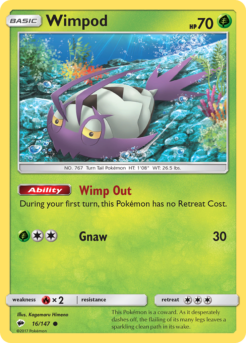
Burning Shadows
This Pokémon is a coward. As it desperately dashes off, the flailing of its many legs leaves a sparkling clean path in its wake.
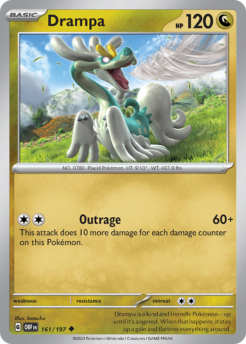
Obsidian Flames
Drampa is a kind and friendly Pokémon—up until it's angered. When that happens, it stirs up a gale and flattens everything around.
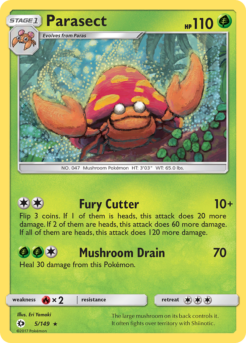
Sun & Moon
The large mushroom on its back controls it. It often fights over territory with Shiinotic.
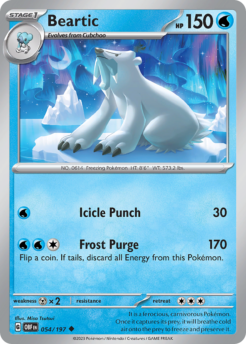
Obsidian Flames
It is a ferocious, carnivorous Pokémon. Once it captures its prey, it will breathe cold air onto the prey to freeze and preserve it.
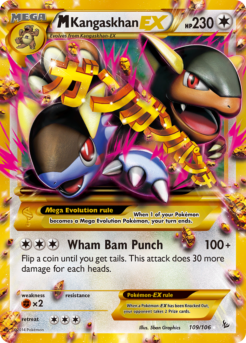
Flashfire
Flip a coin until you get tails. This attack does 30 more damage for each heads.
Tutustu myös
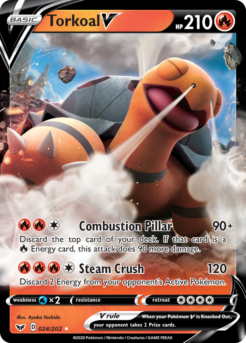
Sword & Shield
Discard the top card of your deck. If that card is a Fire Energy card, this attack does 90 more damage.
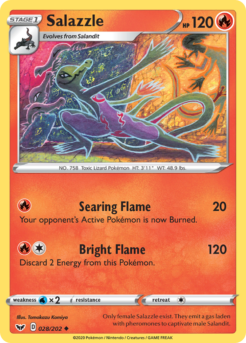
Sword & Shield
Only female Salazzle exist. They emit a gas laden with pheromones to captivate male Salandit.
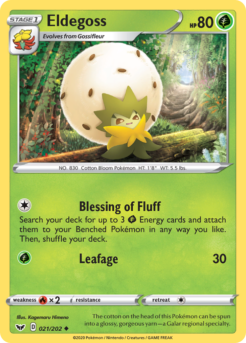
Sword & Shield
The cotton on the head of this Pokémon can be spun into a glossy, gorgeous yarn—a Galar regional specialty.

Sword & Shield
Attach up to 3 Fire Energy cards from your discard pile to your Pokémon in any way you like.
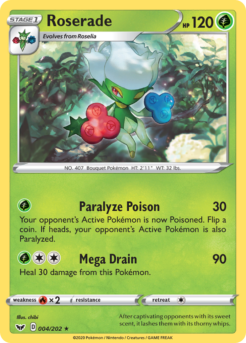
Sword & Shield
After captivating opponents with its sweet scent, it lashes them with its thorny whips.
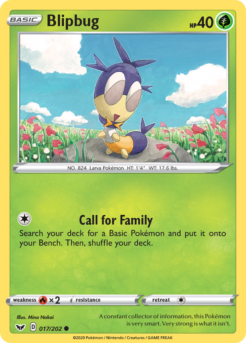
Sword & Shield
A constant collector of information, this Pokémon is very smart. Very strong is what it isn't.

Sword & Shield
Search your deck for up to 2 Pokémon, reveal them, and put them into your hand. Then, shuffle your deck.
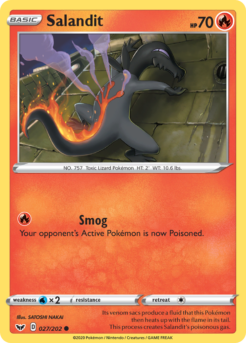
Sword & Shield
Its venom sacs produce a fluid that this Pokémon then heats up with the flame in its tail. This process creates Salandit's poisonous gas.