



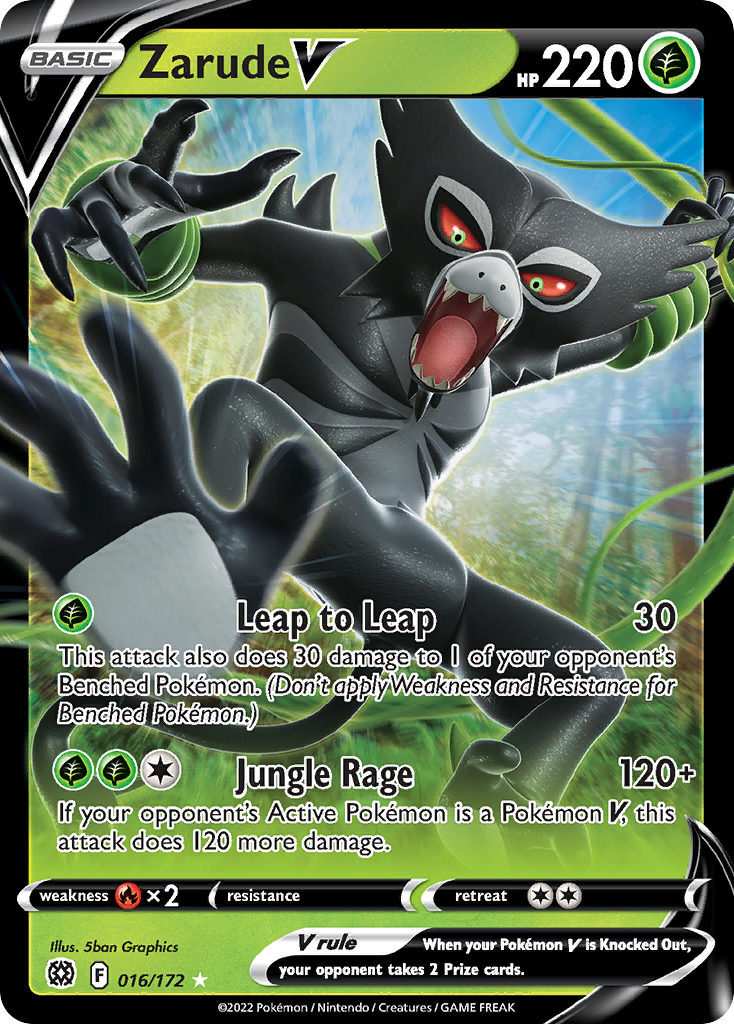
This attack also does 30 damage to 1 of your opponent’s Benched Pokémon. (Don’t apply Weakness and Resistance for Benched Pokémon.)
| Supertype | Pokémon |
|---|---|
| Subtype | Basic |
| HP | 220 |
| Types | Grass |
| Attack | Leap to Leap |
| Attack cost | Grass |
| Artist | 5ban Graphics |
| Rarity | Rare Holo V |
| Pokédex | 893 |
Información del vendedor
- Nombre de la tienda: DutchGem
- Vendedor: DutchGem
-
Dirección:
gekkestraat
179
2345GT Utrecht
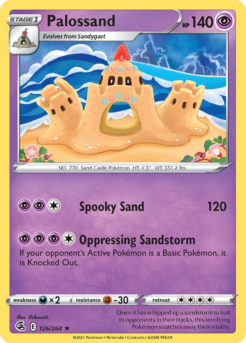
Fusion Strike
Once it has whipped up a sandstorm to halt its opponents in their tracks, this terrifying Pokémon snatches away their vitality.
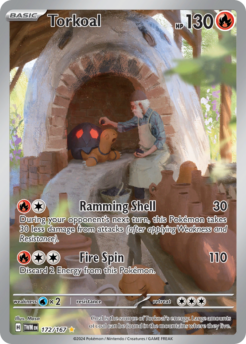
Scarlet & Violet
Coal is the source of Torkoal's energy. Large amounts of coal can be found in the mountains where they live.
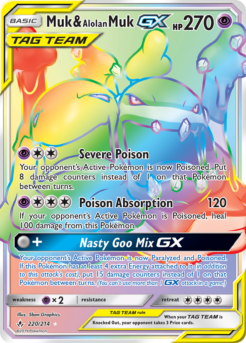
Sun & Moon
Your opponent’s Active Pokémon is now Poisoned. Put 8 damage counters instead of 1 on that Pokémon between turns.
Sword & Shield
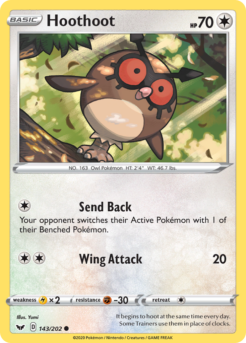
It begins to hoot at the same time every day. Some Trainers use them in place of clocks.
Lost Thunder
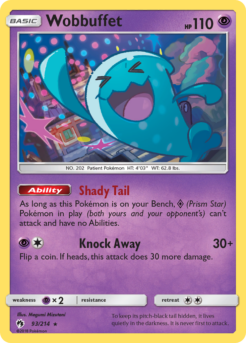
To keep its pitch-black tail hidden, it live quietly in the darkness. It is never first to attack.
Productos relacionados
Sword & Shield
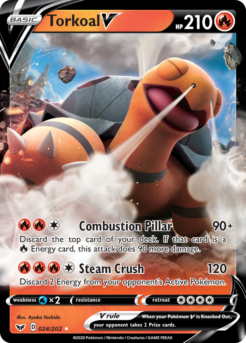
Discard the top card of your deck. If that card is a Fire Energy card, this attack does 90 more damage.
Sword & Shield
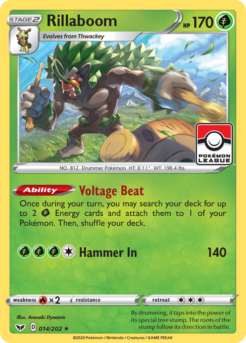
By drumming, it taps into the power of its special tree stump. The roots of the stump follow its direction in battle.
Sword & Shield
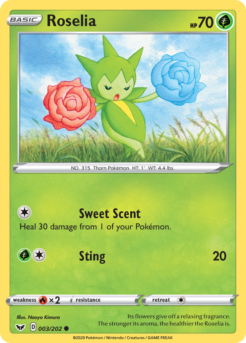
Its flowers give off a relaxing fragrance. The stronger its aroma, the healthier the Roselia is.
Sword & Shield
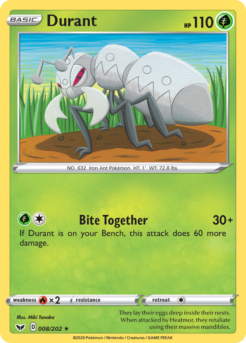
They lay their eggs deep inside their nests. When attacked by Heatmor, they retaliate using their massive mandibles.
Sword & Shield
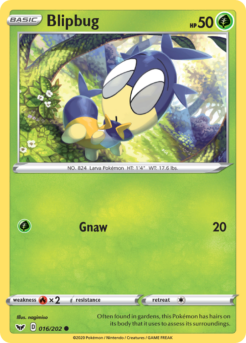
Often found in gardens, this Pokémon has hairs on its body that it uses to assess its surroundings.
Sword & Shield
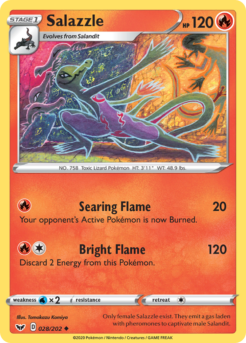
Only female Salazzle exist. They emit a gas laden with pheromones to captivate male Salandit.
Sword & Shield
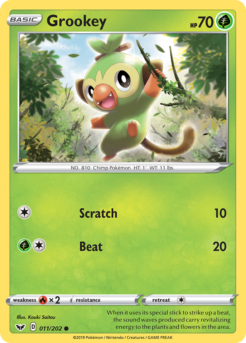
When it uses its special stick to strike up a beat, the sound waves produced carry revitalizing energy to the plants and flowers in the area.
Sword & Shield
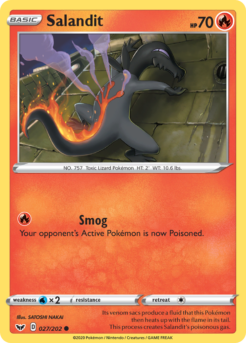
Its venom sacs produce a fluid that this Pokémon then heats up with the flame in its tail. This process creates Salandit's poisonous gas.