



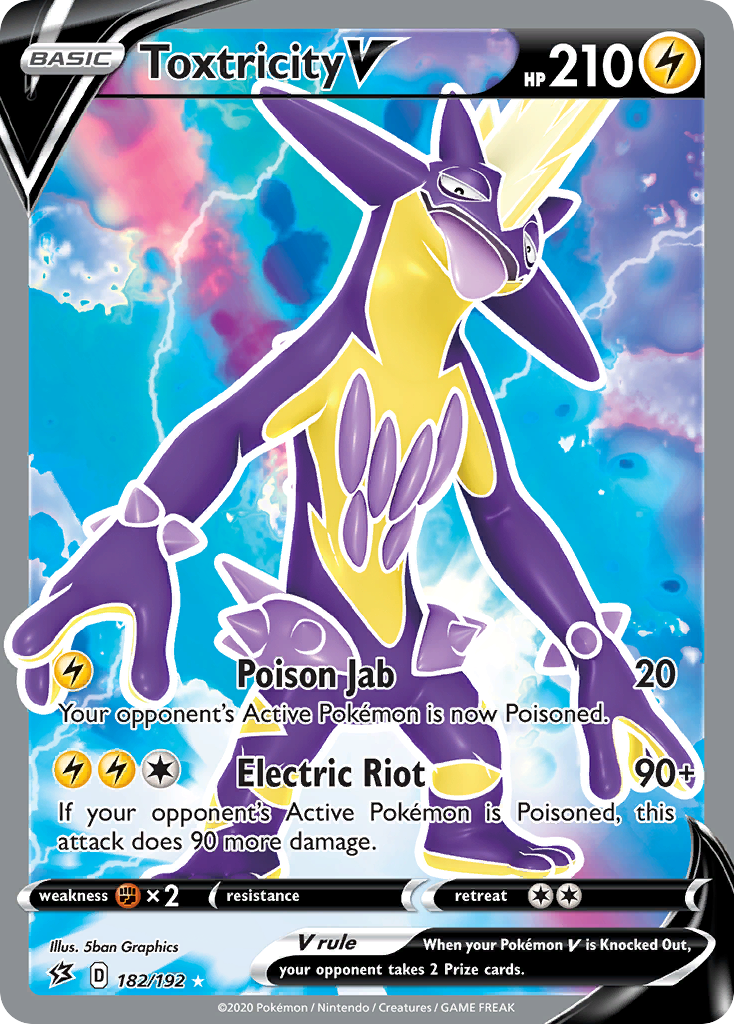


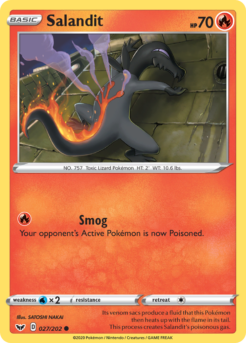
Your opponent’s Active Pokémon is now Poisoned.
| Supertype | Pokémon |
|---|---|
| Subtype | Basic |
| HP | 210 |
| Types | Lightning |
| Attack | Poison Jab |
| Attack cost | Lightning |
| Artist | 5ban Graphics |
| Rarity | Rare Ultra |
| Pokédex | 849 |
Información del vendedor
- Nombre de la tienda: DutchGem
- Vendedor: DutchGem
-
Dirección:
gekkestraat
179
2345GT Utrecht
Base
Sometimes called "The God of Destruction." Its wings are able to support it in spite of its massive weight.
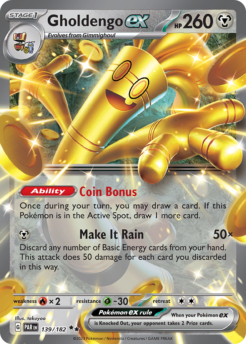
Paradox Rift
Discard any number of Basic Energy cards from your hand. This attack does 50 damage for each card you discarded in this way.
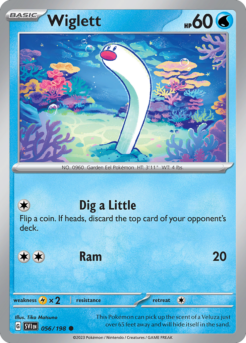
Scarlet & Violet
This Pokémon can pick up the scent of a Veluza just over 65 feet away and will hide itself in the sand.
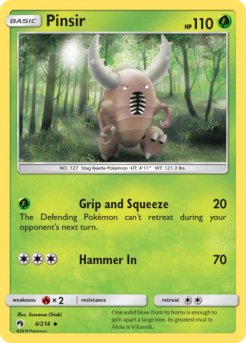
Lost Thunder
One solid blow from its horns is enough to split apart a large tree. Its greatest rival in Alola is Vikavolt.
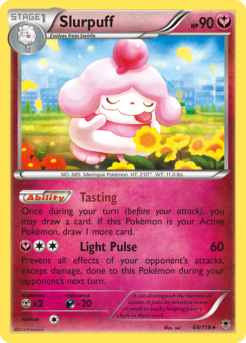
Phantom Forces
It can distinguish the faintest of scents. It puts its sensitive sense of smell to use by helping pastry chefs in their work.
Productos relacionados
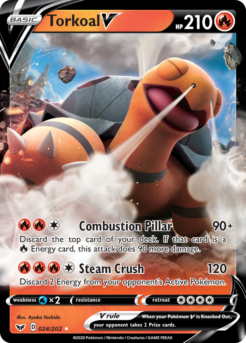
Sword & Shield
Discard the top card of your deck. If that card is a Fire Energy card, this attack does 90 more damage.
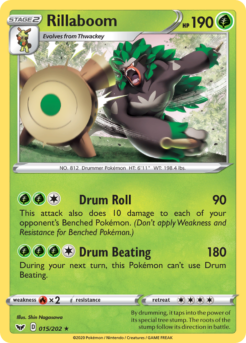
Sword & Shield
By drumming, it taps into the power of its special tree stump. The roots of the stump follow its direction in battle.
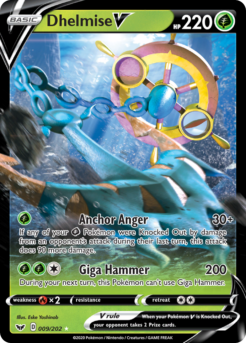
Sword & Shield
If any of your Grass Pokémon were Knocked Out by damage from an opponent’s attack during their last turn, this attack does 90 more damage.
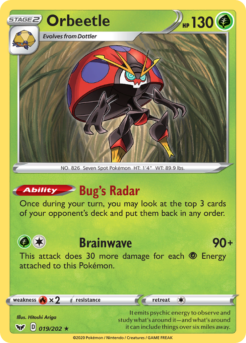
Sword & Shield
It emits psychic energy to observe and study what's around it—and what's around it can include things over six miles away.
Sword & Shield
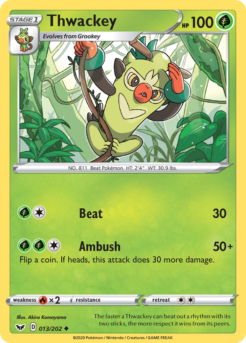
The faster a Thwackey can beat out a rhythm with its two sticks, the more respect it wins from its peers.
Sword & Shield
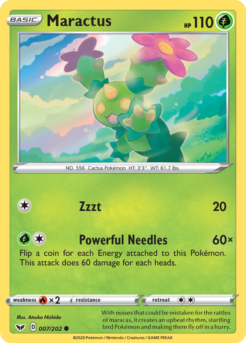
With noises that could be mistaken for the rattles of maracas, it creates an upbeat rhythm, startling bird Pokémon and making them fly off in a hurry.
Sword & Shield
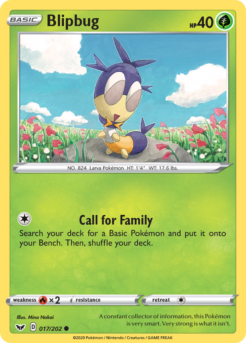
A constant collector of information, this Pokémon is very smart. Very strong is what it isn't.
Sword & Shield
Its venom sacs produce a fluid that this Pokémon then heats up with the flame in its tail. This process creates Salandit's poisonous gas.