



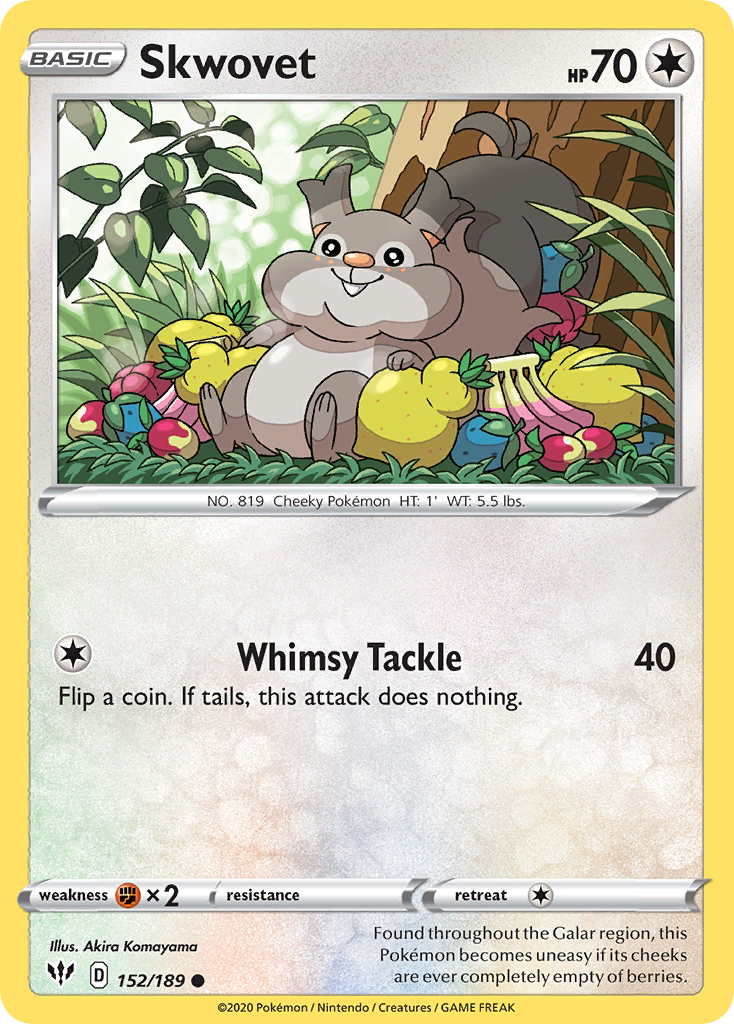
Skwovet

Found throughout the Galar region, this Pokémon becomes uneasy if its cheeks are ever completely empty of berries.

Flip a coin. If tails, this attack does nothing.
| Supertype | Pokémon |
|---|---|
| Subtype | Basic |
| HP | 70 |
| Types | Colorless |
| Attack | Whimsy Tackle |
| Attack cost | Colorless |
| Artist | Akira Komayama |
| Rarity | Common |
| Pokédex | 819 |
| Evolves to | Greedent |
Información del vendedor
- Nombre de la tienda: DutchGem
- Vendedor: DutchGem
-
Dirección:
gekkestraat
179
2345GT Utrecht

Evolutions
Its large ears are flapped like wings when it is listening to distant sounds. It extends toxic barbs when angered.
BREAKthrough
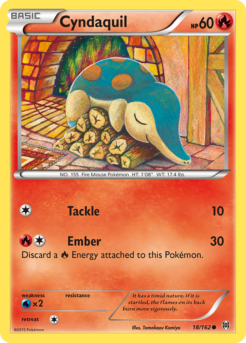
It has a timid nature. If it is startled, the flames on its back burn more vigorously.

Cosmic Eclipse
There are a hundred or so of them living in Alola's waste-disposal site. They're all hard workers who eat a lot of trash.

Scarlet & Violet
The green head has turned vicious due to the spicy chemicals stimulating its brain. Once it goes on a rampage, there is no stopping it.
Sword & Shield
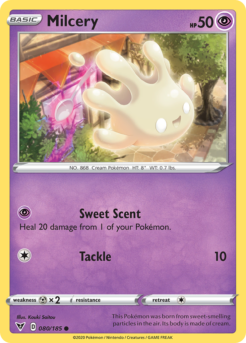
This Pokémon was born from sweet-smelling particles in the air. Its body is made of cream.

Paradox Rift
Attach up to 3 Basic Fighting Energy cards from your discard pile to your Benched Pokémon in any way you like.
Productos relacionados
Sword & Shield
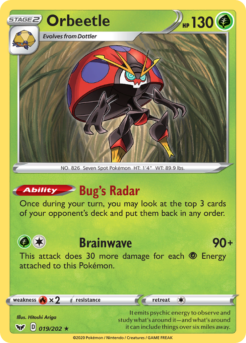
It emits psychic energy to observe and study what's around it—and what's around it can include things over six miles away.
Sword & Shield
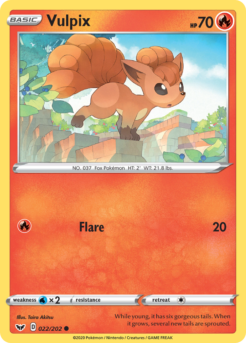
While young, it has six gorgeous tails. When it grows, several new tails are sprouted.
Sword & Shield
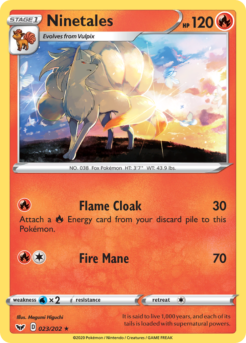
It is said to live 1,000 years, and each of its tails is loaded with supernatural powers.

Sword & Shield
As it grows inside its shell, it uses its psychic abilities to monitor the outside world and prepare for evolution.
Sword & Shield
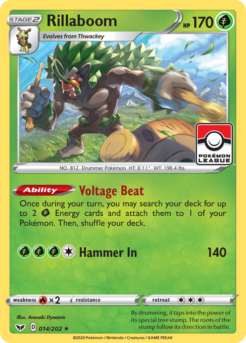
By drumming, it taps into the power of its special tree stump. The roots of the stump follow its direction in battle.

Sword & Shield
There's a hole in its tail that allows it to draw in the air it needs to keep its fire burning. If the hole gets blocked, this Pokémon will fall ill.
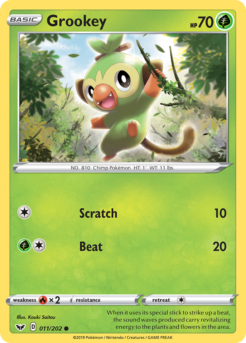
Sword & Shield
When it uses its special stick to strike up a beat, the sound waves produced carry revitalizing energy to the plants and flowers in the area.
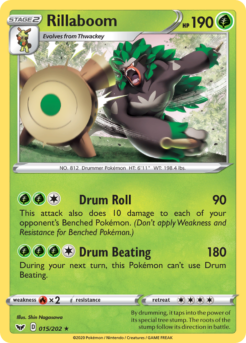
Sword & Shield
By drumming, it taps into the power of its special tree stump. The roots of the stump follow its direction in battle.