






This attack also does 30 damage to 1 of your opponent’s Benched Pokémon. (Don’t apply Weakness and Resistance for Benched Pokémon.)
| Supertype | Pokémon |
|---|---|
| Subtype | VMAX |
| HP | 310 |
| Types | Water |
| Attack | Max Icicle |
| Attack cost | Water |
| Artist | PLANETA Tsuji |
| Rarity | Rare Holo VMAX |
| Pokédex | 471 |
| Evolves from | Glaceon V |
Información del vendedor
- Nombre de la tienda: DutchGem
- Vendedor: DutchGem
-
Dirección:
gekkestraat
179
2345GT Utrecht
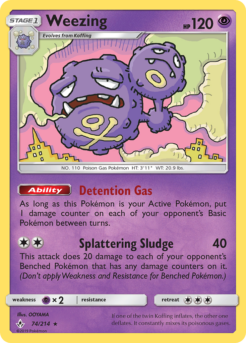
Sun & Moon
If one of the twin Koffing inflates, the other one deflates. It constantly mixes its poisonous gases.

Base
Capable of swimming backward by rapidly flapping its wing-like pectoral fins and stout tail.
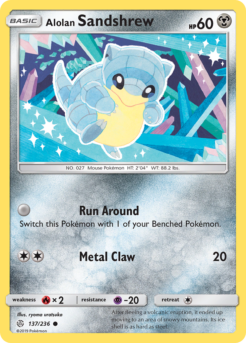
Cosmic Eclipse
After fleeing a volcanic eruption, it ended up moving to an area of snowy mountains. Its ice shell is as hard as steel.
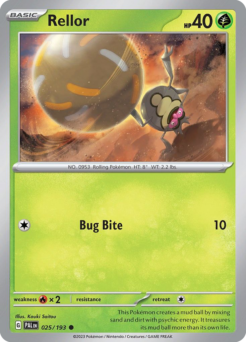
Paldea Evolved
This Pokémon creates a mud ball by mixing sand and dirt with psychic energy. It treasures its mud ball more than its own life.
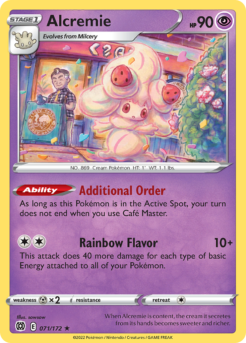
Brilliant Stars
When Alcremie is content, the cream it secretes from its hands becomes sweeter and richer.
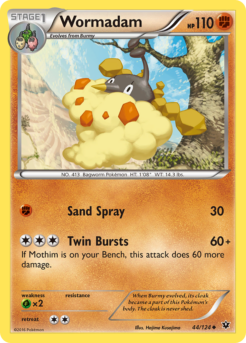
Fates Collide
When Burmy evolved, its cloak became a part of this Pokémon's body. The cloak is never shed.
Productos relacionados
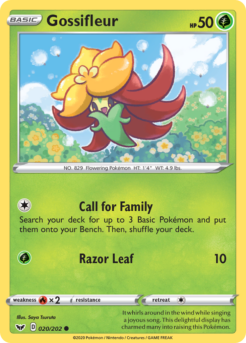
Sword & Shield
It whirls around in the wind while singing a joyous song. This delightful display has charmed many into raising this Pokémon.
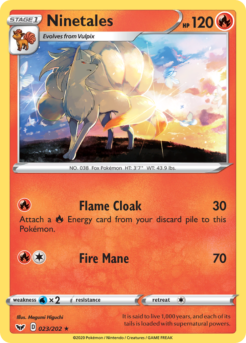
Sword & Shield
It is said to live 1,000 years, and each of its tails is loaded with supernatural powers.
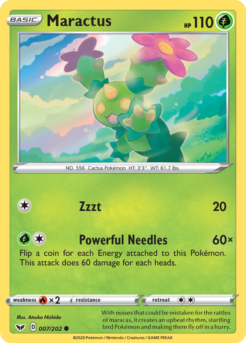
Sword & Shield
With noises that could be mistaken for the rattles of maracas, it creates an upbeat rhythm, startling bird Pokémon and making them fly off in a hurry.
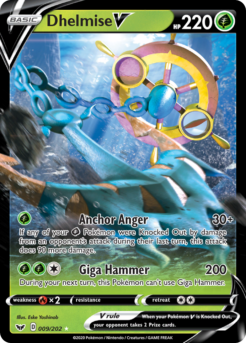
Sword & Shield
If any of your Grass Pokémon were Knocked Out by damage from an opponent’s attack during their last turn, this attack does 90 more damage.
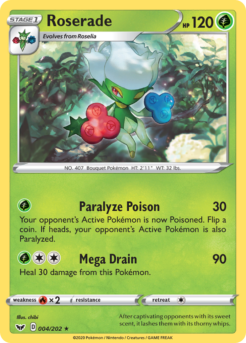
Sword & Shield
After captivating opponents with its sweet scent, it lashes them with its thorny whips.
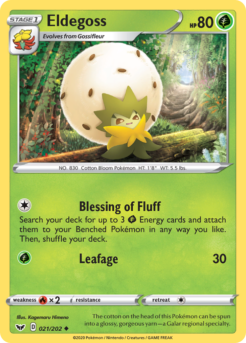
Sword & Shield
The cotton on the head of this Pokémon can be spun into a glossy, gorgeous yarn—a Galar regional specialty.
Sword & Shield
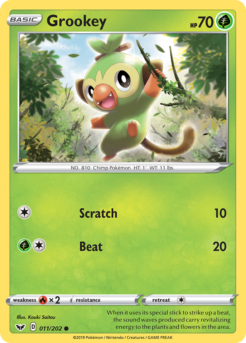
When it uses its special stick to strike up a beat, the sound waves produced carry revitalizing energy to the plants and flowers in the area.
Sword & Shield
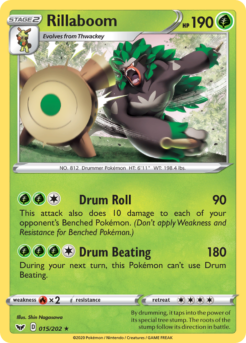
By drumming, it taps into the power of its special tree stump. The roots of the stump follow its direction in battle.