




Clefable

A timid fairy Pokémon that is rarely seen, it will run and hide the moment it senses people.

| Supertype | Pokémon |
|---|---|
| Subtype | Stage 1 |
| HP | 100 |
| Types | Psychic |
| Attack | Magical Shot |
| Attack cost | Psychic |
| Artist | Saya Tsuruta |
| Rarity | Rare |
| Pokédex | 36 |
| Evolves from | Clefairy |
Información del vendedor
- Nombre de la tienda: DutchGem
- Vendedor: DutchGem
-
Dirección:
gekkestraat
179
2345GT Utrecht

Cosmic Eclipse
It vanishes into seaweed and remains perfectly still to avoid attacks from large Pokémon. Rotten seaweed is its main food source.

Paradox Rift
Each Spinda's spot pattern is different. With its stumbling movements, it evades opponents' attacks brilliantly!


Scarlet & Violet
Kilowattrel inflates its throat sac to amplify its electricity. By riding the wind, this Pokémon can fly over 430 miles in a day.
Paldea Evolved
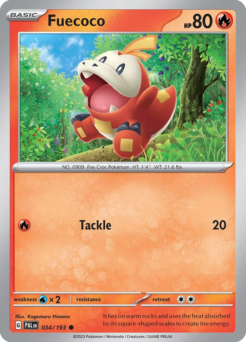
It lies on warm rocks and uses the heat absorbed by its square-shaped scales to create fire energy.

XY
This attack does 30 damage to 1 of your opponent’s Benched Pokémon. (Don’t apply Weakness and Resistance for Benched Pokémon.)
Productos relacionados
Sword & Shield
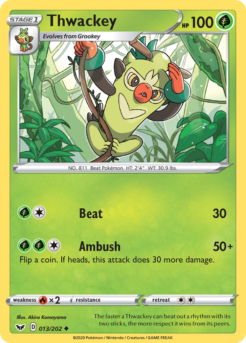
The faster a Thwackey can beat out a rhythm with its two sticks, the more respect it wins from its peers.
Sword & Shield
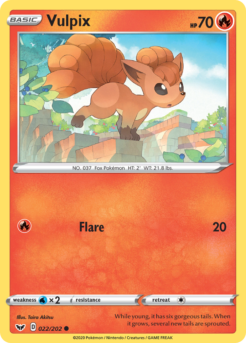
While young, it has six gorgeous tails. When it grows, several new tails are sprouted.

Sword & Shield
When it uses its special stick to strike up a beat, the sound waves produced carry revitalizing energy to the plants and flowers in the area.
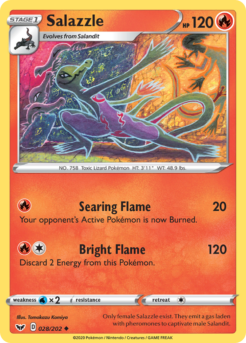
Sword & Shield
Only female Salazzle exist. They emit a gas laden with pheromones to captivate male Salandit.
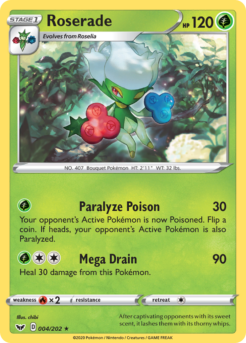
Sword & Shield
After captivating opponents with its sweet scent, it lashes them with its thorny whips.
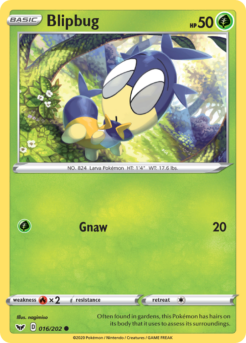
Sword & Shield
Often found in gardens, this Pokémon has hairs on its body that it uses to assess its surroundings.
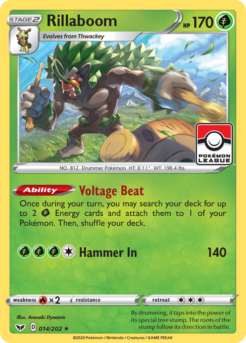
Sword & Shield
By drumming, it taps into the power of its special tree stump. The roots of the stump follow its direction in battle.
Sword & Shield
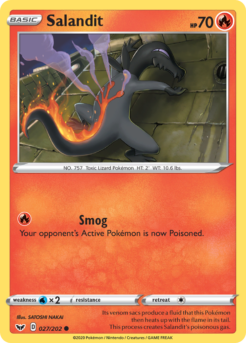
Its venom sacs produce a fluid that this Pokémon then heats up with the flame in its tail. This process creates Salandit's poisonous gas.