



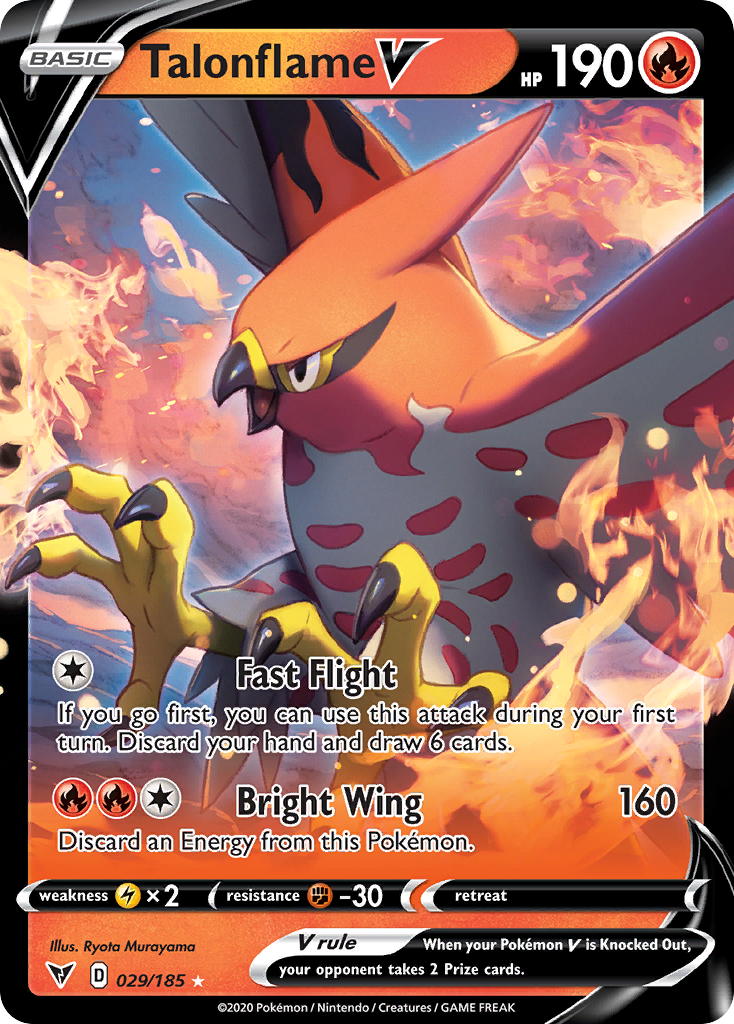
If you go first, you can use this attack during your first turn. Discard your hand and draw 6 cards.
| Supertype | Pokémon |
|---|---|
| Subtype | Basic |
| HP | 190 |
| Types | Fire |
| Attack | Fast Flight |
| Attack cost | Colorless |
| Artist | Ryota Murayama |
| Rarity | Rare Holo V |
| Pokédex | 663 |
Vendor Information
- Store Name: DutchGem
- Vendor: DutchGem
-
Address:
gekkestraat
179
2345GT Utrecht
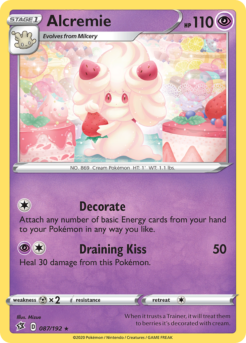
Rebel Clash
When it trusts a Trainer, it will treat them to berries it's decorated with cream.
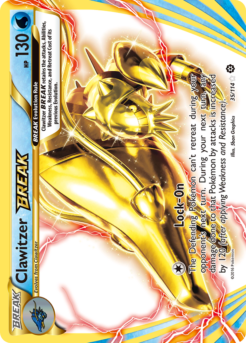
Steam Siege
The Defending Pokémon can’t retreat during your opponent’s next turn. During your next turn, any damage done to that Pokémon by attacks is increased by 120 (after applying Weakness and Resistance).
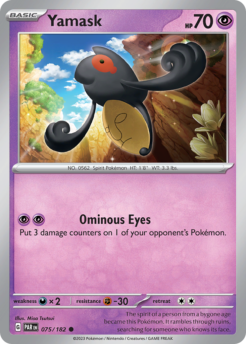
Paradox Rift
The spirit of a person from a bygone age became this Pokémon. It rambles through ruins, searching for someone who knows its face.
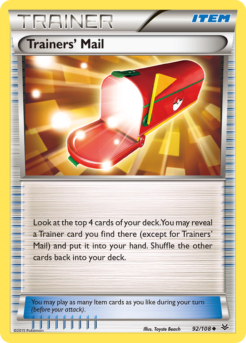
Chilling Reign
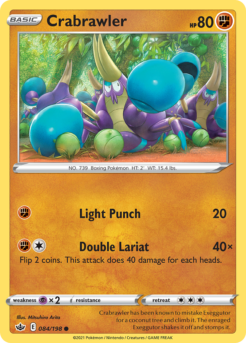
Crabrawler has been known to mistake Exeggutor for a coconut tree and climb it. The enraged Exeggutor shakes it off and stomps it.
Paldean Fates
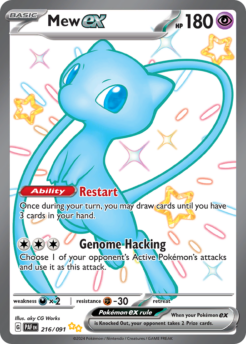
Choose 1 of your opponent’s Active Pokémon’s attacks and use it as this attack.
Ähnliche Produkte
Sword & Shield
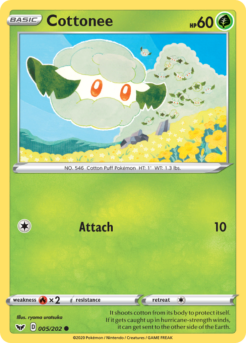
It shoots cotton from its body to protect itself. If it gets caught up in hurricane-strength winds, it can get sent to the other side of the Earth.
Sword & Shield
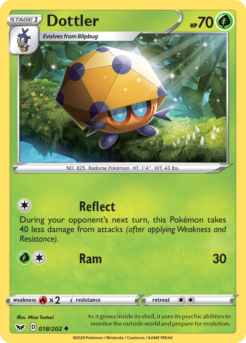
As it grows inside its shell, it uses its psychic abilities to monitor the outside world and prepare for evolution.
Sword & Shield
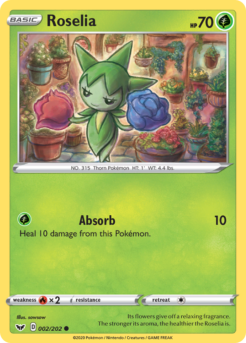
Its flowers give off a relaxing fragrance. The stronger its aroma, the healthier the Roselia is.
Sword & Shield
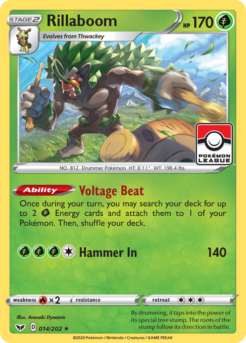
By drumming, it taps into the power of its special tree stump. The roots of the stump follow its direction in battle.
Sword & Shield
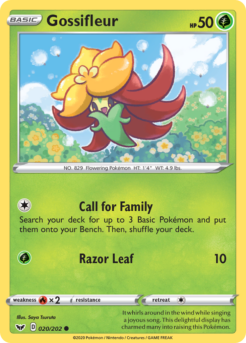
It whirls around in the wind while singing a joyous song. This delightful display has charmed many into raising this Pokémon.
Sword & Shield
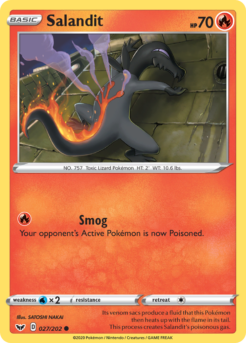
Its venom sacs produce a fluid that this Pokémon then heats up with the flame in its tail. This process creates Salandit's poisonous gas.
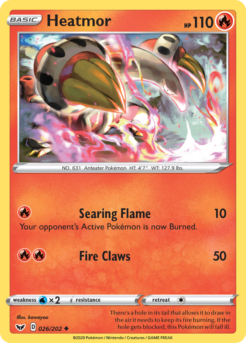
Sword & Shield
There's a hole in its tail that allows it to draw in the air it needs to keep its fire burning. If the hole gets blocked, this Pokémon will fall ill.
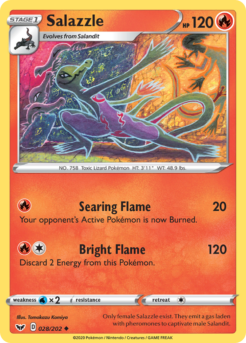
Sword & Shield
Only female Salazzle exist. They emit a gas laden with pheromones to captivate male Salandit.