



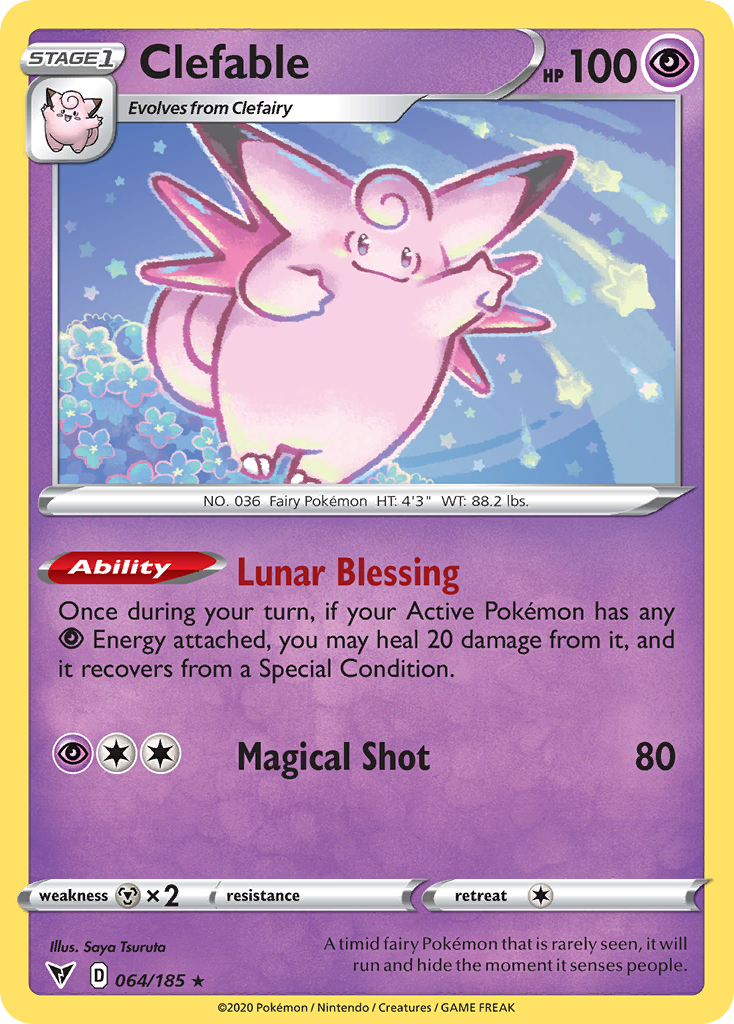
Clefable
A timid fairy Pokémon that is rarely seen, it will run and hide the moment it senses people.
| Supertype | Pokémon |
|---|---|
| Subtype | Stage 1 |
| HP | 100 |
| Types | Psychic |
| Attack | Magical Shot |
| Attack cost | Psychic |
| Artist | Saya Tsuruta |
| Rarity | Rare |
| Pokédex | 36 |
| Evolves from | Clefairy |
Vendor Information
- Store Name: DutchGem
- Vendor: DutchGem
-
Address:
gekkestraat
179
2345GT Utrecht
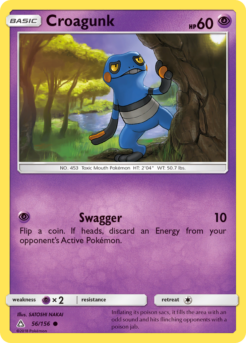
Sun & Moon
Inflating its poison sacs, it fills the area with an odd sound and hits flinching opponents with a poison jab.
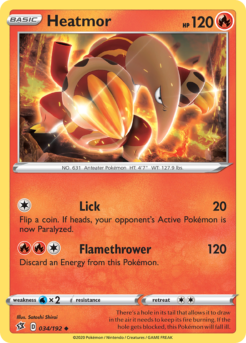
Rebel Clash
There's a hole in its tail that allows it to draw in the air it needs to keep its fire burning. If the hole gets blocked, this Pokémon will fall ill.
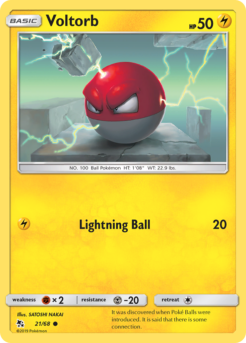
Hidden Fates
It was discovered when Poké Balls were introduced. It is said that there is some connection.
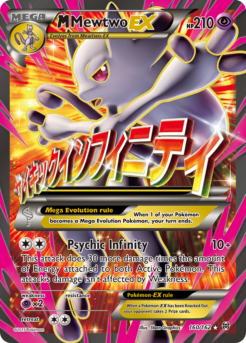
BREAKthrough
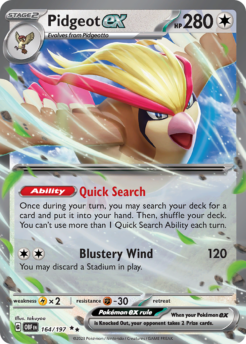
This attack does 30 more damage times the amount of Energy attached to both Active Pokémon. This attack’s damage isn’t affected by Weakness.
Forbidden Light
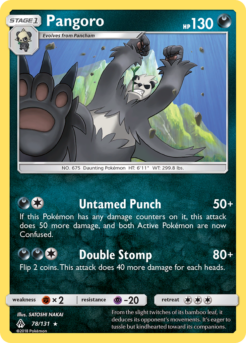
From the slight twitches of its bamboo leaf, it deduces its opponent's movements. It's eager to tussle but kindhearted toward its companions.
Related products
Sword & Shield
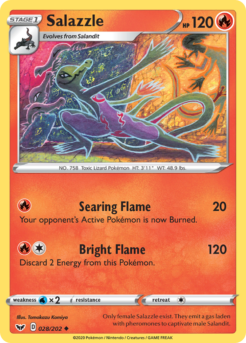
Only female Salazzle exist. They emit a gas laden with pheromones to captivate male Salandit.
Sword & Shield
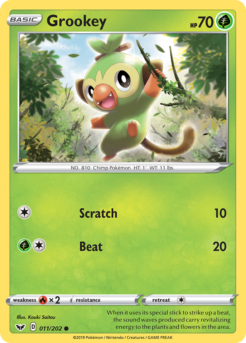
When it uses its special stick to strike up a beat, the sound waves produced carry revitalizing energy to the plants and flowers in the area.
Sword & Shield
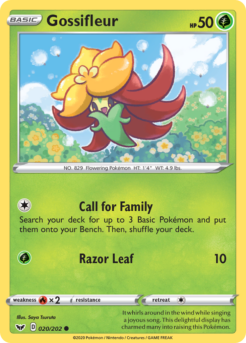
It whirls around in the wind while singing a joyous song. This delightful display has charmed many into raising this Pokémon.

Sword & Shield
Attach up to 3 Fire Energy cards from your discard pile to your Pokémon in any way you like.
Sword & Shield
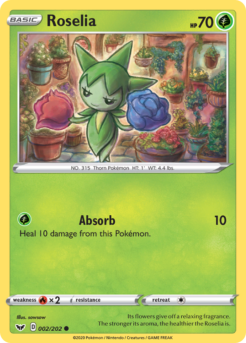
Its flowers give off a relaxing fragrance. The stronger its aroma, the healthier the Roselia is.
Sword & Shield
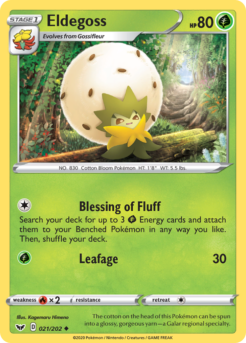
The cotton on the head of this Pokémon can be spun into a glossy, gorgeous yarn—a Galar regional specialty.
Sword & Shield
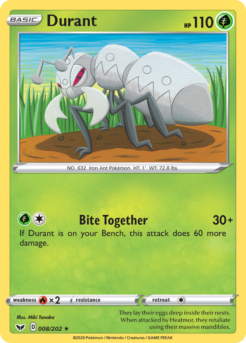
They lay their eggs deep inside their nests. When attacked by Heatmor, they retaliate using their massive mandibles.
Sword & Shield
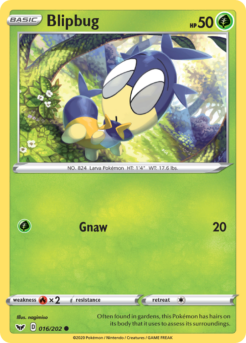
Often found in gardens, this Pokémon has hairs on its body that it uses to assess its surroundings.