



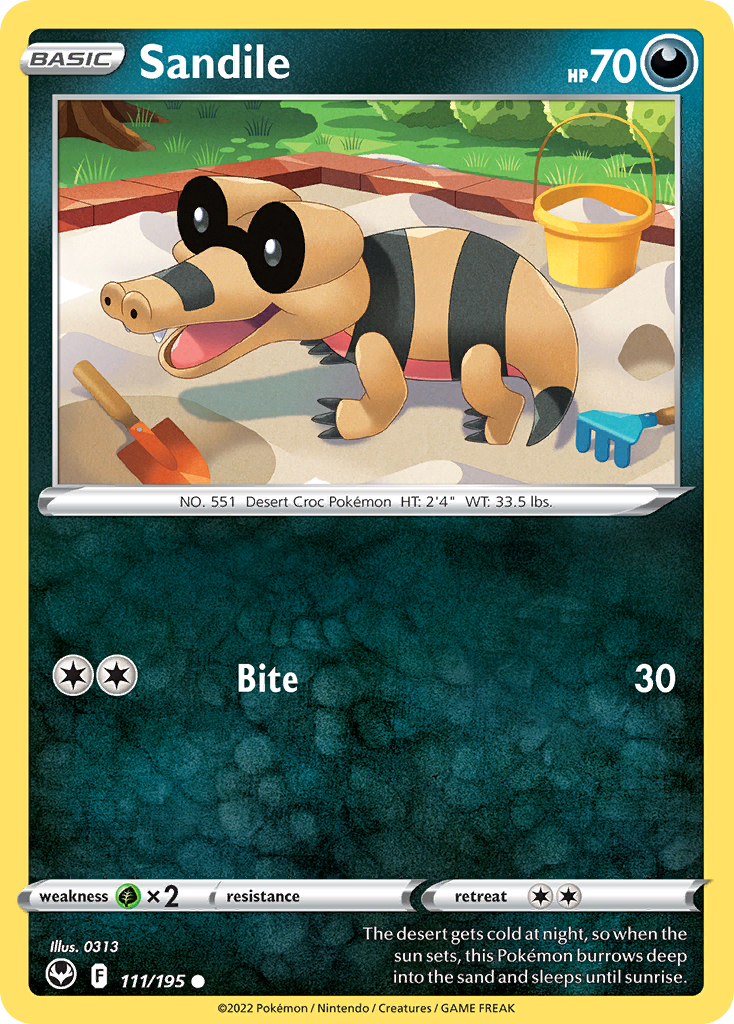
Sandile


The desert gets cold at night, so when the sun sets, this Pokémon burrows deep into the sand and sleeps until sunrise.
| Supertype | Pokémon |
|---|---|
| Subtype | Basic |
| HP | 70 |
| Types | Darkness |
| Attack | Bite |
| Attack cost | Colorless |
| Artist | 0313 |
| Rarity | Common |
| Pokédex | 551 |
| Evolves to | Krokorok |
Vendor Information
- Store Name: DutchGem
- Vendor: DutchGem
-
Address:
gekkestraat
179
2345GT Utrecht
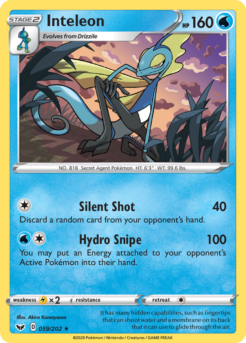
Sword & Shield
It has many hidden capabilities, such as fingertips that can shoot water and a membrane on its back that it can use to glide through the air.
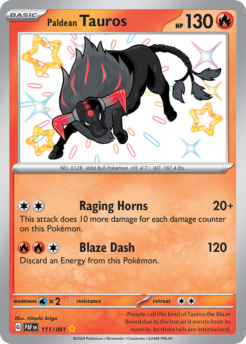
Paldean Fates
People call this kind of Tauros the Blaze Breed due to the hot air it snorts from its nostrils. Its three tails are intertwined.
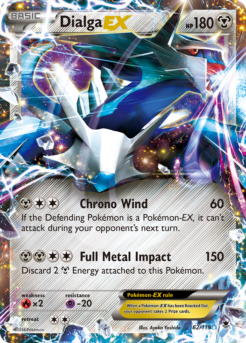
Phantom Forces
If the Defending Pokémon is a Pokémon-EX, it can’t attack during your opponent’s next turn.
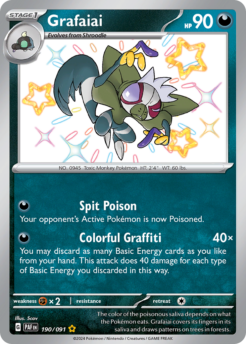
Paldean Fates
The color of the poisonous saliva depends on what the Pokémon eats. Grafaiai covers its fingers in its saliva and draws patterns on trees in forests.
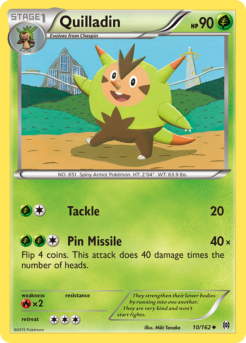
BREAKthrough
They strengthen their lower bodies by running into one another. They are very kind and won't start fights.
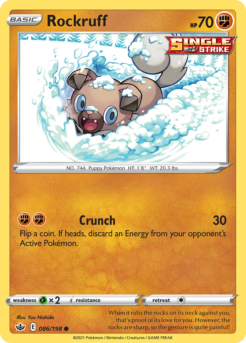
Chilling Reign
When it rubs the rocks on its neck against you, that's proof of its love for you. However, the rocks are sharp, so the gesture is quite painful!
Related products
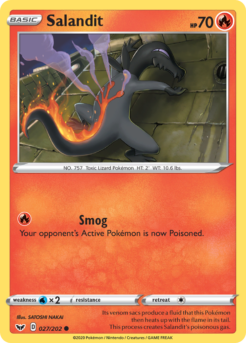
Sword & Shield
Its venom sacs produce a fluid that this Pokémon then heats up with the flame in its tail. This process creates Salandit's poisonous gas.
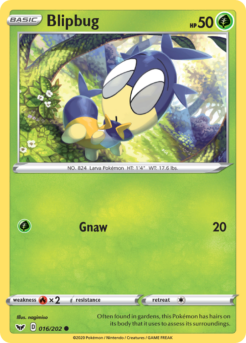
Sword & Shield
Often found in gardens, this Pokémon has hairs on its body that it uses to assess its surroundings.
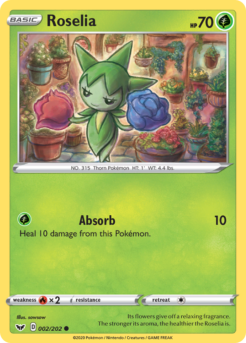
Sword & Shield
Its flowers give off a relaxing fragrance. The stronger its aroma, the healthier the Roselia is.
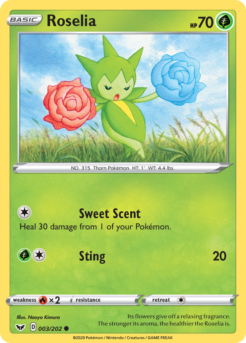
Sword & Shield
Its flowers give off a relaxing fragrance. The stronger its aroma, the healthier the Roselia is.

Sword & Shield
Discard the top card of your deck. If that card is a Fire Energy card, this attack does 90 more damage.
Sword & Shield
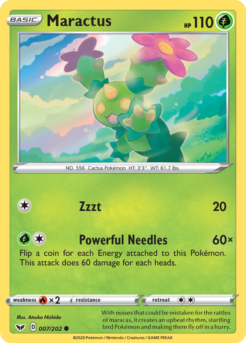
With noises that could be mistaken for the rattles of maracas, it creates an upbeat rhythm, startling bird Pokémon and making them fly off in a hurry.
Sword & Shield
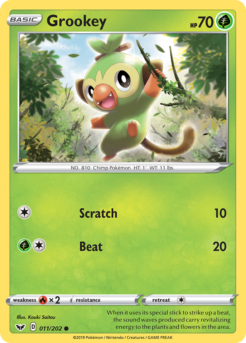
When it uses its special stick to strike up a beat, the sound waves produced carry revitalizing energy to the plants and flowers in the area.
Sword & Shield
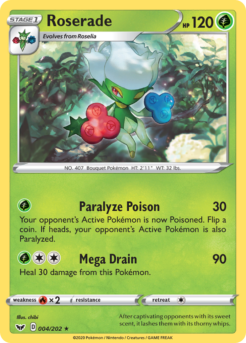
After captivating opponents with its sweet scent, it lashes them with its thorny whips.