



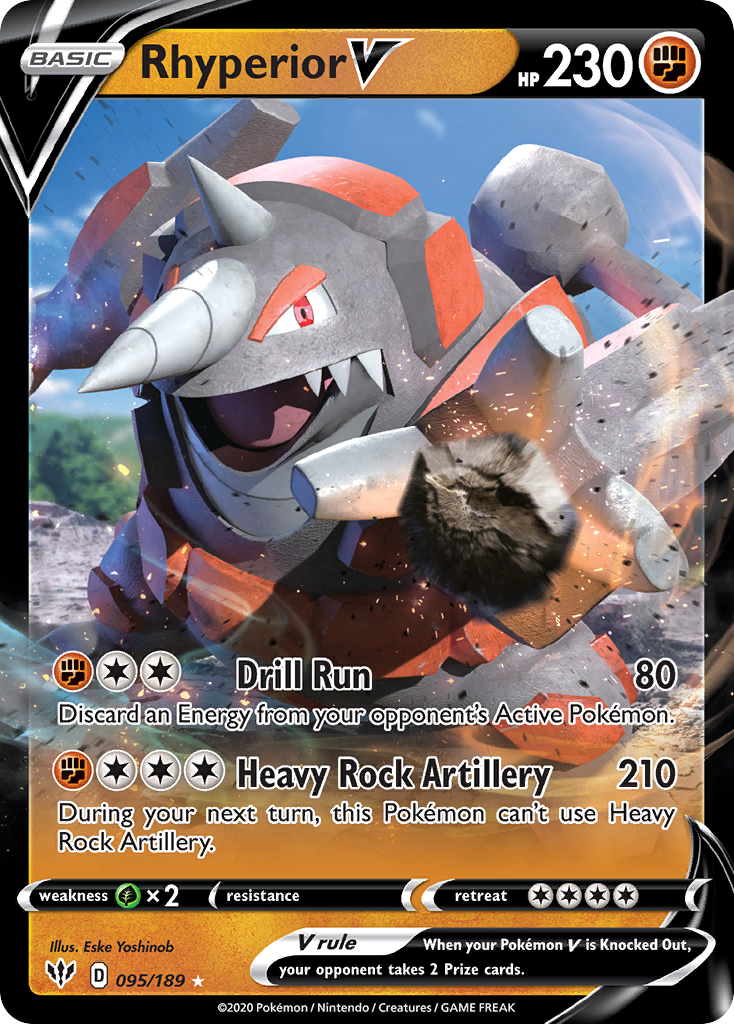
Discard an Energy from your opponent’s Active Pokémon.
| Supertype | Pokémon |
|---|---|
| Subtype | Basic |
| HP | 230 |
| Types | Fighting |
| Attack | Drill Run |
| Attack cost | Fighting |
| Artist | Eske Yoshinob |
| Rarity | Rare Holo V |
| Pokédex | 464 |
Vendor Information
- Store Name: DutchGem
- Vendor: DutchGem
-
Address:
gekkestraat
179
2345GT Utrecht
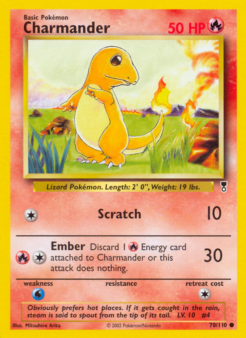
Base
Obviously prefers hot places. If it gets caught in the rain, steam is said to spout from the tip of its tail.
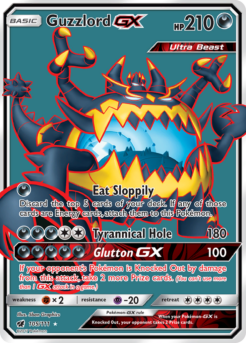
Crimson Invasion
Discard the top 5 cards of your deck. If any of those cards are Energy cards, attach them to this Pokémon.
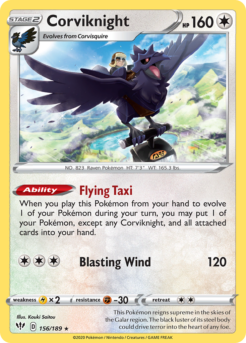
Darkness Ablaze
This Pokémon reigns supreme in the skies of the Galar region. The black luster of its steel body could drive terror into the heart of any foe.
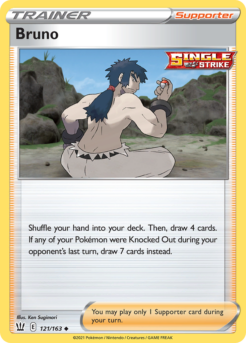
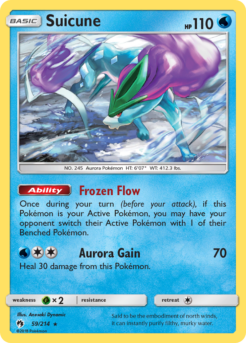
Lost Thunder
Said to be the embodiment of north winds, it can instantly purify filthy, murky water.
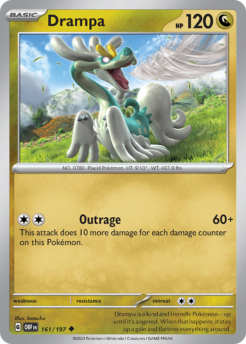
Obsidian Flames
Drampa is a kind and friendly Pokémon—up until it's angered. When that happens, it stirs up a gale and flattens everything around.
Related products
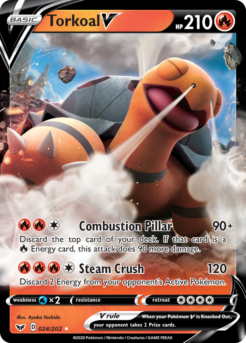
Sword & Shield
Discard the top card of your deck. If that card is a Fire Energy card, this attack does 90 more damage.
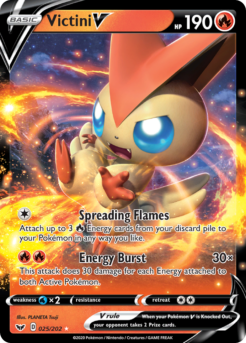
Sword & Shield
Attach up to 3 Fire Energy cards from your discard pile to your Pokémon in any way you like.
Sword & Shield
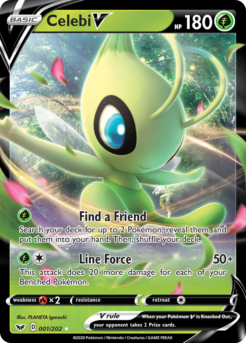
Search your deck for up to 2 Pokémon, reveal them, and put them into your hand. Then, shuffle your deck.
Sword & Shield
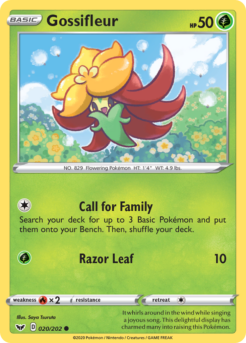
It whirls around in the wind while singing a joyous song. This delightful display has charmed many into raising this Pokémon.
Sword & Shield
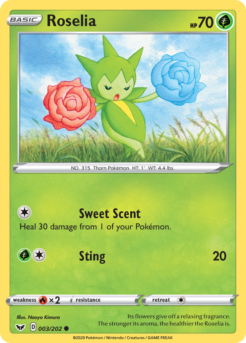
Its flowers give off a relaxing fragrance. The stronger its aroma, the healthier the Roselia is.
Sword & Shield
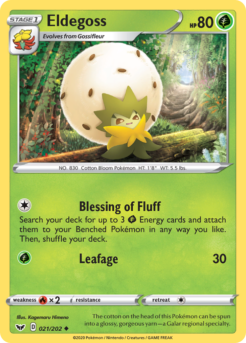
The cotton on the head of this Pokémon can be spun into a glossy, gorgeous yarn—a Galar regional specialty.
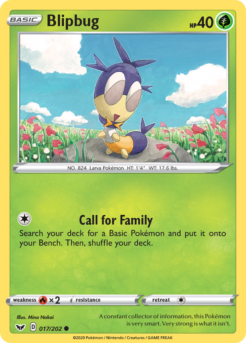
Sword & Shield
A constant collector of information, this Pokémon is very smart. Very strong is what it isn't.
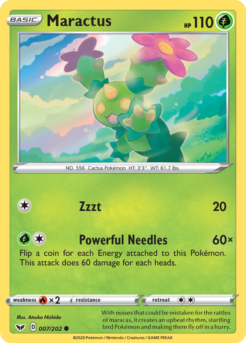
Sword & Shield
With noises that could be mistaken for the rattles of maracas, it creates an upbeat rhythm, startling bird Pokémon and making them fly off in a hurry.