



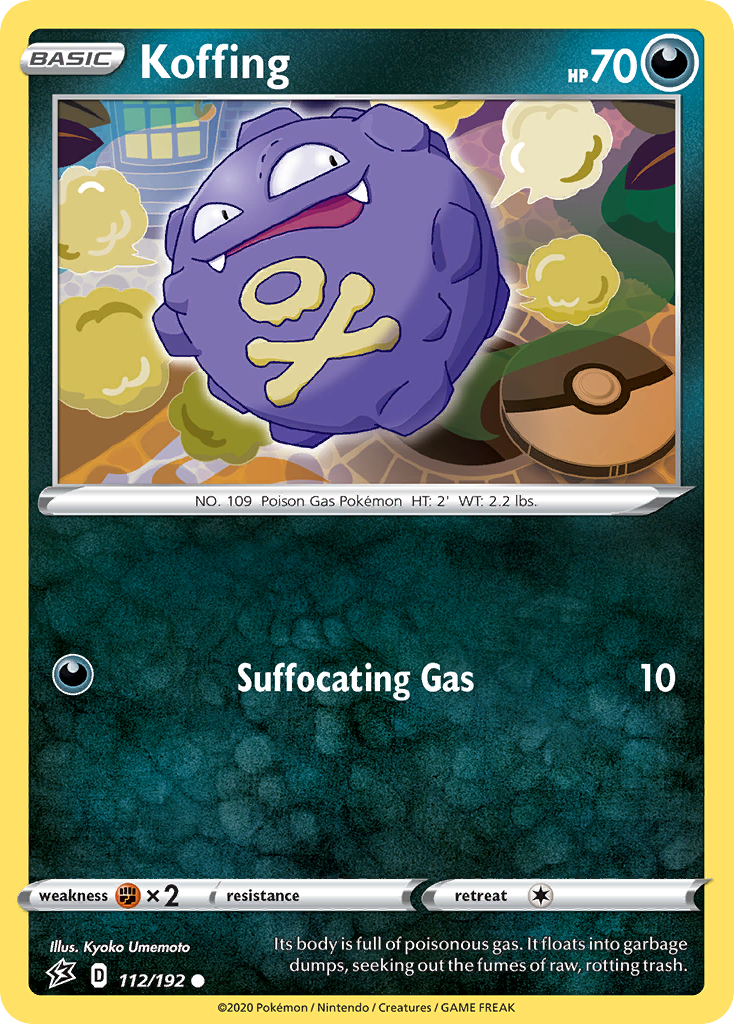
Koffing
Its body is full of poisonous gas. It floats into garbage dumps, seeking out the fumes of raw, rotting trash.
| Supertype | Pokémon |
|---|---|
| Subtype | Basic |
| HP | 70 |
| Types | Darkness |
| Attack | Suffocating Gas |
| Attack cost | Darkness |
| Artist | Kyoko Umemoto |
| Rarity | Common |
| Pokédex | 109 |
| Evolves to | Weezing |
Vendor Information
- Store Name: DutchGem
- Vendor: DutchGem
-
Address:
gekkestraat
179
2345GT Utrecht
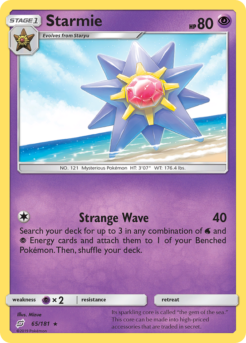
Sun & Moon
Its sparkling core is called "the gem of the sea." This core can be made into high-priced accessories that are traded in secret.
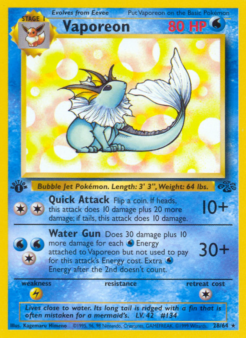
Base
Lives close to water. Its long tail is ridged with a fin that is often mistaken for a mermaid's.
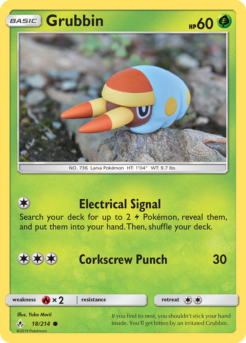
Sun & Moon
If you find its nest, you shouldn't stick your hand inside. You'll get bitten by an irritated Grubbin.
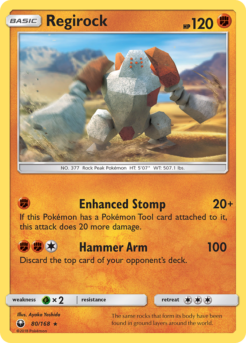
Celestial Storm
The same rocks that form its body have been found in ground layers around the world.

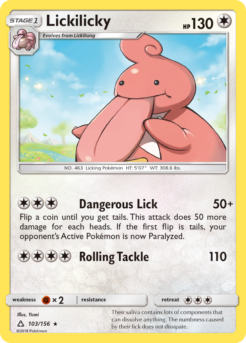
Sun & Moon
Their saliva contains lots of components that can dissolve anything. The numbness caused by their lick does not dissipate.
Related products
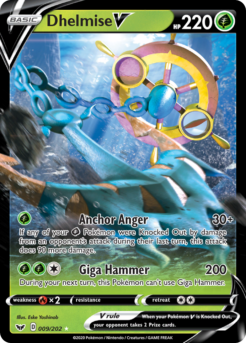
Sword & Shield
If any of your Grass Pokémon were Knocked Out by damage from an opponent’s attack during their last turn, this attack does 90 more damage.
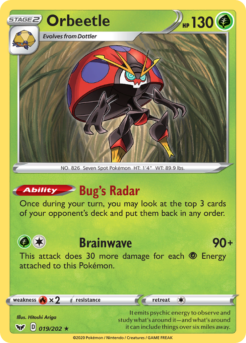
Sword & Shield
It emits psychic energy to observe and study what's around it—and what's around it can include things over six miles away.
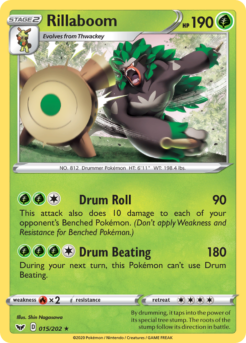
Sword & Shield
By drumming, it taps into the power of its special tree stump. The roots of the stump follow its direction in battle.
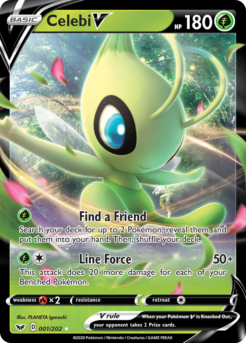
Sword & Shield
Search your deck for up to 2 Pokémon, reveal them, and put them into your hand. Then, shuffle your deck.
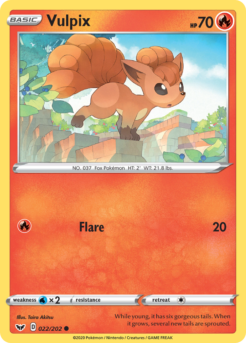
Sword & Shield
While young, it has six gorgeous tails. When it grows, several new tails are sprouted.
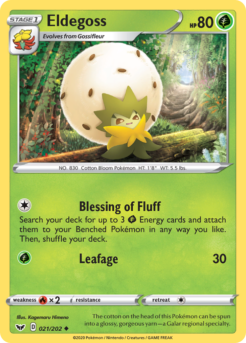
Sword & Shield
The cotton on the head of this Pokémon can be spun into a glossy, gorgeous yarn—a Galar regional specialty.
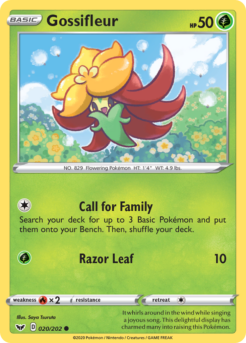
Sword & Shield
It whirls around in the wind while singing a joyous song. This delightful display has charmed many into raising this Pokémon.
Sword & Shield
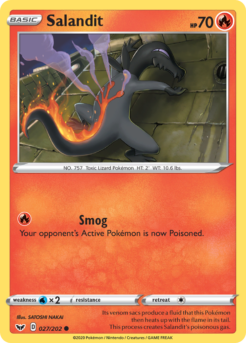
Its venom sacs produce a fluid that this Pokémon then heats up with the flame in its tail. This process creates Salandit's poisonous gas.