



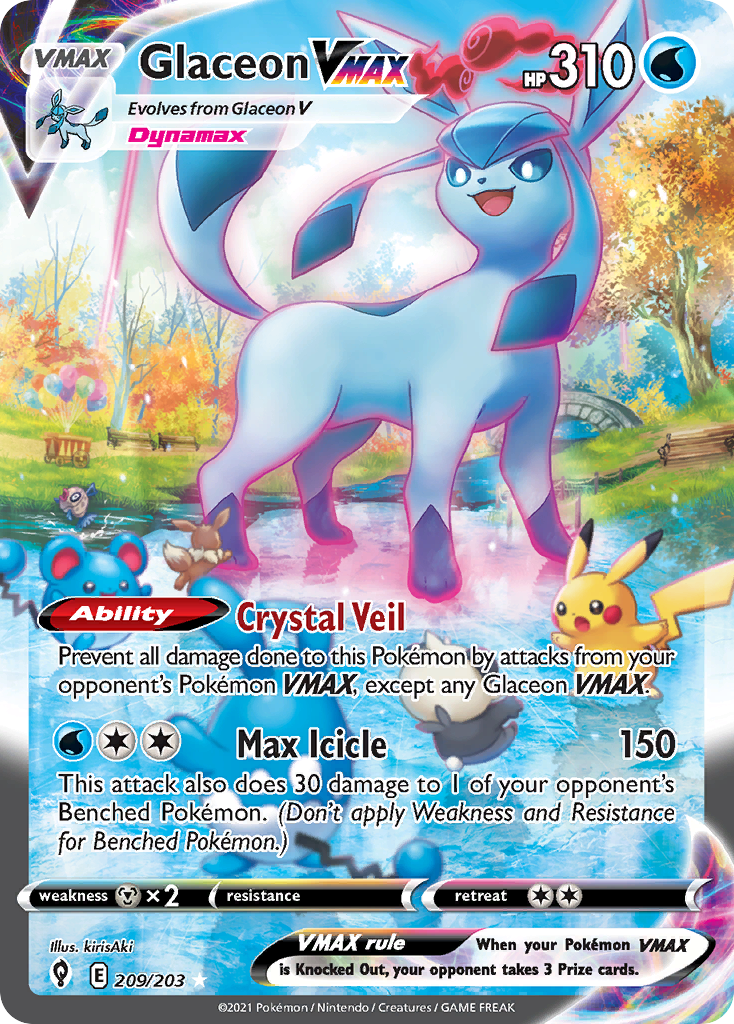

This attack also does 30 damage to 1 of your opponent’s Benched Pokémon. (Don’t apply Weakness and Resistance for Benched Pokémon.)
| Supertype | Pokémon |
|---|---|
| Subtype | VMAX |
| HP | 310 |
| Types | Water |
| Attack | Max Icicle |
| Attack cost | Water |
| Artist | kirisAki |
| Rarity | Rare Rainbow |
| Pokédex | 471 |
| Evolves from | Glaceon V |
Vendor Information
- Store Name: DutchGem
- Vendor: DutchGem
-
Address:
gekkestraat
179
2345GT Utrecht
Scarlet & Violet
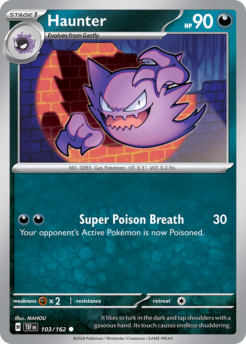
It likes to lurk in the dark and tap shoulders with a gaseous hand. Its touch causes endless shuddering.
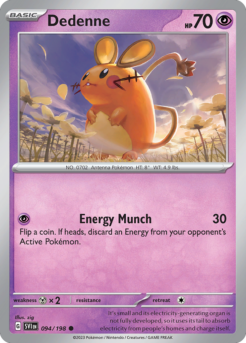
Scarlet & Violet
It's small and its electricity-generating organ is not fully developed, so it uses its tail to absorb electricity from people's homes and charge itself.
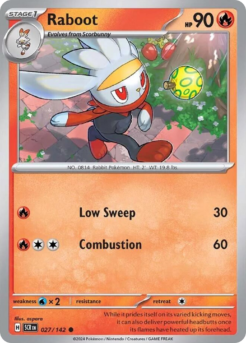
BREAKpoint
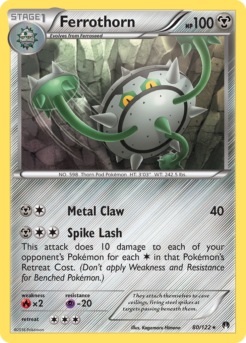
They attach themselves to cave ceilings, firing steel spikes at targets passing beneath them.
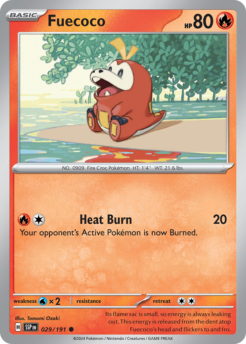
Related products
Sword & Shield
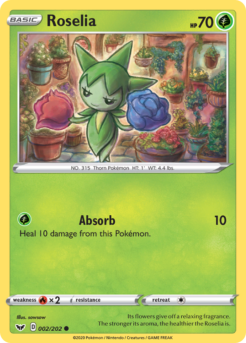
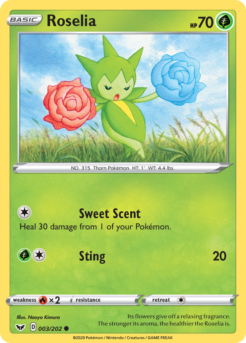
Its flowers give off a relaxing fragrance. The stronger its aroma, the healthier the Roselia is.
Sword & Shield
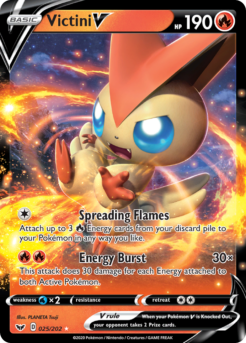
Attach up to 3 Fire Energy cards from your discard pile to your Pokémon in any way you like.
Sword & Shield
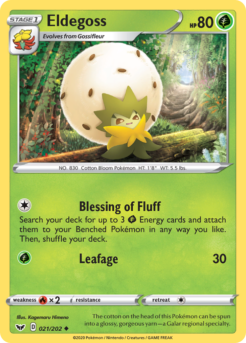
The cotton on the head of this Pokémon can be spun into a glossy, gorgeous yarn—a Galar regional specialty.
Sword & Shield
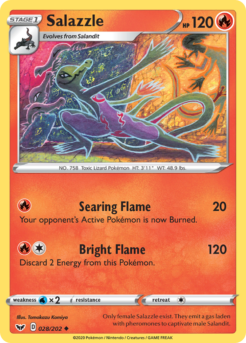
Only female Salazzle exist. They emit a gas laden with pheromones to captivate male Salandit.
Sword & Shield
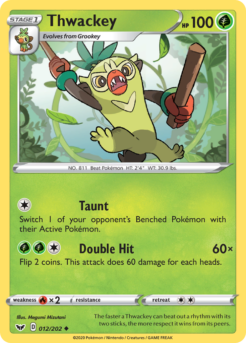
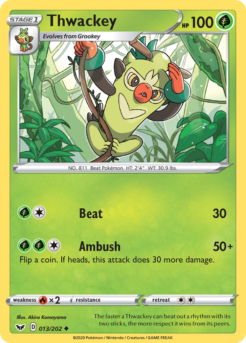
The faster a Thwackey can beat out a rhythm with its two sticks, the more respect it wins from its peers.
Sword & Shield
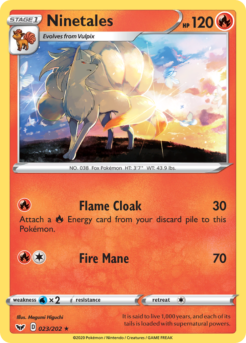
It is said to live 1,000 years, and each of its tails is loaded with supernatural powers.
Sword & Shield
Its flowers give off a relaxing fragrance. The stronger its aroma, the healthier the Roselia is.
Sword & Shield
The faster a Thwackey can beat out a rhythm with its two sticks, the more respect it wins from its peers.