



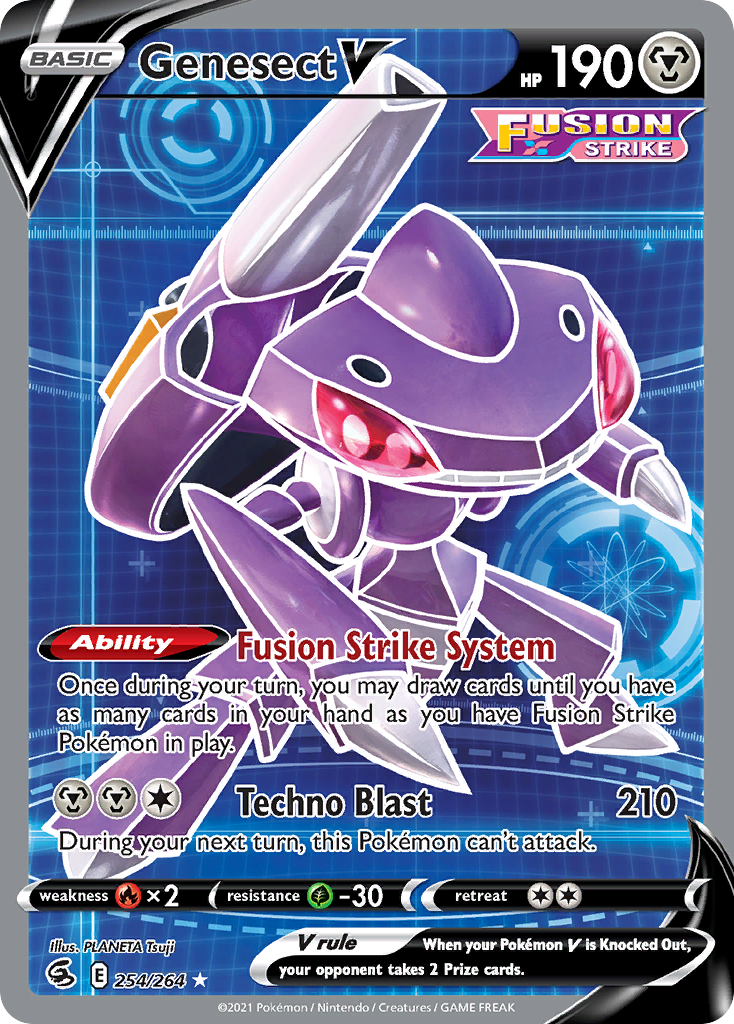

During your next turn, this Pokémon can’t attack.
| Supertype | Pokémon |
|---|---|
| Subtype | Basic |
| HP | 190 |
| Types | Metal |
| Attack | Techno Blast |
| Attack cost | Metal |
| Artist | PLANETA Tsuji |
| Rarity | Rare Ultra |
| Pokédex | 649 |
Vendor Information
- Store Name: DutchGem
- Vendor: DutchGem
-
Address:
gekkestraat
179
2345GT Utrecht
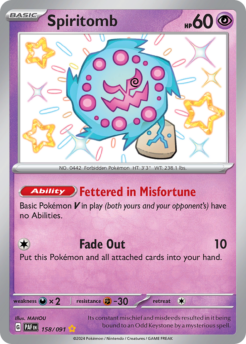
Paldean Fates
Its constant mischief and misdeeds resulted in it being bound to an Odd Keystone by a mysterious spell.
Sun & Moon
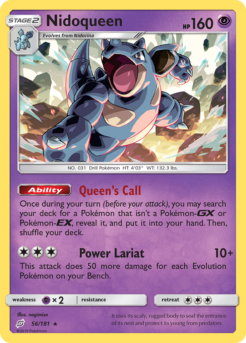
It uses its scaly, rugged body to seal the entrance of its nest and protect its young from predators.
Base
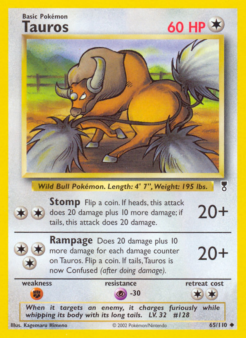
When it targets an enemy, it charges furiously while whipping its body with its long tails.
Rebel Clash
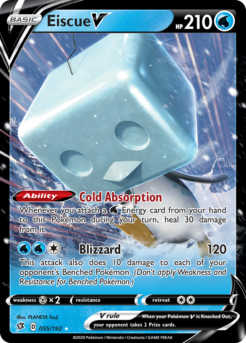
This attack also does 10 damage to each of your opponent’s Benched Pokémon. (Don’t apply Weakness and Resistance for Benched Pokémon.)
Lost Thunder
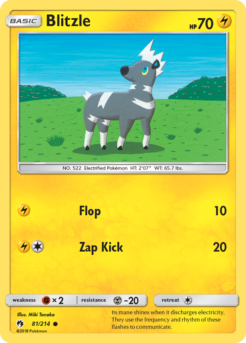
Its mane shines when it discharges electricity. They use the frequency and rhythm of these flashes to communicate.
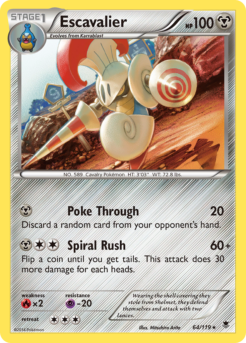
Phantom Forces
Wearing the shell covering they stole from Shelmet, they defend themselves and attack with two lances.
Related products
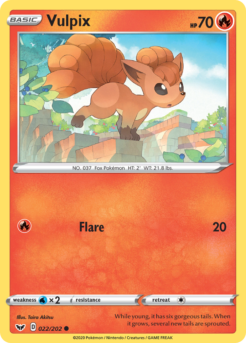
Sword & Shield
While young, it has six gorgeous tails. When it grows, several new tails are sprouted.
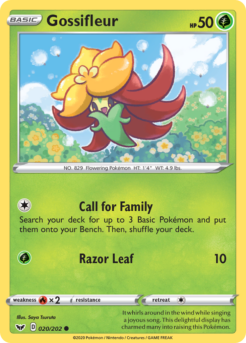
Sword & Shield
It whirls around in the wind while singing a joyous song. This delightful display has charmed many into raising this Pokémon.
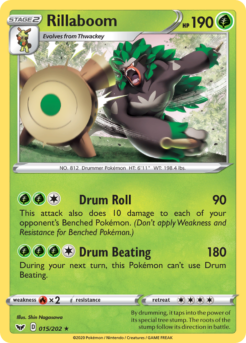
Sword & Shield
By drumming, it taps into the power of its special tree stump. The roots of the stump follow its direction in battle.
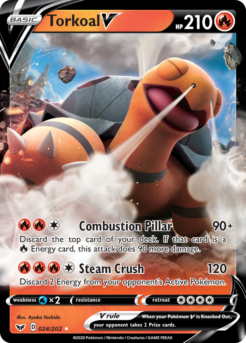
Sword & Shield
Discard the top card of your deck. If that card is a Fire Energy card, this attack does 90 more damage.
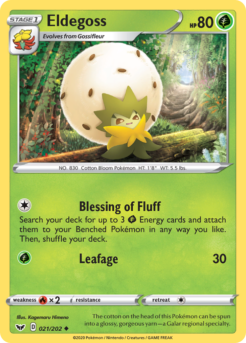
Sword & Shield
The cotton on the head of this Pokémon can be spun into a glossy, gorgeous yarn—a Galar regional specialty.
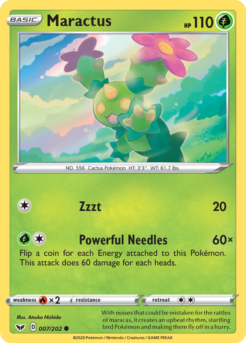
Sword & Shield
With noises that could be mistaken for the rattles of maracas, it creates an upbeat rhythm, startling bird Pokémon and making them fly off in a hurry.
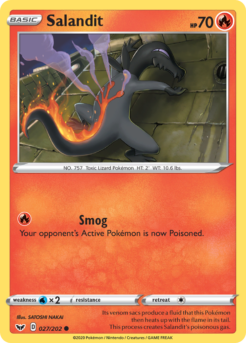
Sword & Shield
Its venom sacs produce a fluid that this Pokémon then heats up with the flame in its tail. This process creates Salandit's poisonous gas.
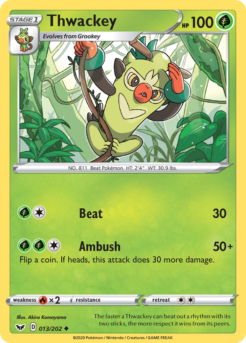
Sword & Shield
The faster a Thwackey can beat out a rhythm with its two sticks, the more respect it wins from its peers.