



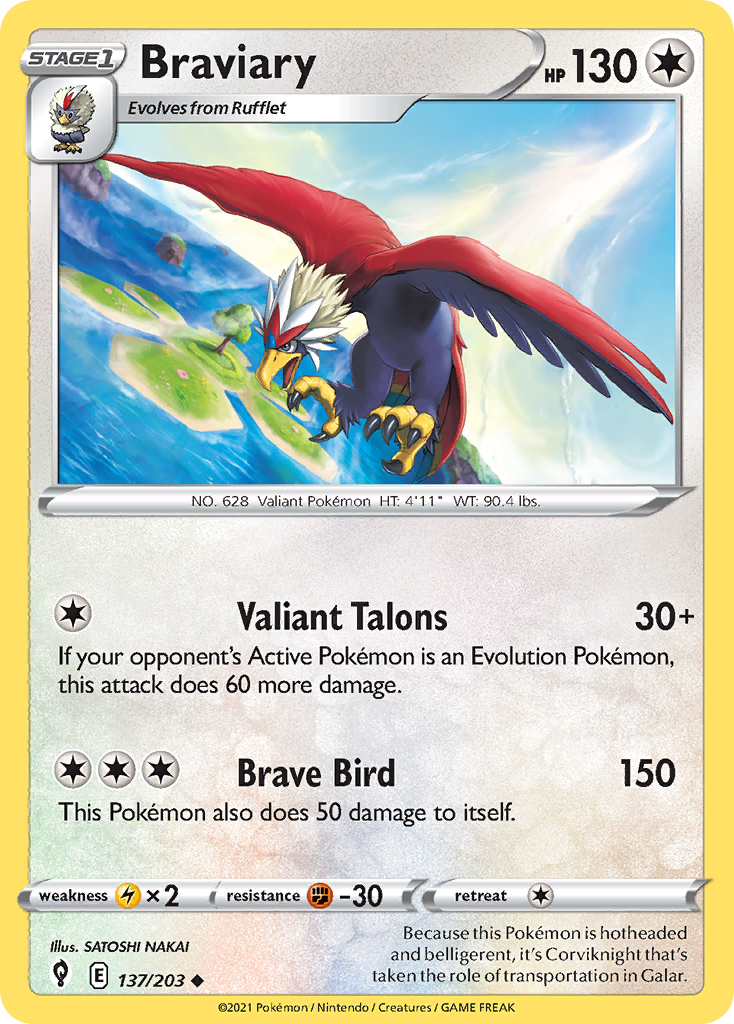
Braviary
Because this Pokémon is hotheaded and belligerent, it’s Corviknight that’s taken the role of transportation in Galar.

If your opponent’s Active Pokémon is an Evolution Pokémon, this attack does 60 more damage.
| Supertype | Pokémon |
|---|---|
| Subtype | Stage 1 |
| HP | 130 |
| Types | Colorless |
| Attack | Valiant Talons |
| Attack cost | Colorless |
| Artist | SATOSHI NAKAI |
| Rarity | Uncommon |
| Pokédex | 628 |
| Evolves from | Rufflet |
Vendor Information
- Store Name: DutchGem
- Vendor: DutchGem
-
Address:
gekkestraat
179
2345GT Utrecht
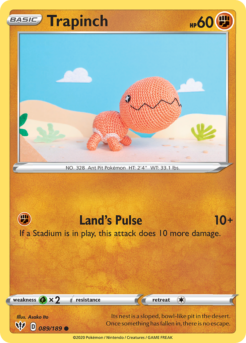
Darkness Ablaze
Its nest is a sloped, bowl-like pit in the desert. Once something has fallen in, there is no escape.
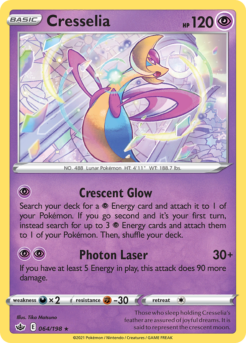
Chilling Reign
Those who sleep holding Cresselia's feather are assured of joyful dreams. It is said to represent the crescent moon.

Shining Legends
It wiggles its hips as it walks. It can cause people to dance in unison with it.
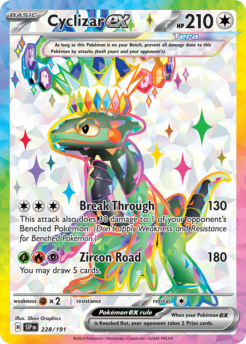
Scarlet & Violet
This attack also does 30 damage to 1 of your opponent’s Benched Pokémon. (Don’t apply Weakness and Resistance for Benched Pokémon.)
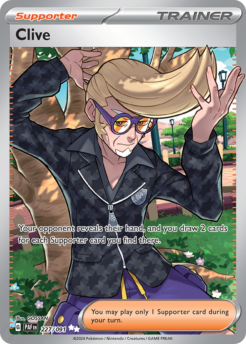

Fusion Strike
As each tail grows, its fur becomes more lustrous. When held, it feels slightly warm.
Related products
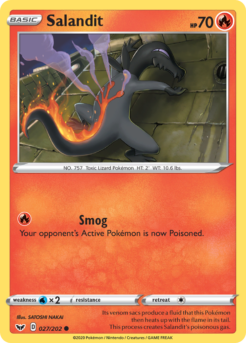
Sword & Shield
Its venom sacs produce a fluid that this Pokémon then heats up with the flame in its tail. This process creates Salandit's poisonous gas.
Sword & Shield
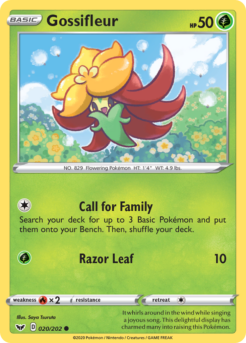
It whirls around in the wind while singing a joyous song. This delightful display has charmed many into raising this Pokémon.
Sword & Shield
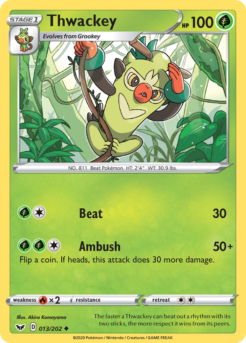
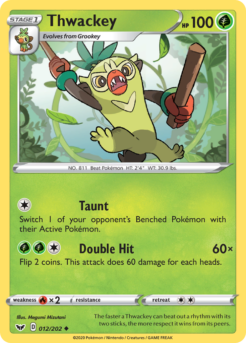
The faster a Thwackey can beat out a rhythm with its two sticks, the more respect it wins from its peers.
Sword & Shield
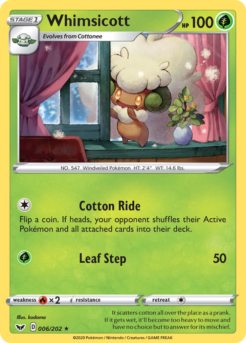
It scatters cotton all over the place as a prank. If it gets wet, it'll become too heavy to move and have no choice but to answer for its mischief.
Sword & Shield
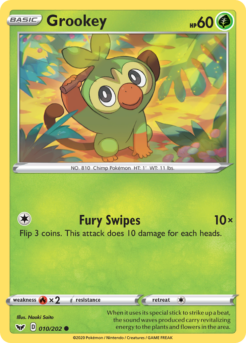
When it uses its special stick to strike up a beat, the sound waves produced carry revitalizing energy to the plants and flowers in the area.
Sword & Shield
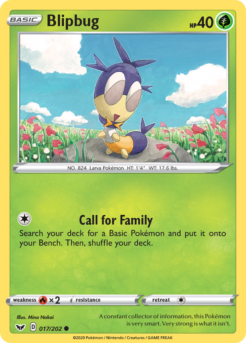
A constant collector of information, this Pokémon is very smart. Very strong is what it isn't.
Sword & Shield
The faster a Thwackey can beat out a rhythm with its two sticks, the more respect it wins from its peers.
Sword & Shield
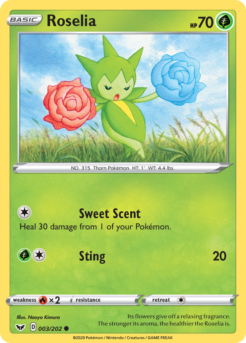
Its flowers give off a relaxing fragrance. The stronger its aroma, the healthier the Roselia is.