



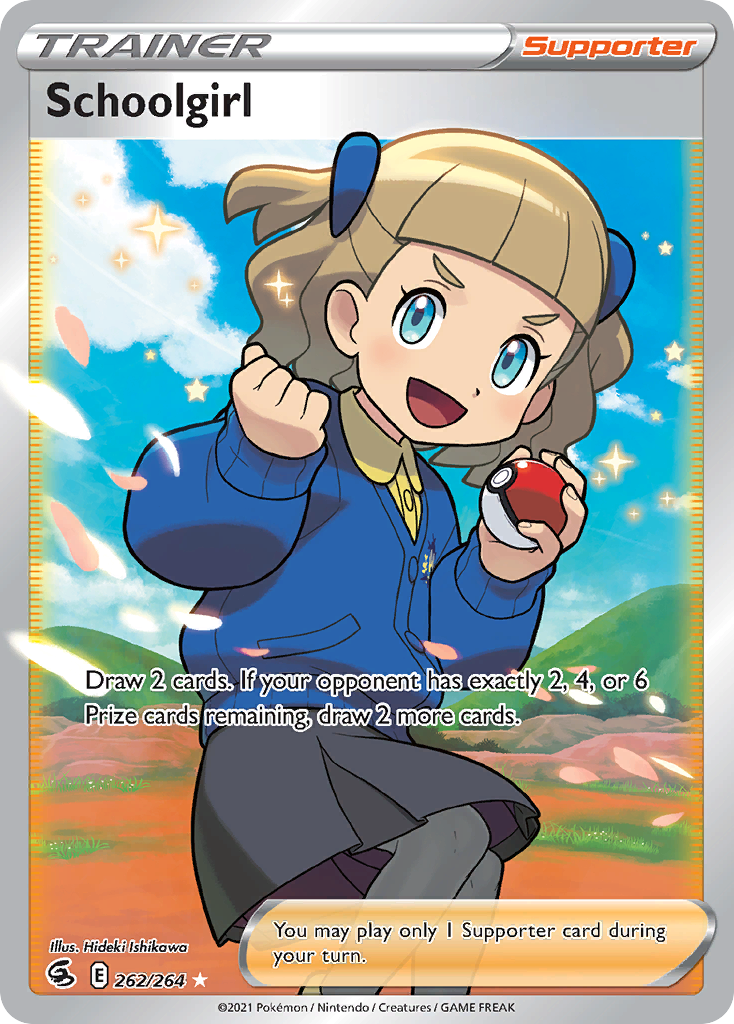


| Supertype | Trainer |
|---|---|
| Subtype | Supporter |
| Artist | Hideki Ishikawa |
| Rarity | Rare Ultra |
Vendor Information
- Store Name: DutchGem
- Vendor: DutchGem
-
Address:
gekkestraat
179
2345GT Utrecht
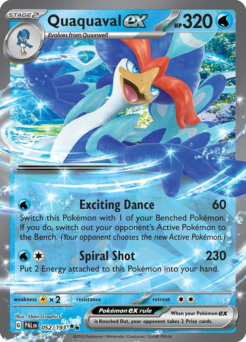
Paldea Evolved
Switch this Pokémon with 1 of your Benched Pokémon. If you do, switch out your opponent’s Active Pokémon to the Bench. (Your opponent chooses the new Active Pokémon.)
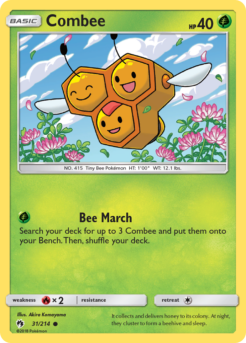
Lost Thunder
It collects and delivers honey to its colony. At night, they cluster to form a beehive and sleep.
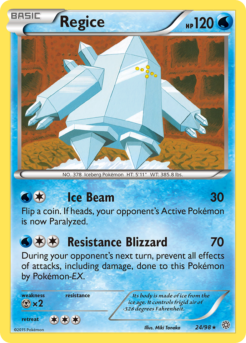
Ancient Origins
Its body is made of ice from the ice age. It controls frigid air of -328 degrees Fahrenheit.
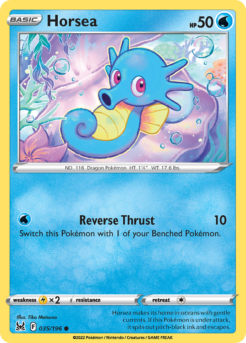
Lost Origin
Horsea makes its home in oceans with gentle currents. If this Pokémon is under attack, it spits out pitch-black ink and escapes.
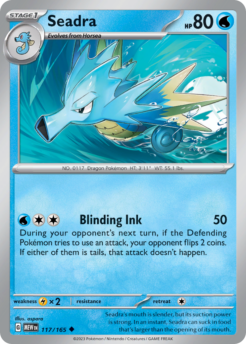
151
Seadra's mouth is slender, but its suction power is strong. In an instant, Seadra can suck in food that's larger than the opening of its mouth.
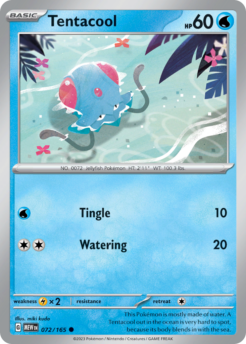
151
This Pokémon is mostly made of water. A Tentacool out in the ocean is very hard to spot, because its body blends in with the sea.
Produtos Relacionados
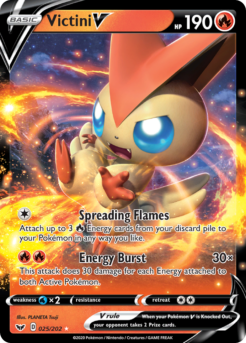
Sword & Shield
Attach up to 3 Fire Energy cards from your discard pile to your Pokémon in any way you like.
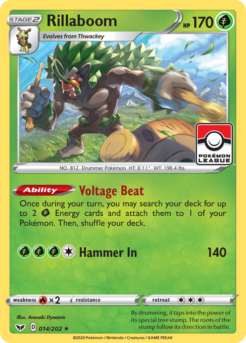
Sword & Shield
By drumming, it taps into the power of its special tree stump. The roots of the stump follow its direction in battle.
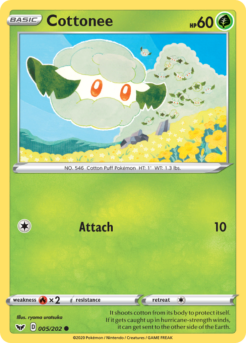
Sword & Shield
It shoots cotton from its body to protect itself. If it gets caught up in hurricane-strength winds, it can get sent to the other side of the Earth.
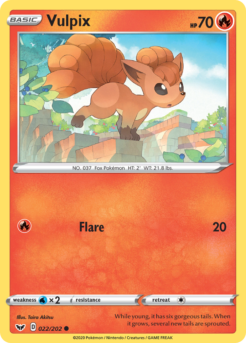
Sword & Shield
While young, it has six gorgeous tails. When it grows, several new tails are sprouted.
Sword & Shield
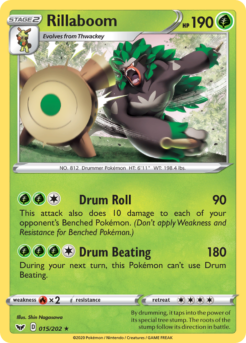
By drumming, it taps into the power of its special tree stump. The roots of the stump follow its direction in battle.
Sword & Shield
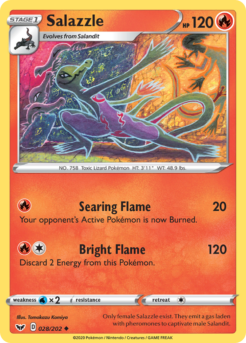
Only female Salazzle exist. They emit a gas laden with pheromones to captivate male Salandit.
Sword & Shield
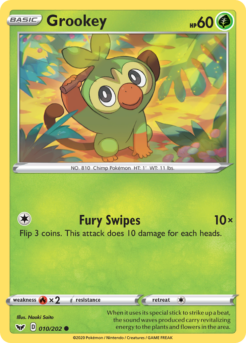
When it uses its special stick to strike up a beat, the sound waves produced carry revitalizing energy to the plants and flowers in the area.
Sword & Shield
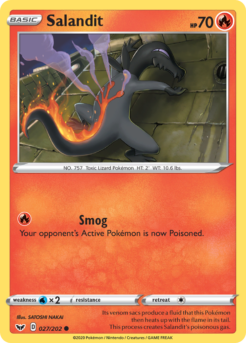
Its venom sacs produce a fluid that this Pokémon then heats up with the flame in its tail. This process creates Salandit's poisonous gas.