



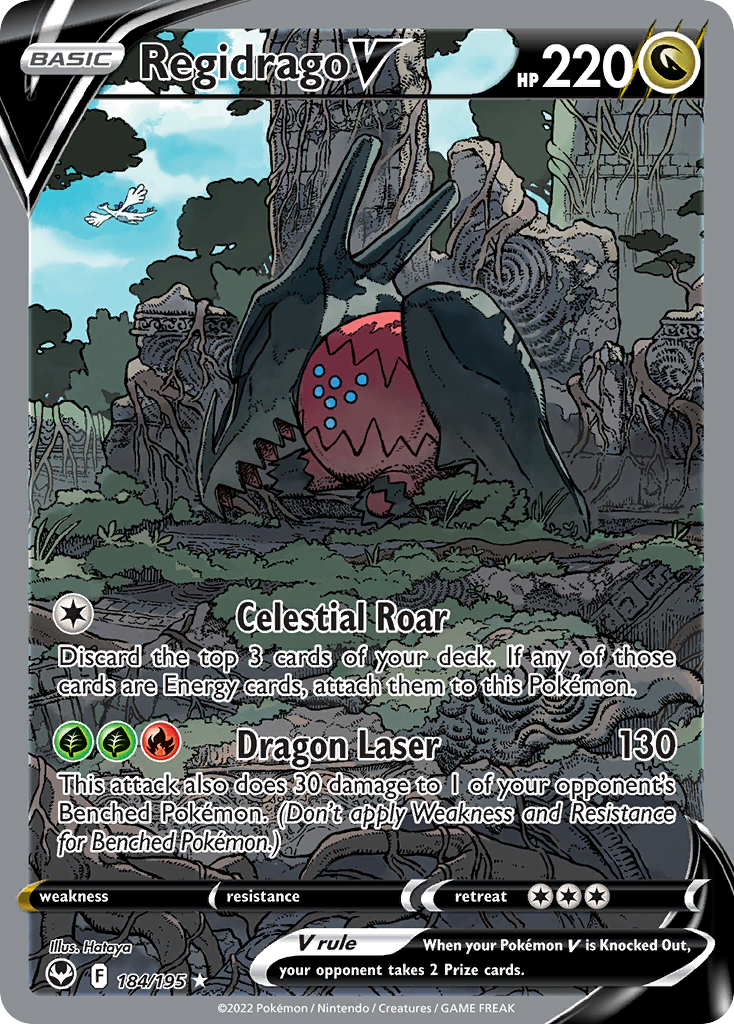

Discard the top 3 cards of your deck. If any of those cards are Energy cards, attach them to this Pokémon.
| Supertype | Pokémon |
|---|---|
| Subtype | Basic |
| HP | 220 |
| Types | Dragon |
| Attack | Celestial Roar |
| Attack cost | Colorless |
| Artist | Hataya |
| Rarity | Rare Ultra |
| Pokédex | 895 |
Vendor Information
- Store Name: DutchGem
- Vendor: DutchGem
-
Address:
gekkestraat
179
2345GT Utrecht
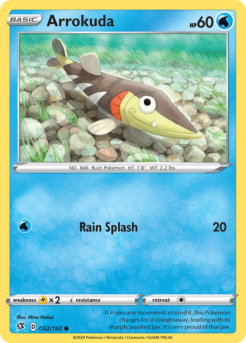
Rebel Clash
If it sees any movement around it, this Pokémon charges for it straightaway, leading with its sharply pointed jaw. It's very proud of that jaw.
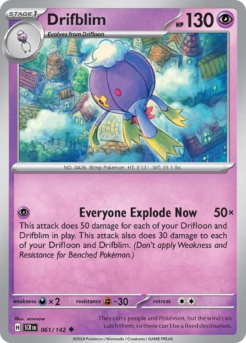
Scarlet & Violet
This attack does 50 damage for each of your Drifloon and Drifblim in play. This attack also does 30 damage to each of your Drifloon and Drifblim. (Don’t apply Weakness and Resistance for Benched Pokémon.)
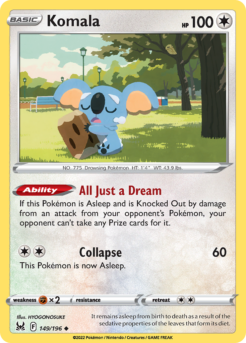
Lost Origin
It remains asleep from birth to death as a result of the sedative properties of the leaves that form its diet.
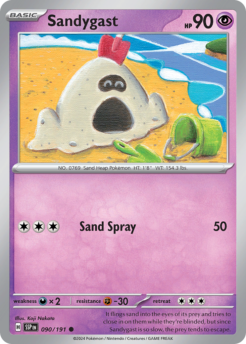
Base
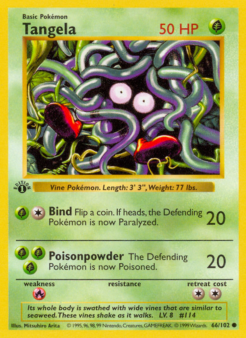
Its whole body is swathed with wide vines that are similar to seaweed. These vines shake as it walks.
Produtos Relacionados
Sword & Shield
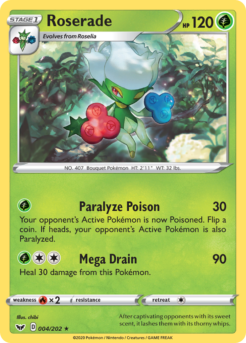
After captivating opponents with its sweet scent, it lashes them with its thorny whips.
Sword & Shield
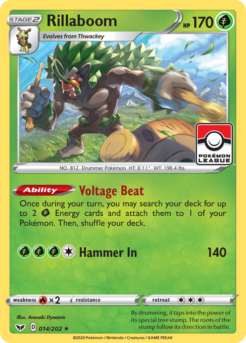
By drumming, it taps into the power of its special tree stump. The roots of the stump follow its direction in battle.
Sword & Shield
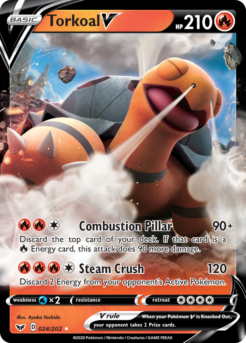
Discard the top card of your deck. If that card is a Fire Energy card, this attack does 90 more damage.
Sword & Shield
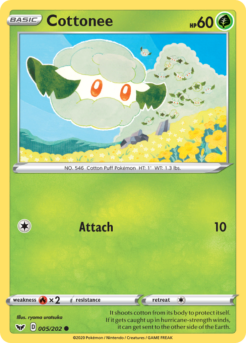
It shoots cotton from its body to protect itself. If it gets caught up in hurricane-strength winds, it can get sent to the other side of the Earth.
Sword & Shield
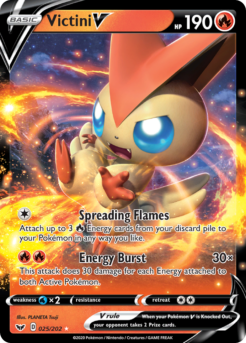
Attach up to 3 Fire Energy cards from your discard pile to your Pokémon in any way you like.
Sword & Shield
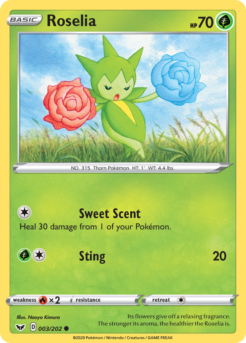
Its flowers give off a relaxing fragrance. The stronger its aroma, the healthier the Roselia is.
Sword & Shield
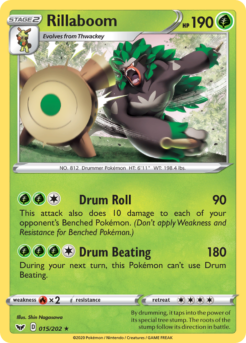
By drumming, it taps into the power of its special tree stump. The roots of the stump follow its direction in battle.
Sword & Shield
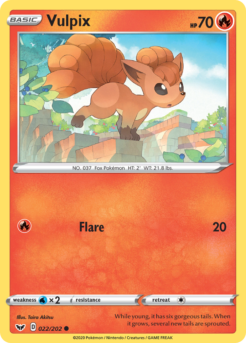
While young, it has six gorgeous tails. When it grows, several new tails are sprouted.