



Pelipper
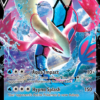
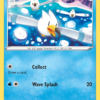
It is a messenger of the skies, carrying small Pokémon and eggs to safety in its bill.

| Supertype | Pokémon |
|---|---|
| Subtype | Stage 1 |
| HP | 120 |
| Types | Water |
| Attack | Wing Attack |
| Attack cost | Colorless |
| Artist | Eri Yamaki |
| Rarity | Uncommon |
| Pokédex | 279 |
| Evolves from | Wingull |
Vendor Information
- Store Name: DutchGem
- Vendor: DutchGem
-
Address:
gekkestraat
179
2345GT Utrecht
Steam Siege
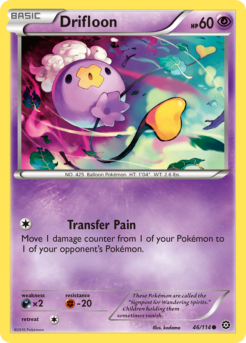
These Pokémon are called the "Signpost for Wandering Spirits." Children holding them sometimes vanish.
BREAKthrough
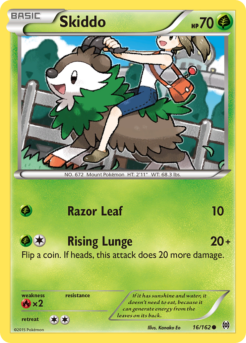
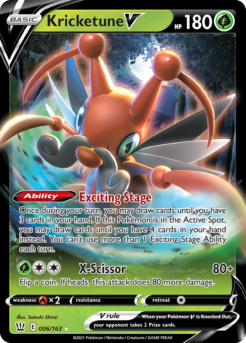
If it has sunshine and water, it doesn't need to eat, because it can generate energy from the leaves on its back.
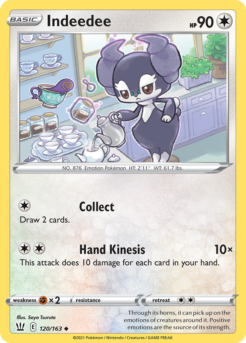
Battle Styles
Through its horns, it can pick up on the emotions of creatures around it. Positive emotions are the source of its strength.
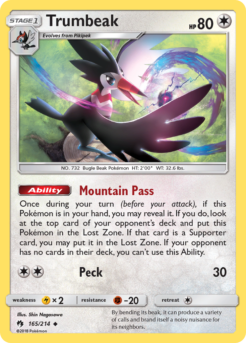
Lost Thunder
By bending its beak, it can produce a variety of calls and brand itself a noisy nuisance for its neighbors.
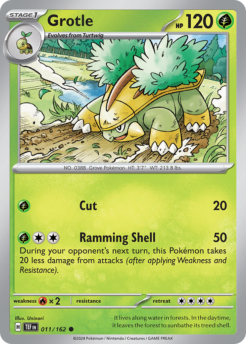
Scarlet & Violet
It lives along water in forests. In the daytime, it leaves the forest to sunbathe its treed shell.
Produtos Relacionados
Sword & Shield
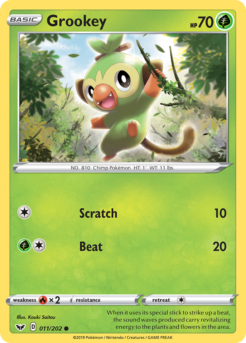
When it uses its special stick to strike up a beat, the sound waves produced carry revitalizing energy to the plants and flowers in the area.
Sword & Shield
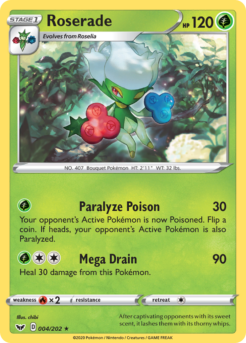
After captivating opponents with its sweet scent, it lashes them with its thorny whips.
Sword & Shield
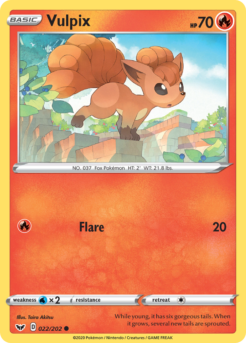
While young, it has six gorgeous tails. When it grows, several new tails are sprouted.
Sword & Shield
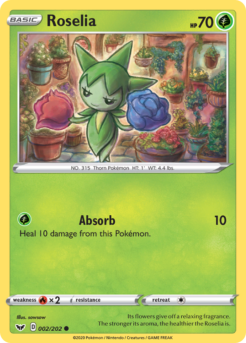
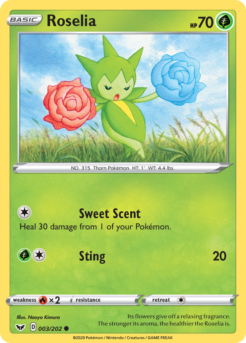
Its flowers give off a relaxing fragrance. The stronger its aroma, the healthier the Roselia is.
Sword & Shield
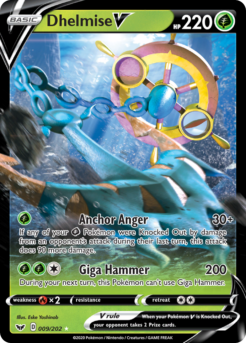
If any of your Grass Pokémon were Knocked Out by damage from an opponent’s attack during their last turn, this attack does 90 more damage.
Sword & Shield
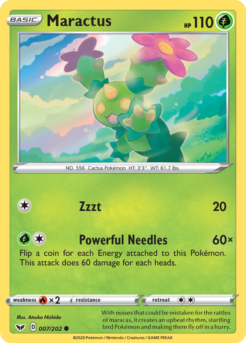
With noises that could be mistaken for the rattles of maracas, it creates an upbeat rhythm, startling bird Pokémon and making them fly off in a hurry.
Sword & Shield
Its flowers give off a relaxing fragrance. The stronger its aroma, the healthier the Roselia is.
Sword & Shield
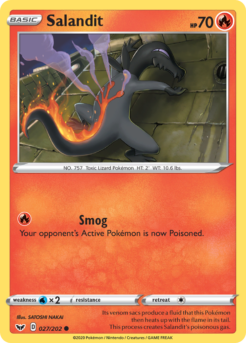
Its venom sacs produce a fluid that this Pokémon then heats up with the flame in its tail. This process creates Salandit's poisonous gas.