



Nuzleaf


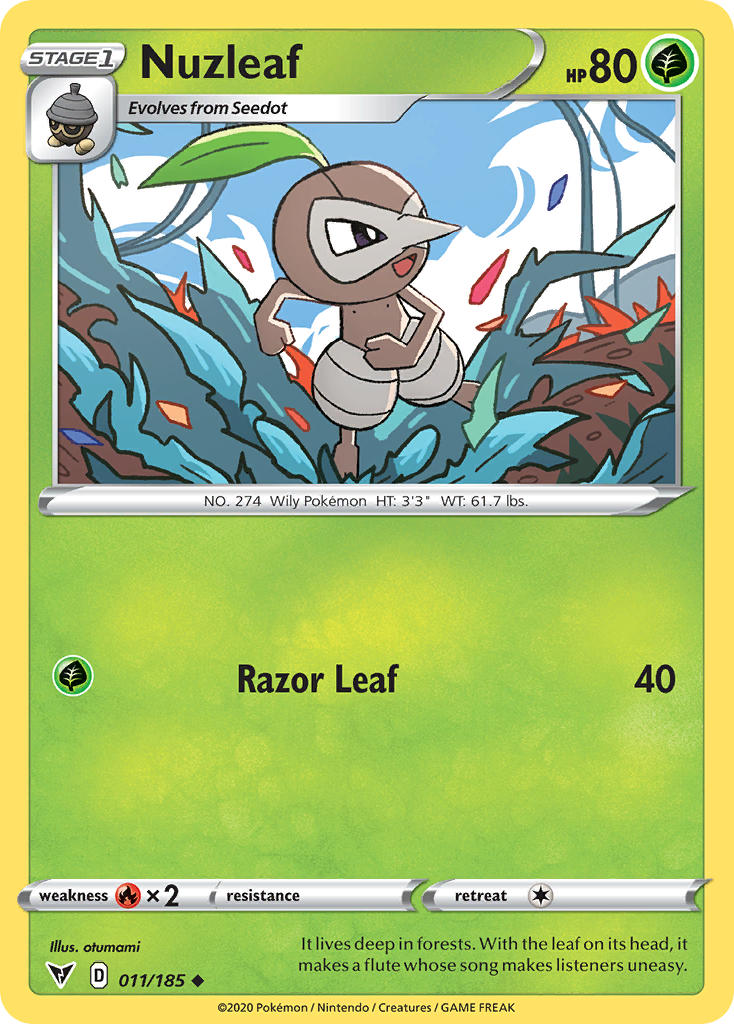
It lives deep in forests. With the leaf on its head, it makes a flute whose song makes listeners uneasy.

| Supertype | Pokémon |
|---|---|
| Subtype | Stage 1 |
| HP | 80 |
| Types | Grass |
| Attack | Razor Leaf |
| Attack cost | Grass |
| Artist | otumami |
| Rarity | Uncommon |
| Pokédex | 274 |
| Evolves from | Seedot |
| Evolves to | Shiftry |
Vendor Information
- Store Name: DutchGem
- Vendor: DutchGem
-
Address:
gekkestraat
179
2345GT Utrecht

Paldean Fates
Because its wings aren't yet fully grown, it has to hop to get around. It is always staring at something.

Evolving Skies
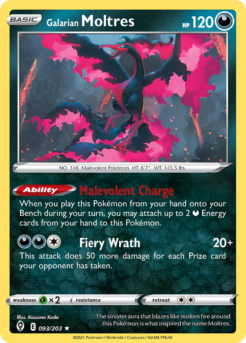
The sinister aura that blazes like molten fire around this Pokémon is what inspired the name Moltres.

Ancient Origins
It moves by spinning on its foot. It is a rare Pokémon that was discovered in ancient ruins.

Steam Siege
It expels its internal steam from the arms on its back. It has enough power to blow away a mountain.

Produtos Relacionados

Sword & Shield
By drumming, it taps into the power of its special tree stump. The roots of the stump follow its direction in battle.
Sword & Shield
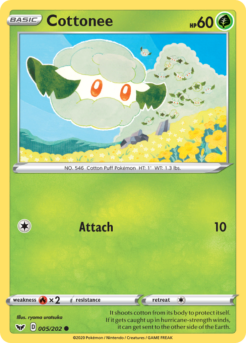
It shoots cotton from its body to protect itself. If it gets caught up in hurricane-strength winds, it can get sent to the other side of the Earth.

Sword & Shield
While young, it has six gorgeous tails. When it grows, several new tails are sprouted.

Sword & Shield
A constant collector of information, this Pokémon is very smart. Very strong is what it isn't.
Sword & Shield
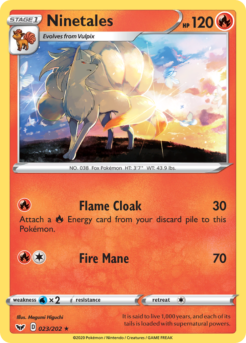
It is said to live 1,000 years, and each of its tails is loaded with supernatural powers.

Sword & Shield
As it grows inside its shell, it uses its psychic abilities to monitor the outside world and prepare for evolution.

Sword & Shield
The faster a Thwackey can beat out a rhythm with its two sticks, the more respect it wins from its peers.

Sword & Shield
It whirls around in the wind while singing a joyous song. This delightful display has charmed many into raising this Pokémon.