



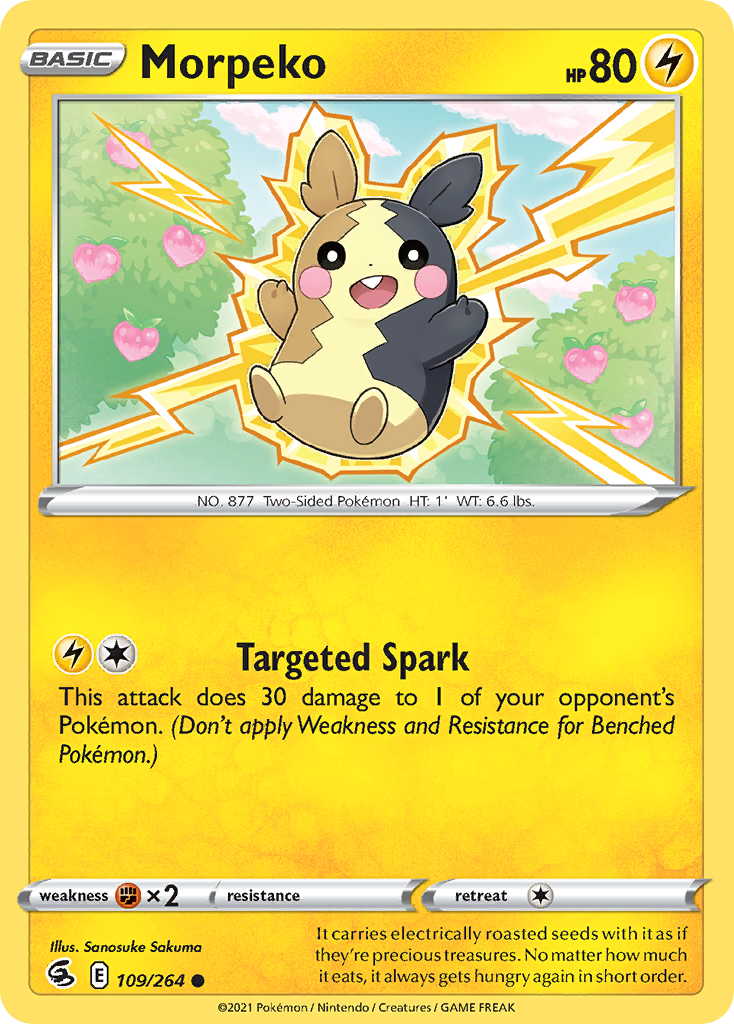
Morpeko
It carries electrically roasted seeds with it as if they’re precious treasures. No matter how much it eats, it always gets hungry again in short order.
This attack does 30 damage to 1 of your opponent’s Pokémon. (Don’t apply Weakness and Resistance for Benched Pokémon.)
| Supertype | Pokémon |
|---|---|
| Subtype | Basic |
| HP | 80 |
| Types | Lightning |
| Attack | Targeted Spark |
| Attack cost | Lightning |
| Artist | Sanosuke Sakuma |
| Rarity | Common |
| Pokédex | 877 |
Vendor Information
- Store Name: DutchGem
- Vendor: DutchGem
-
Address:
gekkestraat
179
2345GT Utrecht
Sun & Moon
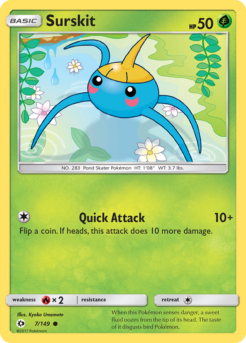
When this Pokémon senses danger, a sweet fluid oozes from the tip of its heads. The taste of it disgusts bird Pokémon.
Sun & Moon
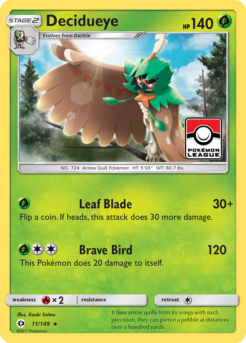
It fires arrow quills from its wings with such precision, they can pierce a pebble at distances over a hundred yards.

Obsidian Flames
The tea that composes Polteageist's body has a distinct and enjoyable flavor. Drinking too much, however, can be fatal.
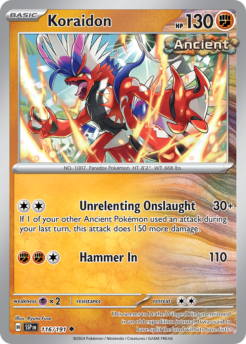
Scarlet & Violet
If 1 of your other Ancient Pokémon used an attack during your last turn, this attack does 150 more damage.