



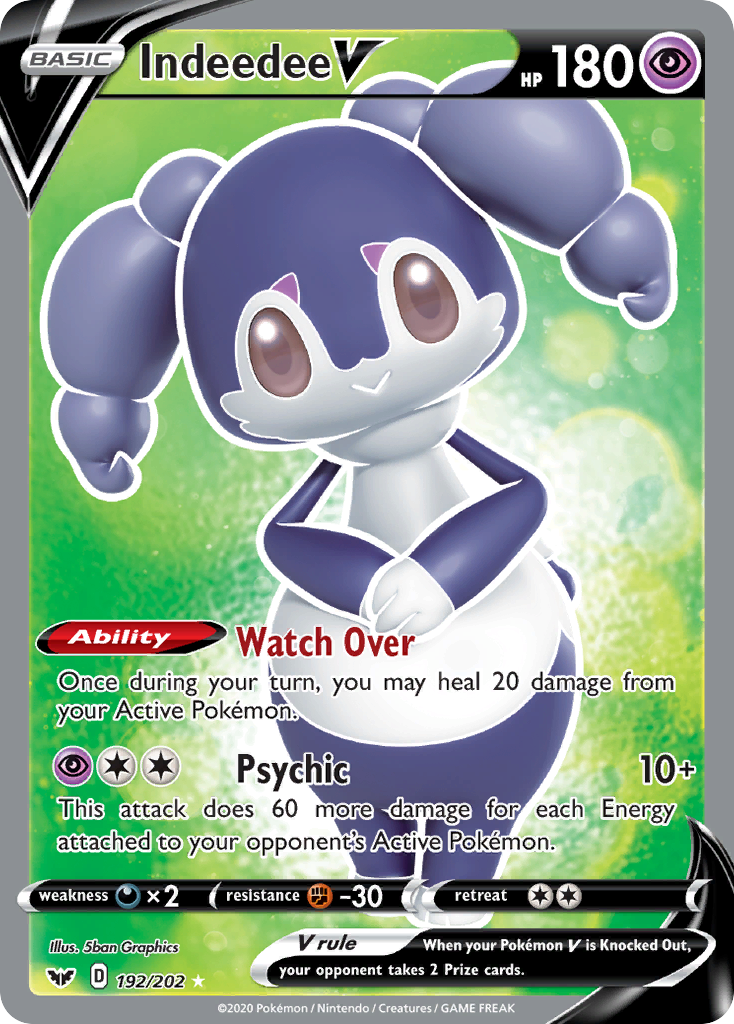

This attack does 60 more damage for each Energy attached to your opponent’s Active Pokémon.
| Supertype | Pokémon |
|---|---|
| Subtype | Basic |
| HP | 180 |
| Types | Psychic |
| Attack | Psychic |
| Attack cost | Psychic |
| Artist | 5ban Graphics |
| Rarity | Rare Ultra |
| Pokédex | 876 |
Vendor Information
- Store Name: DutchGem
- Vendor: DutchGem
-
Address:
gekkestraat
179
2345GT Utrecht
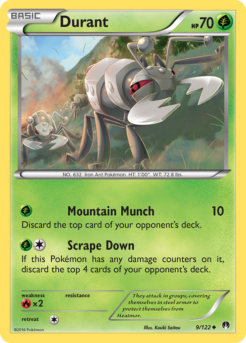
BREAKpoint
They attack in groups, covering themselves in steel armor to protect themselves from Heatmor.
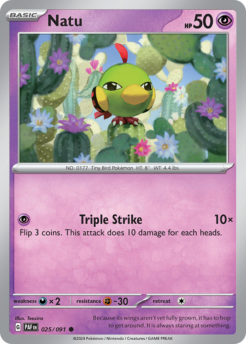
Paldean Fates
Because its wings aren't yet fully grown, it has to hop to get around. It is always staring at something.
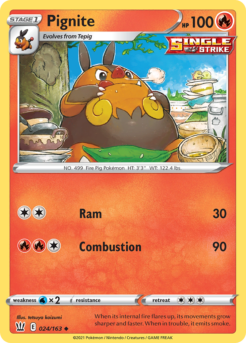
Battle Styles
When its internal fire flares up, its movements grow sharper and faster. When in trouble, it emits smoke.
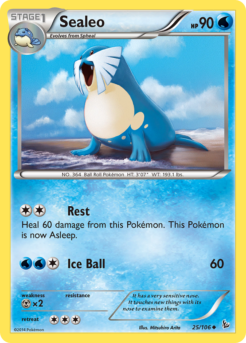
Sun & Moon
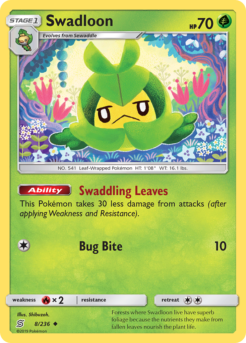
Forests where Swadloon live have superb foliage because the nutrients they make from fallen leaves nourish the plant life.
Produtos Relacionados
Sword & Shield
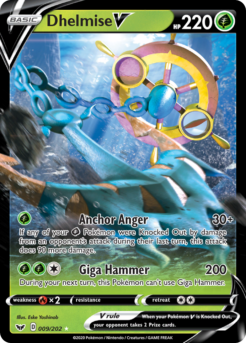
If any of your Grass Pokémon were Knocked Out by damage from an opponent’s attack during their last turn, this attack does 90 more damage.
Sword & Shield
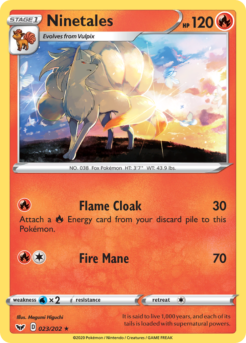
It is said to live 1,000 years, and each of its tails is loaded with supernatural powers.
Sword & Shield
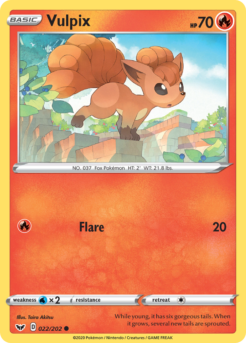
While young, it has six gorgeous tails. When it grows, several new tails are sprouted.
Sword & Shield
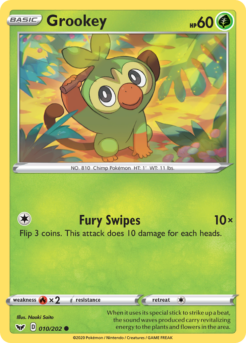
When it uses its special stick to strike up a beat, the sound waves produced carry revitalizing energy to the plants and flowers in the area.
Sword & Shield
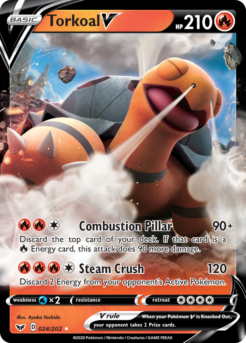
Discard the top card of your deck. If that card is a Fire Energy card, this attack does 90 more damage.
Sword & Shield
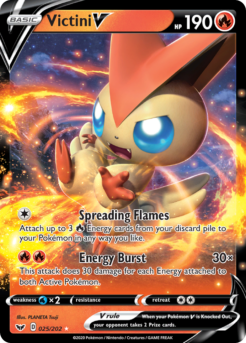
Attach up to 3 Fire Energy cards from your discard pile to your Pokémon in any way you like.
Sword & Shield
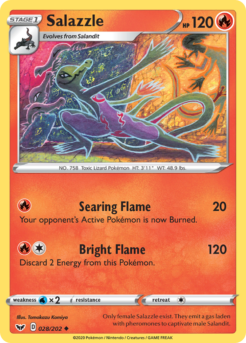
Only female Salazzle exist. They emit a gas laden with pheromones to captivate male Salandit.
Sword & Shield
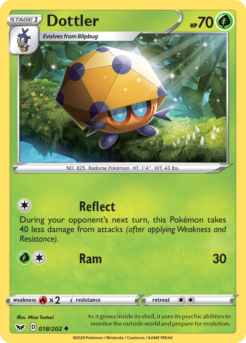
As it grows inside its shell, it uses its psychic abilities to monitor the outside world and prepare for evolution.