



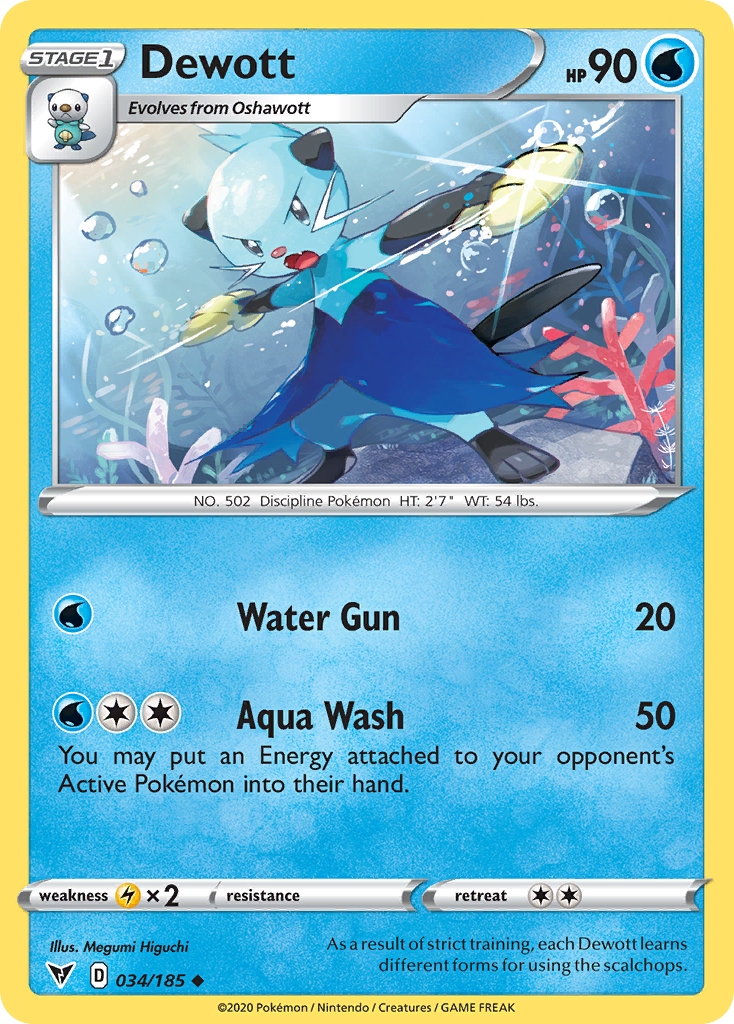
Dewott


As a result of strict training, each Dewott learns different forms for using the scalchops.
| Supertype | Pokémon |
|---|---|
| Subtype | Stage 1 |
| HP | 90 |
| Types | Water |
| Attack | Water Gun |
| Attack cost | Water |
| Artist | Megumi Higuchi |
| Rarity | Uncommon |
| Pokédex | 502 |
| Evolves from | Oshawott |
| Evolves to | Samurott |
Vendor Information
- Store Name: DutchGem
- Vendor: DutchGem
-
Address:
gekkestraat
179
2345GT Utrecht
Scarlet & Violet
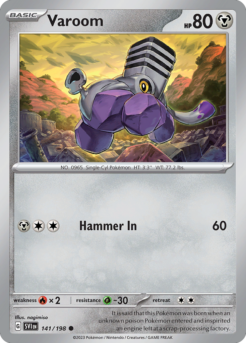
It is said that this Pokémon was born when an unknown poison Pokémon entered and inspirited an engine left at a scrap-processing factory.
Sword & Shield
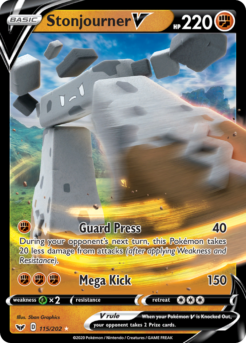
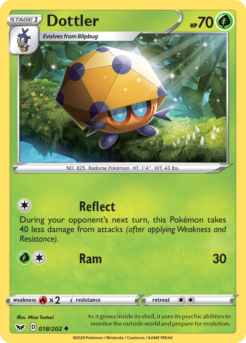
During your opponent’s next turn, this Pokémon takes 20 less damage from attacks (after applying Weakness and Resistance).
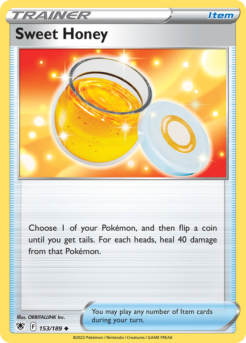

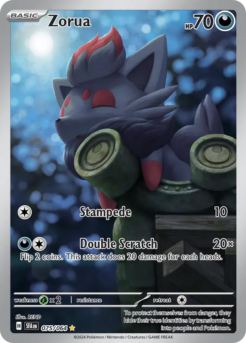

Scarlet & Violet
Your opponent reveals their hand. Discard all Item cards and Pokémon Tool cards you find there.
Produtos Relacionados
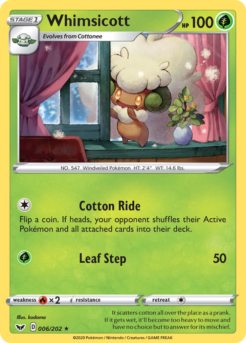
Sword & Shield
It scatters cotton all over the place as a prank. If it gets wet, it'll become too heavy to move and have no choice but to answer for its mischief.
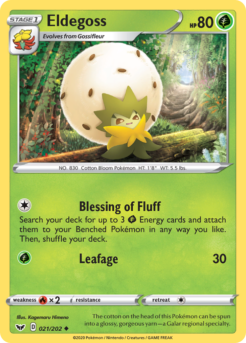
Sword & Shield
The cotton on the head of this Pokémon can be spun into a glossy, gorgeous yarn—a Galar regional specialty.
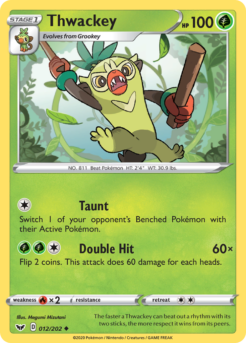
Sword & Shield
The faster a Thwackey can beat out a rhythm with its two sticks, the more respect it wins from its peers.
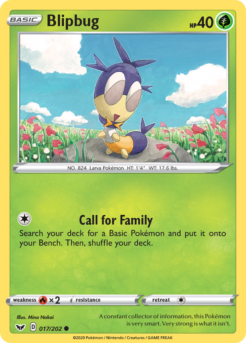
Sword & Shield
A constant collector of information, this Pokémon is very smart. Very strong is what it isn't.
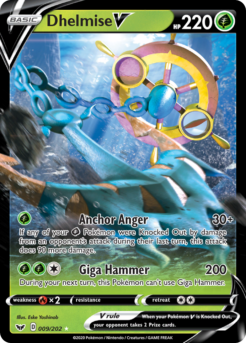
Sword & Shield
If any of your Grass Pokémon were Knocked Out by damage from an opponent’s attack during their last turn, this attack does 90 more damage.

Sword & Shield
There's a hole in its tail that allows it to draw in the air it needs to keep its fire burning. If the hole gets blocked, this Pokémon will fall ill.
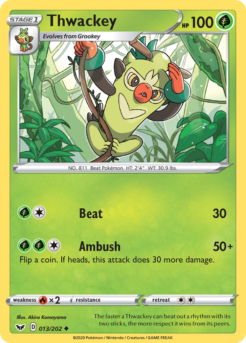
Sword & Shield
The faster a Thwackey can beat out a rhythm with its two sticks, the more respect it wins from its peers.
Sword & Shield
As it grows inside its shell, it uses its psychic abilities to monitor the outside world and prepare for evolution.