



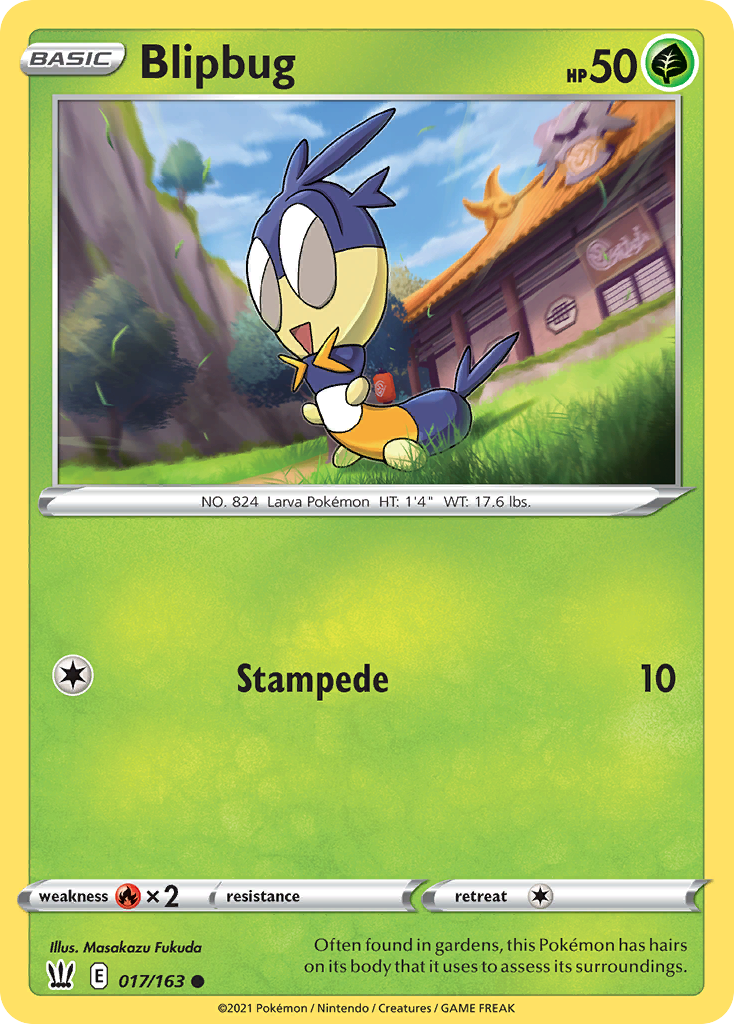
Blipbug
Often found in gardens, this Pokémon has hairs on its body that it uses to assess its surroundings.
| Supertype | Pokémon |
|---|---|
| Subtype | Basic |
| HP | 50 |
| Types | Grass |
| Attack | Stampede |
| Attack cost | Colorless |
| Artist | Masakazu Fukuda |
| Rarity | Common |
| Pokédex | 824 |
| Evolves to | Dottler |
Vendor Information
- Store Name: DutchGem
- Vendor: DutchGem
-
Address:
gekkestraat
179
2345GT Utrecht

Evolutions
Heal 60 damage from this Pokémon. This Pokémon can’t attack during your next turn.

Cosmic Eclipse
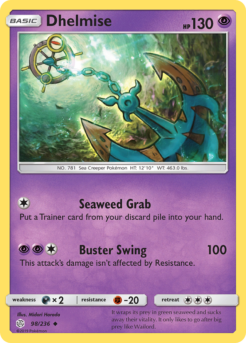
It wraps its prey in green seaweed and sucks away their vitality. It only likes to go after big prey like Wailord.
Flashfire
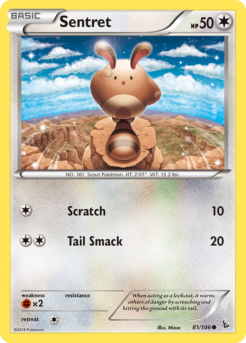
When acting as a lookout, it warns others of danger by screeching and hitting the ground with its tail.
Cosmic Eclipse
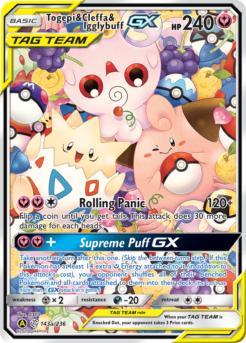
Flip a coin until you get tails. This attack does 30 more damage for each heads.
Produtos Relacionados
Sword & Shield
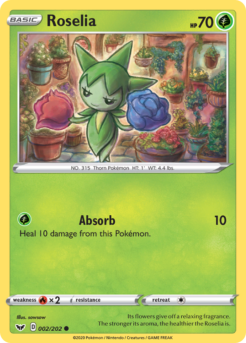
Its flowers give off a relaxing fragrance. The stronger its aroma, the healthier the Roselia is.
Sword & Shield
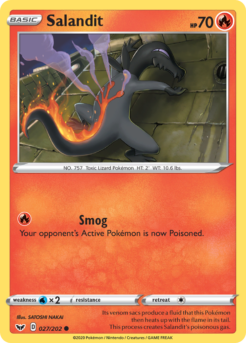
Its venom sacs produce a fluid that this Pokémon then heats up with the flame in its tail. This process creates Salandit's poisonous gas.
Sword & Shield
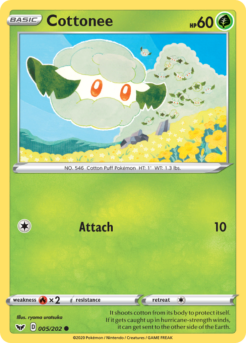
It shoots cotton from its body to protect itself. If it gets caught up in hurricane-strength winds, it can get sent to the other side of the Earth.
Sword & Shield
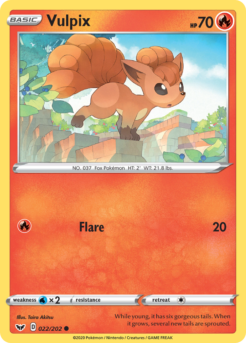
While young, it has six gorgeous tails. When it grows, several new tails are sprouted.
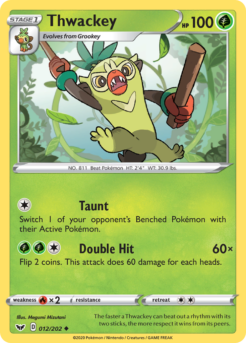
Sword & Shield
The faster a Thwackey can beat out a rhythm with its two sticks, the more respect it wins from its peers.
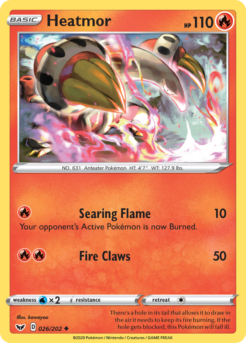
Sword & Shield
There's a hole in its tail that allows it to draw in the air it needs to keep its fire burning. If the hole gets blocked, this Pokémon will fall ill.
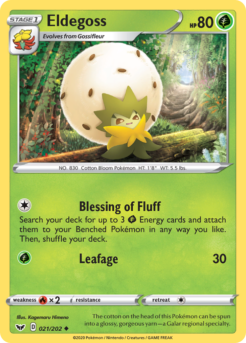
Sword & Shield
The cotton on the head of this Pokémon can be spun into a glossy, gorgeous yarn—a Galar regional specialty.
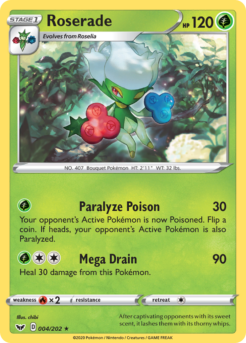
Sword & Shield
After captivating opponents with its sweet scent, it lashes them with its thorny whips.