



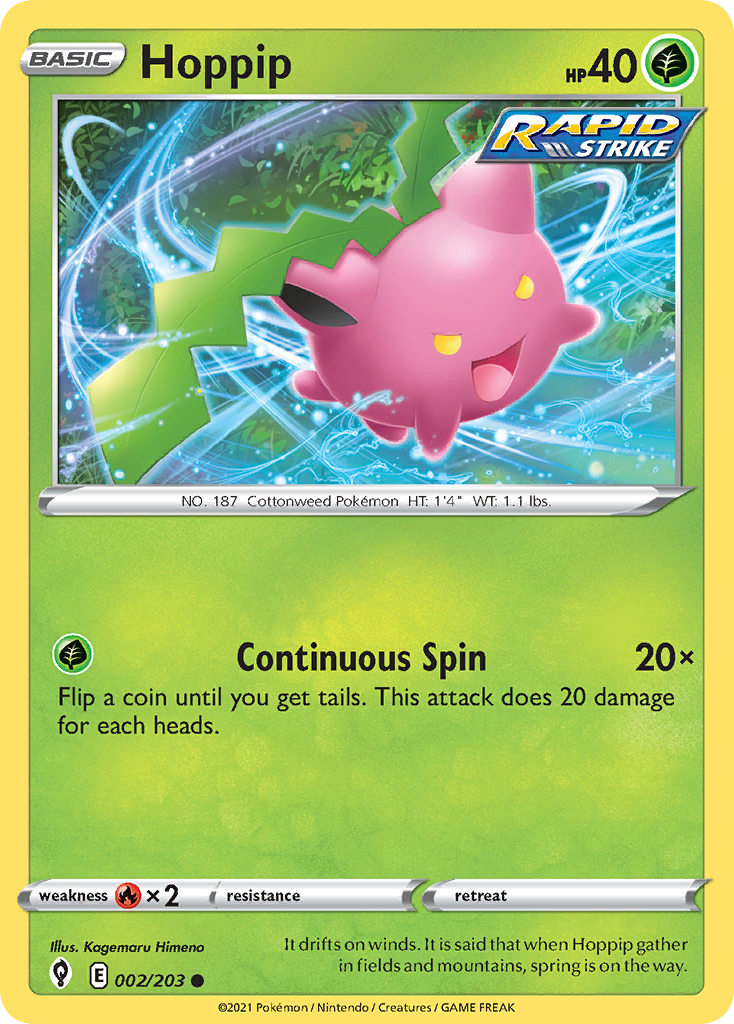
Hoppip
It drifts on winds. It is said that when Hoppip gather in fields and mountains, spring is on the way.
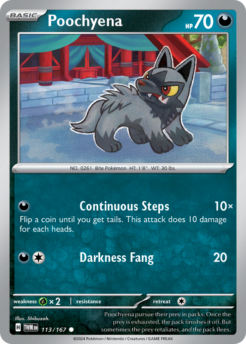
Flip a coin until you get tails. This attack does 20 damage for each heads.
| Supertype | Pokémon |
|---|---|
| Subtype | Basic |
| HP | 40 |
| Types | Grass |
| Attack | Continuous Spin |
| Attack cost | Grass |
| Artist | Kagemaru Himeno |
| Rarity | Common |
| Pokédex | 187 |
| Evolves to | Skiploom |
Vendor Information
- Store Name: DutchGem
- Vendor: DutchGem
-
Address:
gekkestraat
179
2345GT Utrecht

Scarlet & Violet
Poochyena pursue their prey in packs. Once the prey is exhausted, the pack finishes it off. But sometimes the prey retaliates, and the pack flees.
Scarlet & Violet
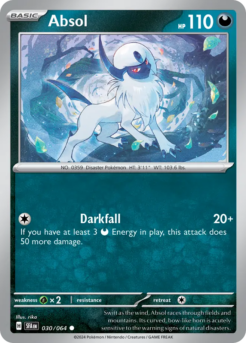
If you have at least 3 Darkness Energy in play, this attack does 50 more damage.
151
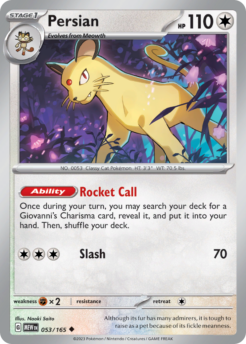
Although its fur has many admirers, it is tough to raise as a pet because of its fickle meanness.
151
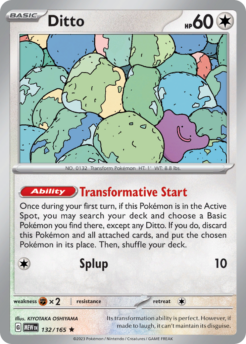
Its transformation ability is perfect. However, if made to laugh, it can't maintain its disguise.
Produtos Relacionados
Sword & Shield
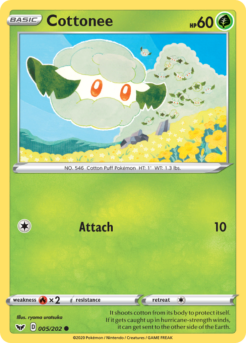
It shoots cotton from its body to protect itself. If it gets caught up in hurricane-strength winds, it can get sent to the other side of the Earth.
Sword & Shield
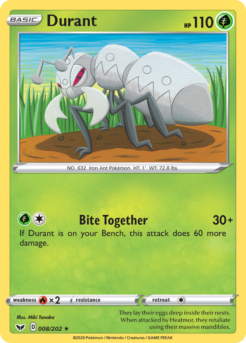
They lay their eggs deep inside their nests. When attacked by Heatmor, they retaliate using their massive mandibles.
Sword & Shield
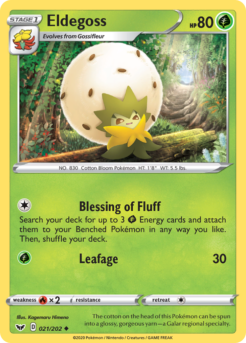
The cotton on the head of this Pokémon can be spun into a glossy, gorgeous yarn—a Galar regional specialty.
Sword & Shield
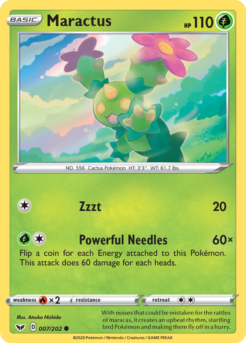
With noises that could be mistaken for the rattles of maracas, it creates an upbeat rhythm, startling bird Pokémon and making them fly off in a hurry.
Sword & Shield
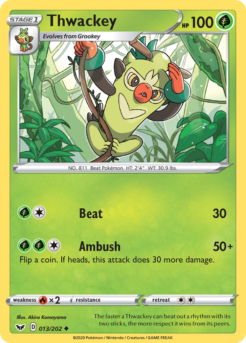
The faster a Thwackey can beat out a rhythm with its two sticks, the more respect it wins from its peers.
Sword & Shield
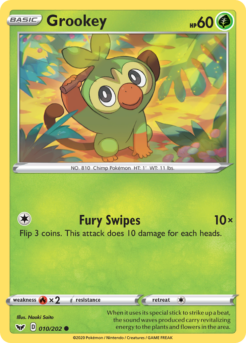
When it uses its special stick to strike up a beat, the sound waves produced carry revitalizing energy to the plants and flowers in the area.
Sword & Shield
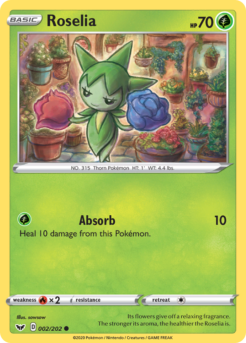
Its flowers give off a relaxing fragrance. The stronger its aroma, the healthier the Roselia is.
Sword & Shield
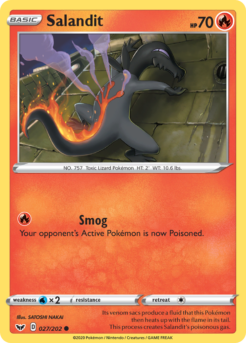
Its venom sacs produce a fluid that this Pokémon then heats up with the flame in its tail. This process creates Salandit's poisonous gas.